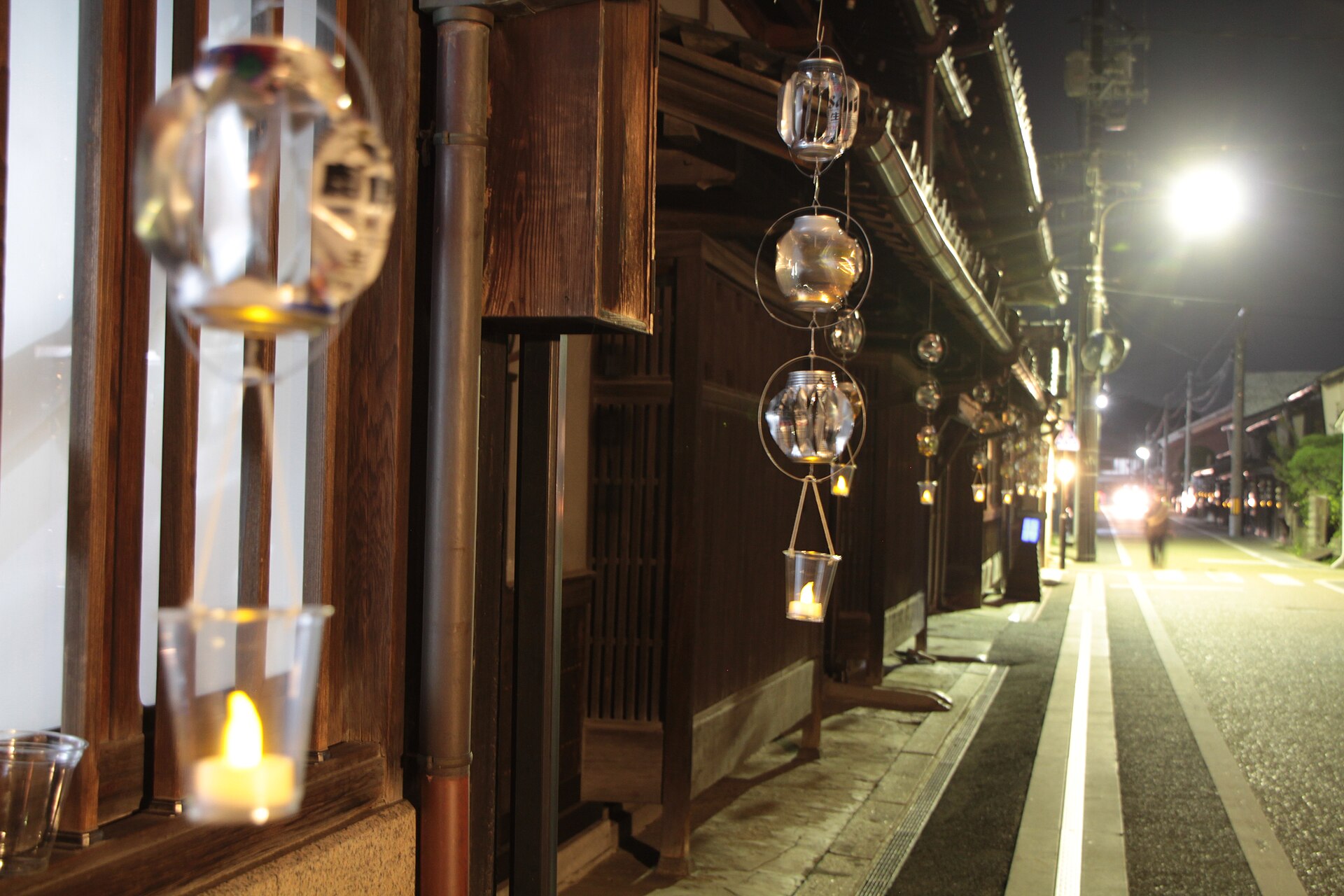
North Okayama · TsuyamaNo.618★★Open in map →
Tsuyama Joto Townscape
— Merchant quarter on the old Izumo highway
East of Tsuyama Castle, one street of the old Izumo highway kept its Edo-period merchant houses: white plaster laid in a diamond lattice, latticed windows under the eaves, and roof ridges running with the road rather than across it.
- FromTsuyama Station
- ~15 minCity loop bus from Tsuyama Station
- Get off atHigashi-Shinmachi stop (Gongo city loop bus)
- On foot
- Tsuyama Joto Townscape
The sweet spot
This is not a hidden street. It is a nationally designated preservation district with its own visitor centre and a city bus that stops at the end of it. What keeps it calm is that people live here. The houses that open to visitors are outnumbered by the ones that do not, so the quarter never fills the way a preserved street with a shop in every frontage does.
Where it is
14 more notes in Okayama · open the map →What to look for — in walking order
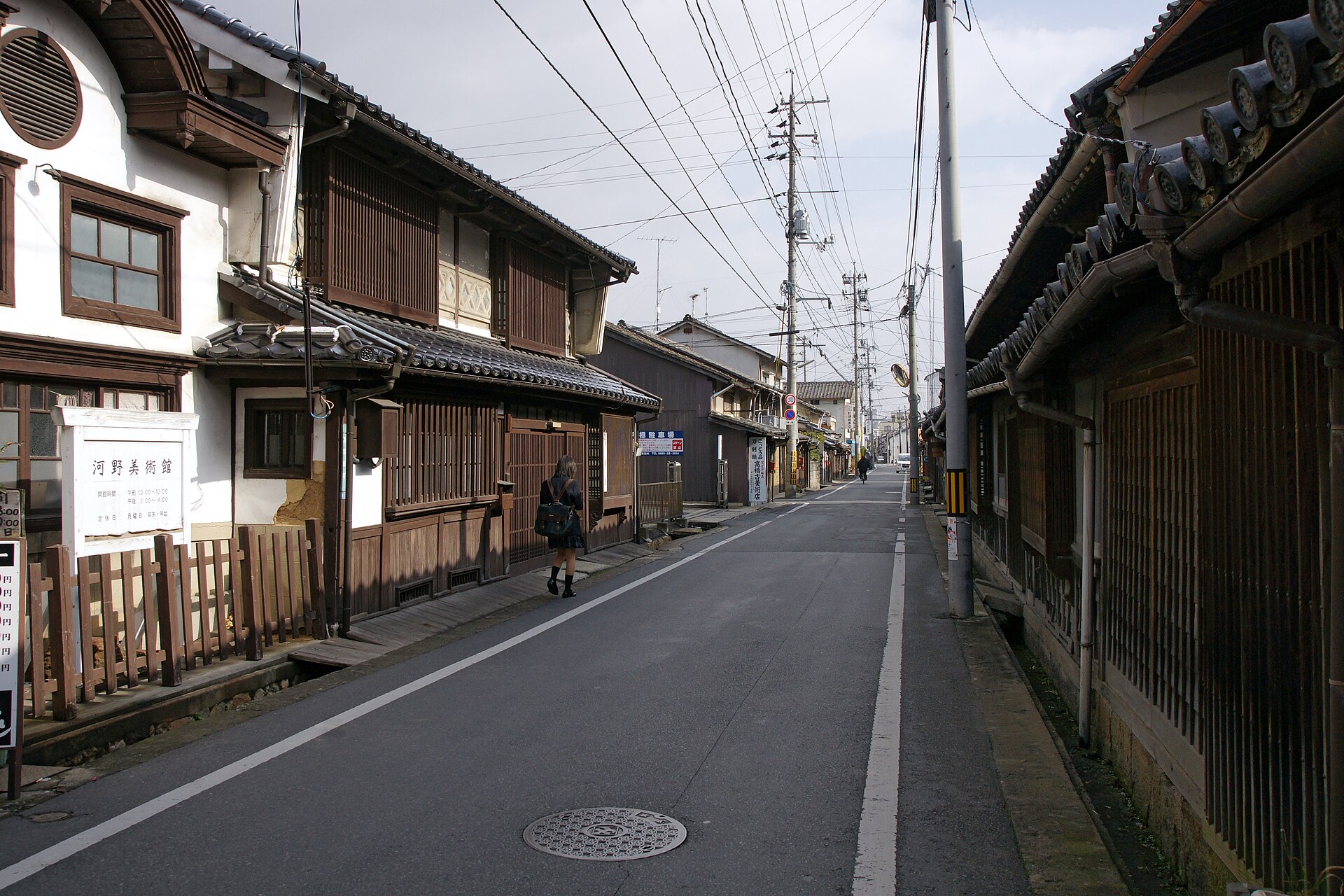
- The old Izumo highwaythe single street the whole quarter is built along, kinking sharply where the castle town once wanted it to
- Joto Mukashi Machiyaa merchant house open to walk through, grown from a street-front shop into a run of rooms and stores
- Former Mitsukuri Genpo Residencethe single-storey birthplace of the Western-studies scholar, designated a National Historic Site
- Tsuyama Archives of Western Learninga museum on the town's line of Dutch- and Western-studies scholars, just off the street to the north
How to actually get there
- Okayama Station → Tsuyama Station on the JR Tsuyama Line.
- Tsuyama Station → Higashi-Shinmachi on the Gongo city loop bus, about fifteen minutes.
- Step down onto the old Izumo highway and walk west along it.
- Keep going west past the scholar's house and the archives, and the street runs on toward the castle hill.
- Gongo loop bus from Tsuyama Station
- Tsuyama Station → Higashi-Shinmachi on the city's Gongo loop bus, about fifteen minutes, and the district begins where you step down. Tsuyama Station is where three JR lines meet; the Tsuyama Line from Okayama is the one most visitors arrive on, and it carries a rapid service called Kotobuki.
- Returning to Tsuyama Station
- The Gongo bus runs a circuit, so the stop back toward the station is not necessarily the one you got off at — read the board rather than waiting where you landed. Walking back is reasonable too: the quarter and the station stand at opposite ends of the old town, and the route passes below the castle.
About the place
The Izumo Kaido crossed the mountains of northern Okayama, and Tsuyama's castle town grew along it. The eastern quarter is the part that came through: roughly eight hectares of merchant houses, running as one street with lanes dropping away on either side. Walk it and the details repeat. Namako walls set white plaster in diamonds across dark tile, mushiko windows sit in the upper storey like small barred cages, and tiled eaves carry on unbroken from one frontage to the next. The road does not run straight either. It kinks hard in places, a defensive habit of castle towns that survives here as a street which keeps hiding its own end.
How to enjoy it
Walk the street once end to end before going inside anything: the interest here is the run of frontages, and stopping at the first open door breaks the rhythm. Then double back for the two or three interiors that admit visitors. Because the bus sets you down at the eastern end, the walk runs naturally westward, and it keeps going toward the castle hill once the preserved section stops.
Background & history
Tsuyama grew as a castle town in the Edo period, spreading east along the Izumo Kaido, the highway that ran toward the Japan Sea coast. This quarter housed merchants rather than samurai, which is why the frontages are shops and storehouses instead of gates and walls. It produced scholars as well as traders: Mitsukuri Genpo, who read and translated Western books for the shogunate and taught at its institute for foreign texts, was born in one of these houses, and the house is now a National Historic Site. The quarter was designated a national preservation district in 2013.
Before you go
- Cash
- The street itself costs nothing to walk. The houses that open to visitors are run separately rather than under one ticket, so ask at the visitor centre near the eastern end which of them are open that day before you plan around any of them.
- Before you go
- This is a lived-in quarter rather than an open-air museum, and each house that admits visitors keeps its own days and hours. Check the loop bus's last departure before you set out. If you arrive in the afternoon, walk the street first and leave the interiors for another time.
- Another way
- By car it is about fifteen minutes from the Tsuyama interchange on the Chugoku Expressway, and the district has its own visitor car park rather than roadside spaces.
- After you get off
- The Higashi-Shinmachi stop sits on the old highway at the eastern end of the district, with the preservation-district sign a few steps away. Face west and the whole quarter runs ahead of you in a single line, so there is nothing to navigate.