Sado Island · OgiNo.497★★Open in map →
Shukunegi
— A shipwrights' village packed into a Sado inlet
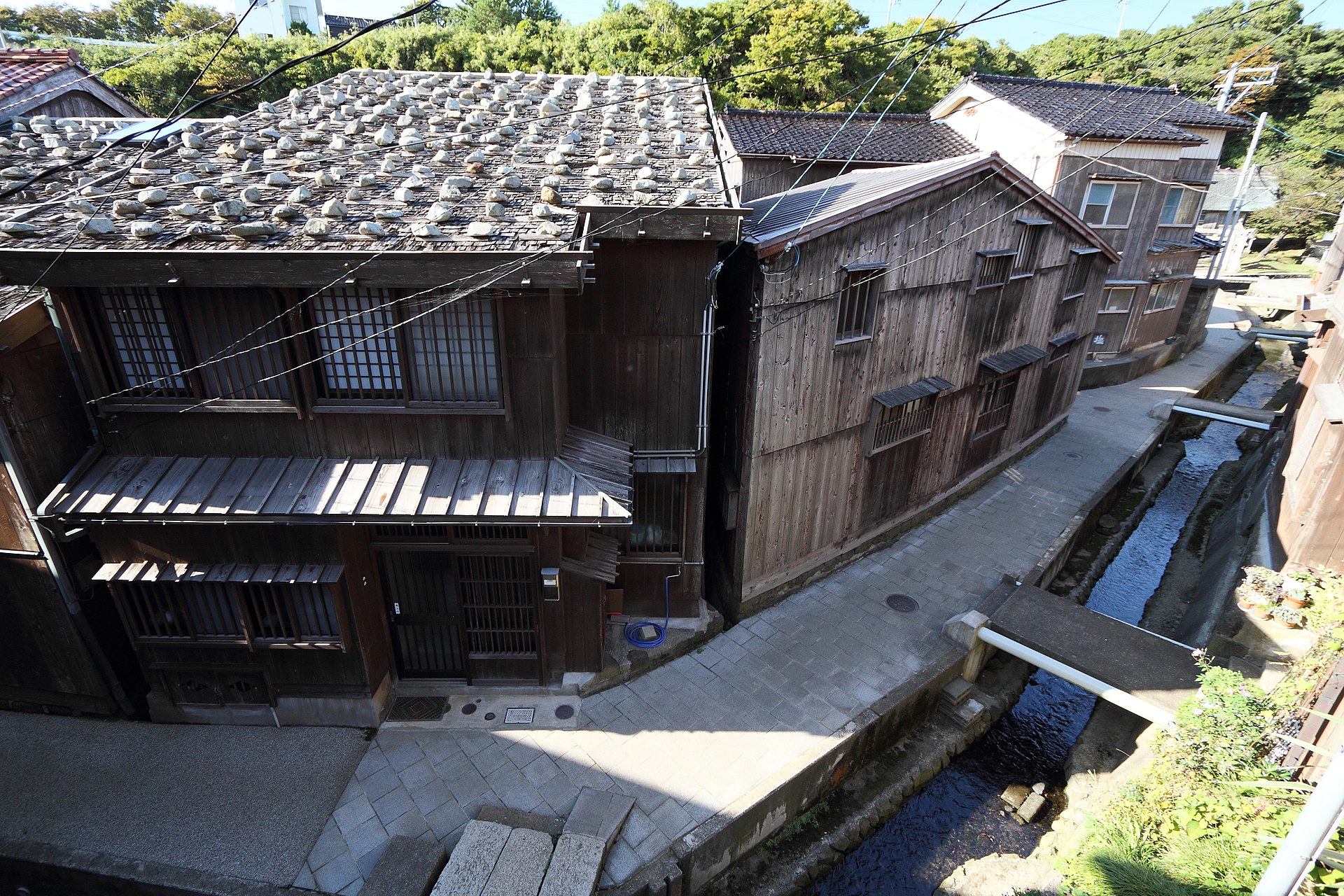
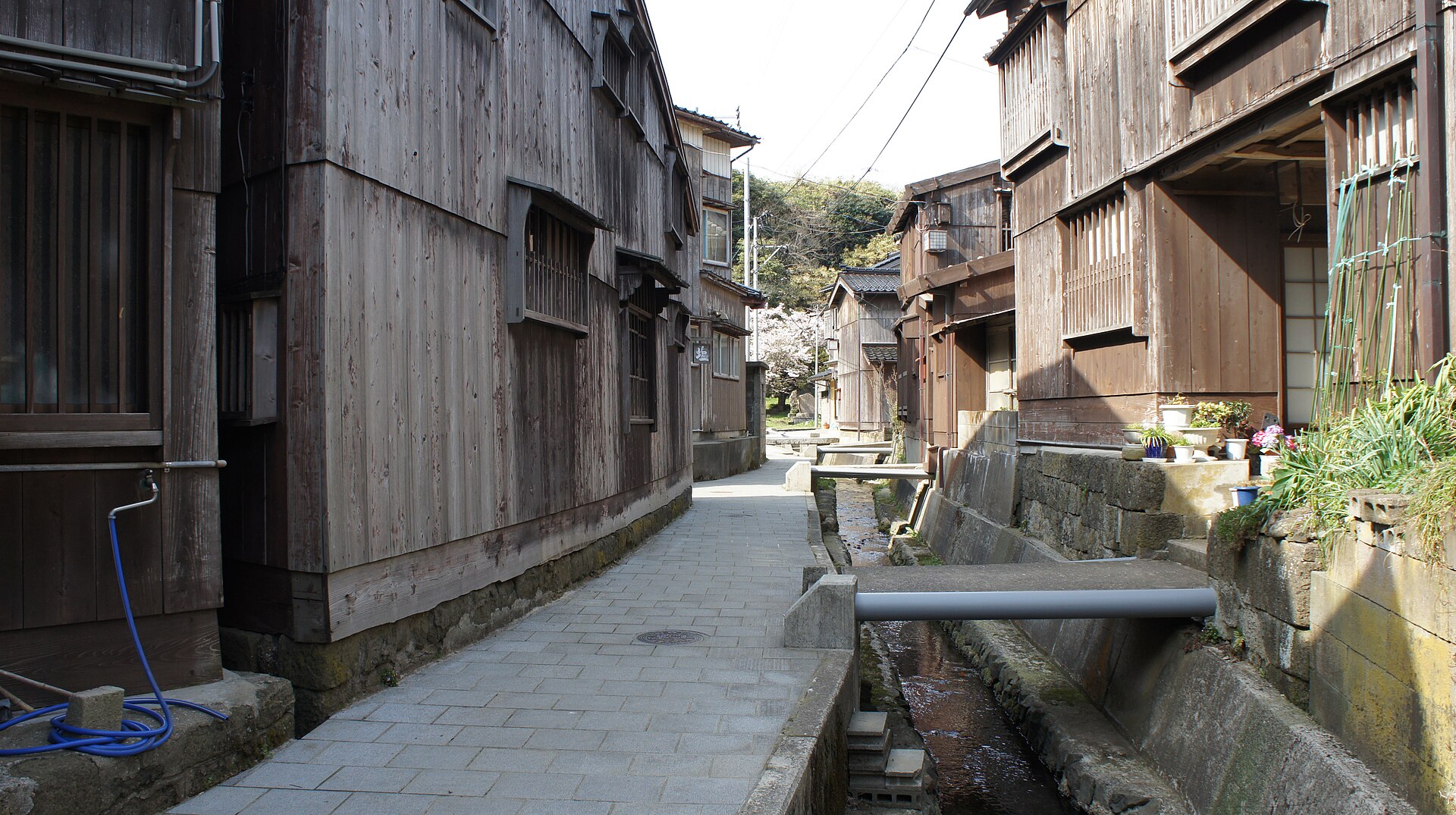
Board-walled houses jammed into a small inlet on the south coast of Sado, built by the ship carpenters who worked the northern trade routes. The lanes are shoulder-width, the shingled roofs are weighted with stones, and a few of the houses are open inside.
- FromOgi Port
- ~10 min by roadOgi-line bus from the port
- Get off atShukunegi bus stop (Ogi line)
- On foot
- Shukunegi
The sweet spot
Sado gets visitors, but most of them land at Ryotsu in the north and give their day to the gold mine. Shukunegi is at the far southern tip, nearer the Naoetsu ferry than the main one, and reaching it takes a decision rather than a detour. The village is small enough to walk in a single loop — which is why it gets skipped, and why it is still whole.
Where it is
12 more notes in Niigata · open the map →What to look for — in walking order
- Hakusan Shrinethe village shrine, its torii cut from granite shipped in from the Inland Sea
- The board-walled lanespassages barely wide enough for one person, walled in reused ship planking
- The triangular housea house built to fill the wedge where two lanes meet, the village's landmark
- The stone bridgea bridge of Seto Inland Sea granite carried here by the trading ships
- The sengokubune halla full-size reconstructed cargo ship in the folk museum east of the village
How to actually get there
- Ogi Port → Shukunegi (Ogi-line bus along the coast road, about ten minutes).
- Drop from the coast road into the inlet and start at the shrine end.
- Follow the lanes to the triangular house, then loop back past the stone bridge.
- Walk east to the Ogi Folk Museum and the sengokubune hall before the return bus.
- Ogi-line bus from Ogi Port
- Ogi is the ferry port for the south of the island. The Ogi-line bus follows the coast road west and reaches Shukunegi in about the time the drive takes, roughly ten minutes. The stop is at the mouth of the village, so there is no connecting walk at the far end.
- Return to Ogi Port
- The same line runs back along the coast to Ogi. Island buses are timed around the ferries rather than around visitors, so settle the return service before you walk down into the inlet.
About the place
The inlet is small and the houses are wedged into it, board wall against board wall, a little over a hundred of them inside the twenty-eight and a half hectares of protected ground. There is barely space between buildings, so the lanes bend around them instead of running through. Roofs are shingled and held down with stones against the wind off the sea. Much of the timber came off ships as offcuts and reused planking, and the joinery is a shipwright's rather than a house carpenter's. One house was built to fill the wedge where two lanes meet, and that odd triangular front is now the face of the village.
How to enjoy it
A few houses inside the village are opened to visitors, and they are the only way to see the shipwright's joinery from the inside — ask which are open on the day, because it changes. Give the folk museum east of the village its own slot: the reconstructed cargo ship standing in the hall is the scale everything here was built around. Plan the loop backward from the return bus; the village is short and the museum is not.
Background & history
There was a harbour here from medieval times, but the money came later, when the kitamaebune trade around the Japan Sea coast was at its height in the late Edo and early Meiji years. Sado's gold had already made Ogi a port of call, and Shukunegi turned that traffic into a shipbuilding and shipowning business of its own. When the sailing trade ended the income stopped and nothing was rebuilt, which is the plain reason the village survives in the form it does. It was designated a national preservation district in 1991.
Before you go
- Cash
- Walking the lanes costs nothing. A few of the houses are opened to visitors and charge admission separately, and the Ogi Folk Museum just east of the village has its own ticket.
- Before you go
- This is a lived-in village, not an open-air museum. The lanes run past people's front walls and the houses on both sides are homes. Winter on Sado's south coast is wet and windy and the ferry timetable thins out. Opening days for the paid houses and the museum vary with the season.
- Another way
- From Niigata the jetfoil crosses to Ryotsu in about an hour, but Ryotsu is at the other end of the island and needs a long road connection afterwards. From Naoetsu on the mainland's western coast, the car ferry lands at Ogi, which is the near side for Shukunegi.
- After you get off
- The stop is on the coast road at the edge of the settlement. Walk down and the village begins at once, the lane dropping between board walls with the sea behind you. There is no main street to find; the route is a loop, and the triangular house marks the turn.