Miyazaki Inland · SaitoNo.1229★★Open in map →
Saitobaru Burial Mounds
A plateau west of Saito town covered with ancient burial mounds and protected as a special historic site. There are no gates and no admission. The paths, the car park and the toilets stay open every day of the year, around the clock.
- FromMiyazaki Station
- ~70 minMiyazaki Kotsu bus, roughly hourly
- Get off atSaito Bus Center (Miyazaki Kotsu bus)
- From there
- Saitobaru Burial Mounds
The sweet spot
Saitobaru is not an obscure site. It carries the highest national heritage rank and it draws crowds for the spring flowers. What it does not have is a gate, a ticket desk or a closing time, so the plateau is open whenever you arrive. Outside the flower fortnight the field is large enough that visitors spread thin across it.
Where it is
18 more notes in Miyazaki · open the map →What to look for — in walking order
- Konohana-kan guidance centrethe information hub at the south of the plateau, with a farm shop and the trailhead for the mound paths
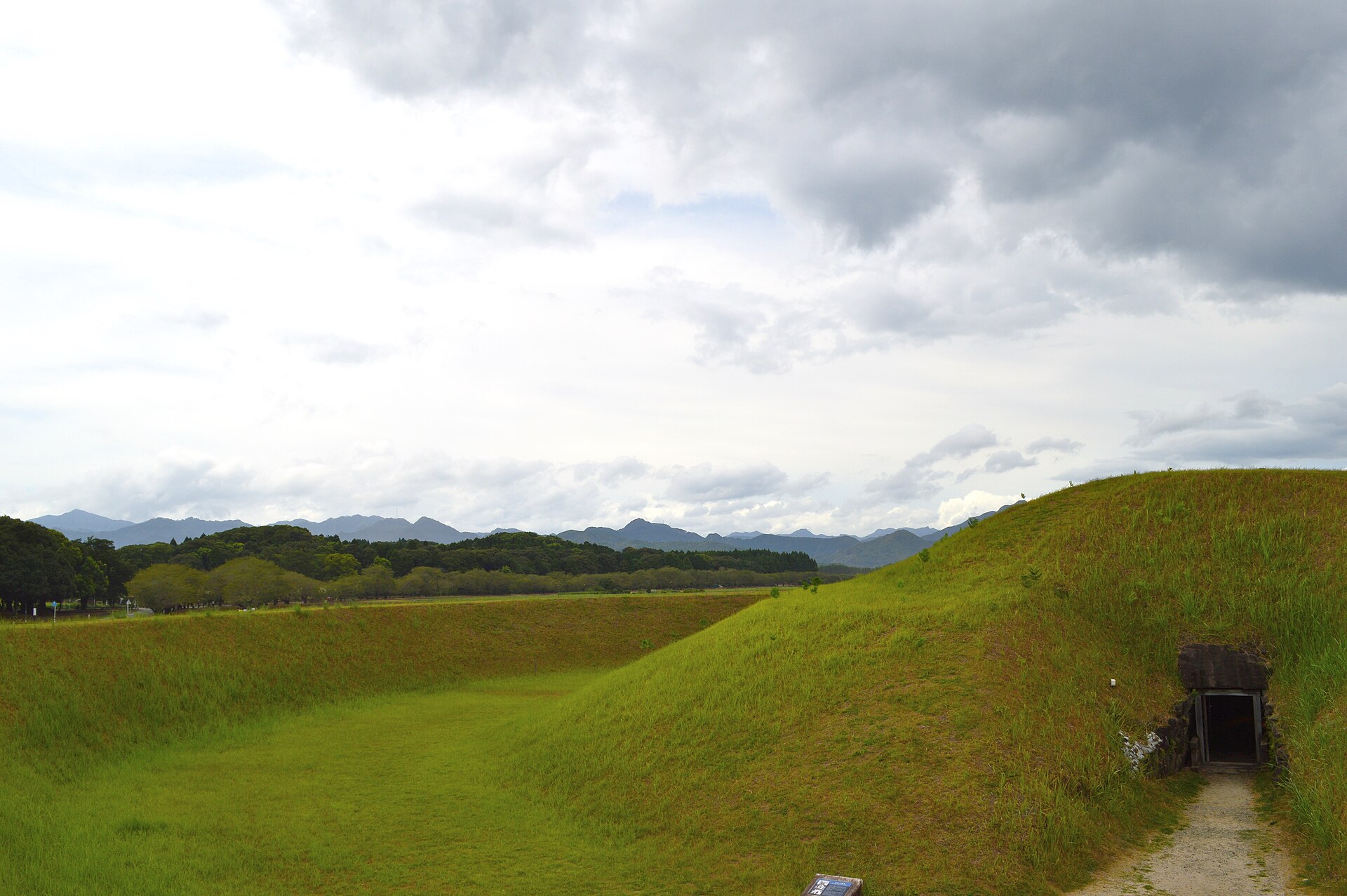
- Oni-no-Iwaya mounda round mound about 36 metres across, the only one in the group with a corridor-style stone chamber
- Osahozuka and Mesahozukathe two giants of the group, fenced as imperial mausoleum reference sites, one of them the largest keyhole tomb in Kyushu
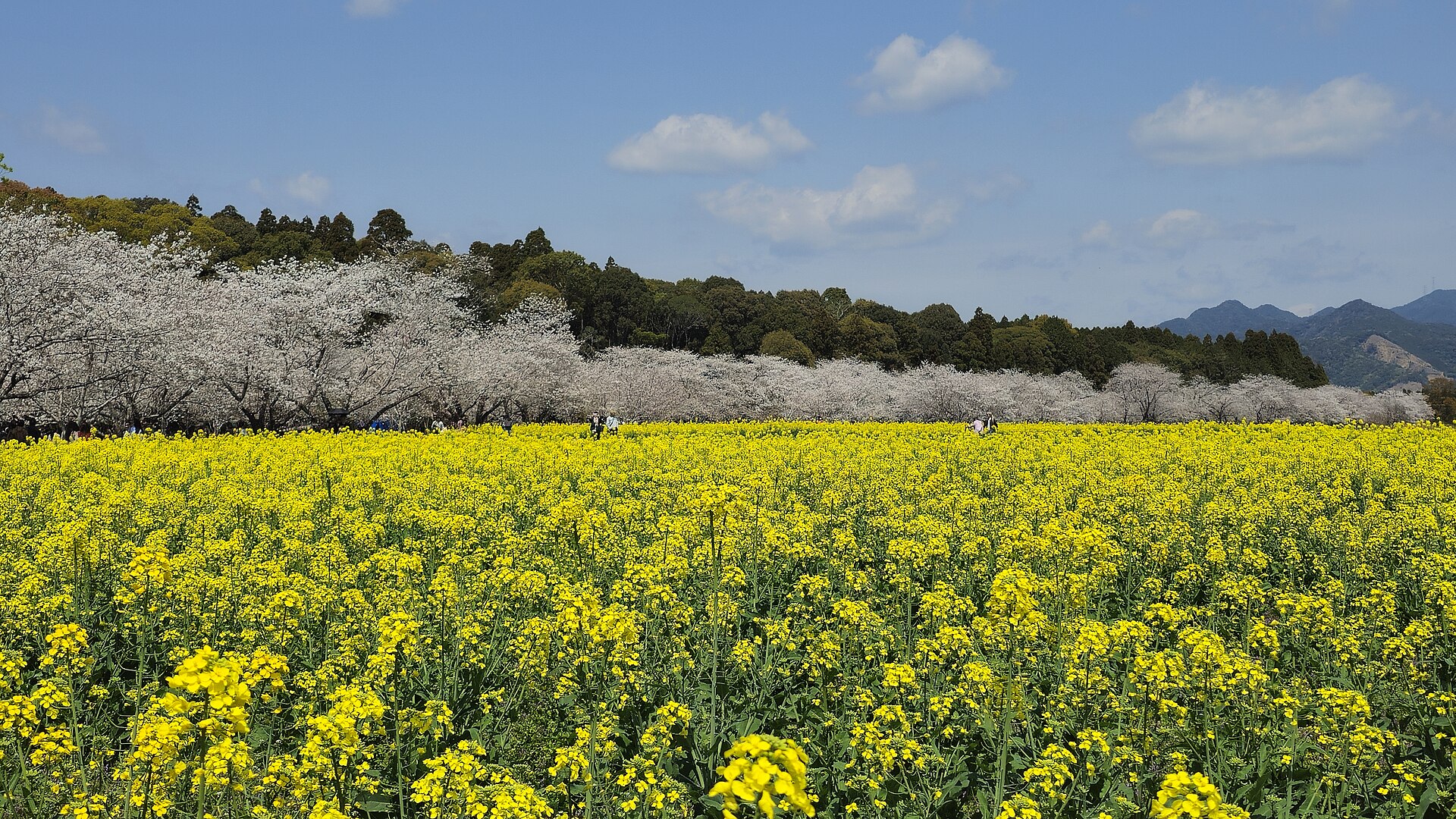
- The flower fields facing the great moundsabout 2,000 cherry trees and 300,000 rape blossoms on the open ground in front of the two fenced tombs
- Saitobaru Archaeological Museumthe prefectural museum on the north side of the plateau, holding the haniwa figures and mirrors dug from these mounds
How to actually get there
- Miyazaki Station → Saito Bus Center (Miyazaki Kotsu bus bound for Saito, about 60 minutes).
- Saito Bus Center → Konohana-kan guidance centre (taxi, northwest and up onto the plateau).
- Konohana-kan → Oni-no-Iwaya → Osahozuka and Mesahozuka → the archaeology museum, on foot across open grass.
- Miyazaki Kotsu bus to Saito Bus Center
- Miyazaki Station or Miyako City →(Miyazaki Kotsu bus bound for Saito, about 60 minutes)→ Saito Bus Center. Departures run roughly every 30 to 60 minutes through the day, so no timetable planning is needed. From the bus centre the last leg is by taxi, which the prefectural tourism site puts at under 10 minutes by car.
- Return from Saito Bus Center
- Ask Konohana-kan or the museum to call a taxi back to the bus centre rather than expecting to find one waiting on the plateau. Buses from Saito Bus Center towards Miyazaki finish in the early evening, so read the posted timetable when you arrive rather than at the end of the day.
About the place
Saitobaru is a plateau on the right bank of the Hitotsuse River, lifted above the plain west of Saito town. Burial mounds are scattered across it — 319 in the official count, from low round tumuli to long keyhole-shaped tombs, spread over a band running about 4.2 kilometres north to south. What makes the place unusual is the emptiness around them. Almost no buildings stand between the mounds, so the ground reads much as it did when the tombs were raised, and one silhouette lines up against the next across open grass. Paths and a road run through the whole field, and the two largest mounds sit fenced at its centre.
How to enjoy it
Cherry and rape blossom come to their peak together between late March and early April, when the fields in front of the great mounds turn white and yellow at once. Outside that window the plateau is at its best in the low light of early morning or in the hour before sunset, when the mounds throw long shadows across the grass. The chambers inside the mounds can only be entered on days the archaeology museum is open, so check that before you plan a whole afternoon here.
Background & history
The mounds were raised between the end of the third century and the seventh. In the winter of 1912 Miyazaki Prefecture began digging here with scholars invited from universities, and the work, which ran until 1917, is recorded as the first full-scale organised excavation of burial mounds in Japan. The site was later designated a national historic site, then raised to special historic site rank in 1952. It is also one of the places named in the Agency for Cultural Affairs Japan Heritage story on the mound landscape of southern Miyazaki.
Before you go
- Cash
- The mound park, its car park and its toilets are free to use, and the prefectural archaeology museum on the same plateau lists free admission. Carry cash for the bus and for the taxi leg, since the park being free does not cover either.
- Before you go
- The grounds, the car park and the toilets stay open every day of the year, but the inside of the mound chambers can only be seen on days the archaeology museum is open. This is wide open ground with little shade and almost no lighting after dark, and fires, barbecues and fireworks are not allowed.
- Another way
- By car it is about 15 minutes from the Saito interchange on the Higashi-Kyushu Expressway, or about an hour from Miyazaki Airport. The plateau roads are wide and the car park is large, which is why most visitors drive.
- After you get off
- Saito Bus Center sits about two kilometres southeast of the mounds, down in the town. Take a taxi from the bus centre up onto the plateau to the Konohana-kan guidance centre, where the mound paths begin.