South Miyazaki · Nichinan CoastNo.997★★★Open in map →
Miyazaki Tree-Ripened Mango
— A netted apple mango, met at a coastal roadside stop
Miyazaki does not cut its mangoes down: each fruit is bagged in a net and left on the branch until it falls of its own weight. A roadside stop on the Nichinan coast sells what the nets catch, out under the palms.
- FromNango Station (JR Nichinan Line)
- 7–12 minTaxi from Nango Station
- Miyazaki Tree-Ripened Mango
Where it is
18 more notes in Miyazaki · open the map →What to look for — in walking order
- The produce halllocal mango on the shelves from April, with hyuganatsu and dekopon filling the colder months
- The takeaway windowthe counter where the mango arrives as soft serve rather than whole fruit
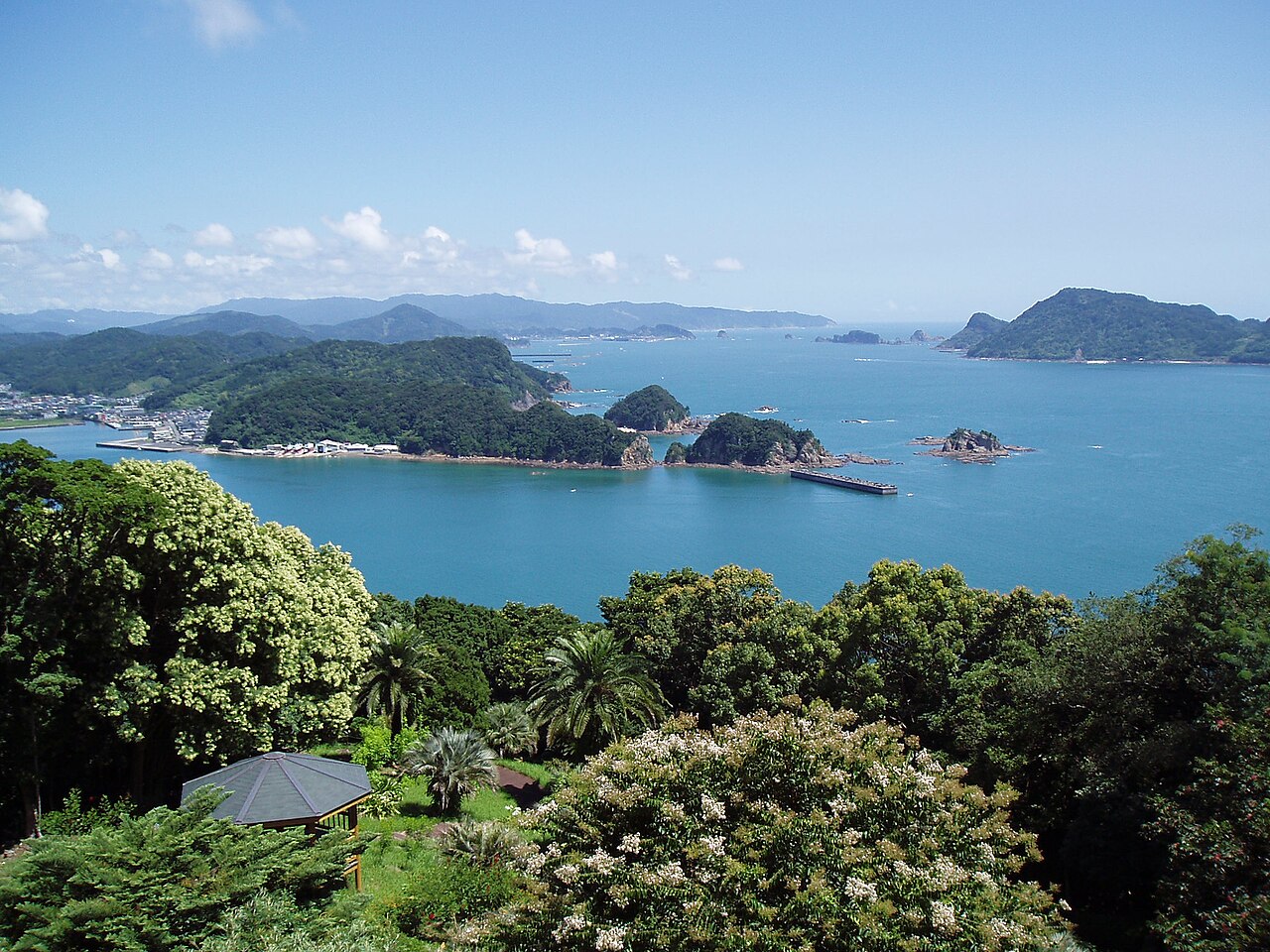
- The deck over the waterwooden terrace facing the Hyuga-nada and the small islands offshore
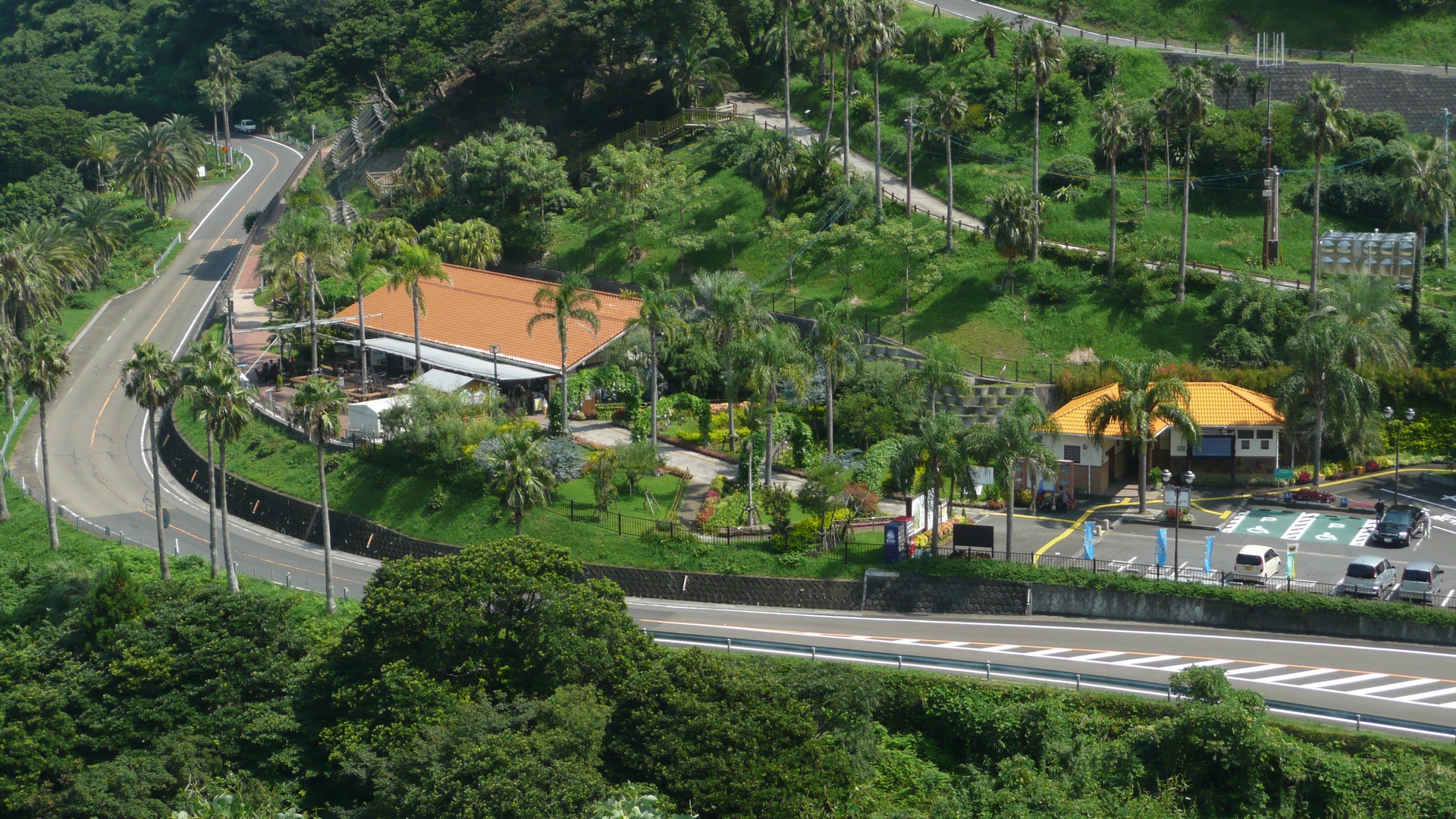
- The hillside gardenpalms and subtropical planting on the slope the stop shares with the prefectural crops station
- The jacaranda groveone of the largest stands in Japan of the purple-flowering tree, up the hill behind
How to actually get there
- Nango Station to the roadside stop on Route 448, by taxi.
- Start in the produce hall, then the takeaway window.
- Out to the deck for the islands, then up the slope through the garden.
- Finish at the jacaranda grove before heading back down to the road.
- From Nango Station
- The Nichinan Line runs south from Minami-Miyazaki along the coast, through Obi and Aburatsu, to Nango. The roadside stop is further south again, out where the coast road climbs above the bay, too far to walk. Take a taxi from the station forecourt.
- Back to Nango Station
- Return north along the same coast road. The Nichinan Line keeps a country timetable rather than a city one, so fix the return train before you settle on the terrace, and count the taxi in when you work backwards.
About the place
The method is the local invention, not the tree. Elsewhere the fruit is cut early and ripened off the branch. Here the crop is thinned until a branch carries one fruit worth keeping, that fruit is wrapped in a net, and nobody touches it again until it drops. What the net catches is already ripe, and ripe fruit does not travel well. Each fruit is then graded on colour, shape, size and sugar, and only fruit clearing fifteen degrees of sugar along with the rest of the standard goes out as Taiyo no Tamago, the top grade. Miyazaki is second in the country for mangoes, behind Okinawa.
How to enjoy it
Whole fruit is a spring and summer matter, with the local crop starting to reach the shelves in April; a winter call is a citrus call instead, and the soft serve runs either way. The jacaranda on the slope opens from late May, which is the one week the garden outranks the shop. Mango belongs to the same family as lacquer and the sap can irritate skin, so use a fork if you have any doubt.
Background & history
The tree is a stranger to this coast. Mango is tropical, and what grows here is Irwin, a red apple type brought in from outside rather than bred locally. The turning point was an accident of observation: growers found that fruit which had fallen on its own tasted better than fruit they had cut, and the prefectural research station worked with the first of them until the net had replaced the shears across the district. The written brand standard came last, which is how a fruit with no local past ended up with a name that can be checked.
Before you go
- Cash
- There is no admission; you pay for what you buy and what you eat. Top-grade fruit is priced as a gift rather than a snack, so decide what you are after before you start looking. Carry cash as well as a card.
- Before you go
- The shop and the kitchen both keep daytime hours and close earlier in the colder half of the year, and the kitchen stops serving well before the shop shuts. There is no fixed weekly closing day, but the stop can close at short notice.
- Another way
- By car it is a stop on Route 448, the coast road through the Nichinan Kaigan quasi-national park, with parking on site. Coming down from Miyazaki, 220 and 448 are the same road as far as the crossing by Nango Station; from there the 448 carries on alone along the shore.
- After you get off
- From Nango Station it is a taxi ride south to the coast road. The buildings sit a level above the carriageway behind a screen of palms, with the car park at the near end and the garden climbing the slope behind them.