Ibaraki · MakabeNo.965★★Open in map →
Makabe Historic Townscape
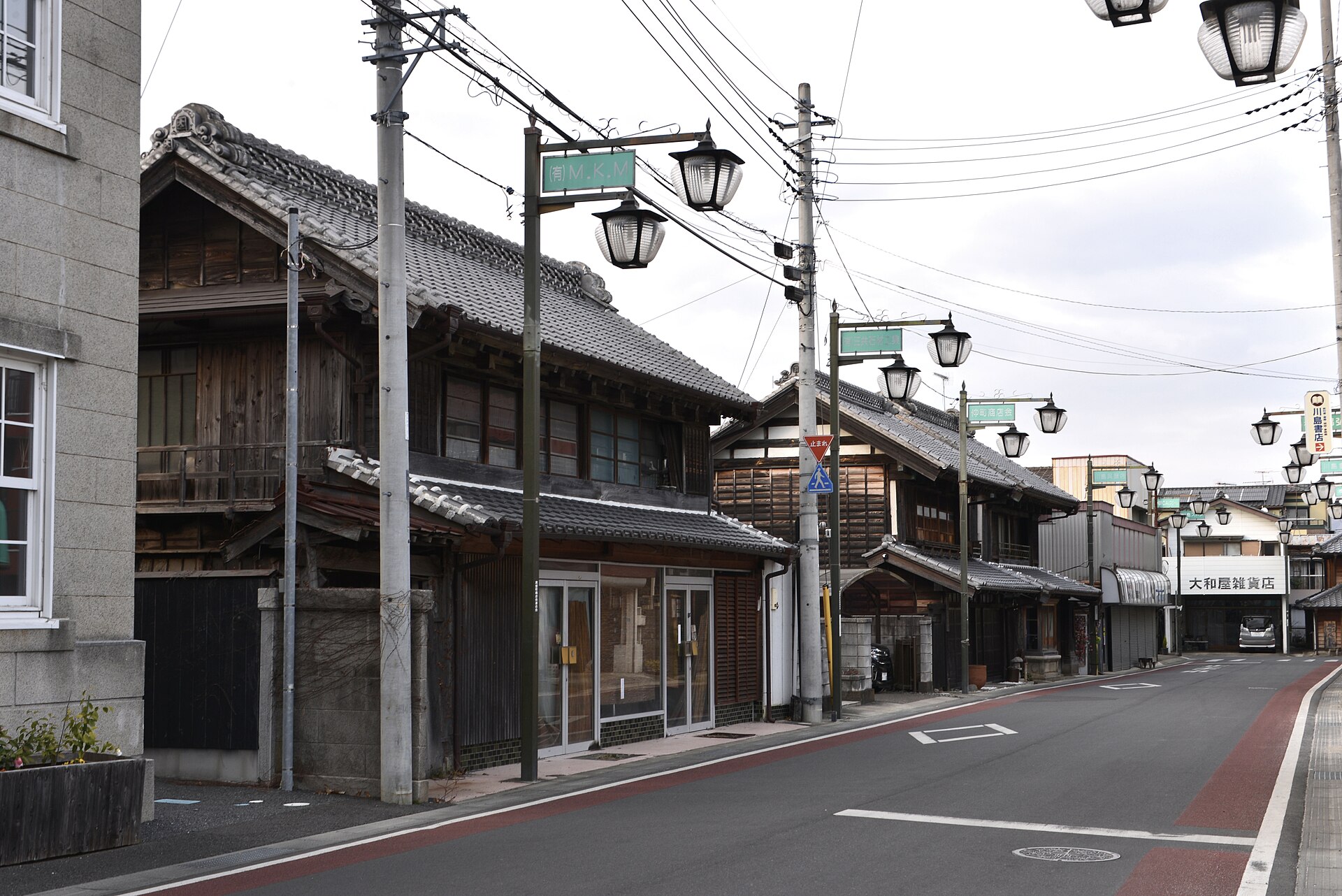
A street grid at the northern foot of Mount Tsukuba, still fronted by the dark-plastered storehouses that Makabe's merchants built through the Edo and Meiji periods. Nationally designated, but lived in rather than roped off.
- FromUeno Stn
- ~2 hr 30 minJR Mito Line, then city bus
- Get off atIwase Station (JR Mito Line)
- From there
- Makabe Historic Townscape
The sweet spot
This is not a hidden place. It carries a national designation and is signposted and mapped. It stays quiet for a practical reason: Makabe has no railway station, the old line through the town is now the Rinrin Road cycling path, and the city bus calls only a few times a day. On ordinary days that keeps foot traffic light, while the doll festival in February fills the same streets.
Where it is
13 more notes in Ibaraki · open the map →What to look for — in walking order
- Makabe Denshokanthe district's public hall, library and history museum in one complex, built to sit within the townscape
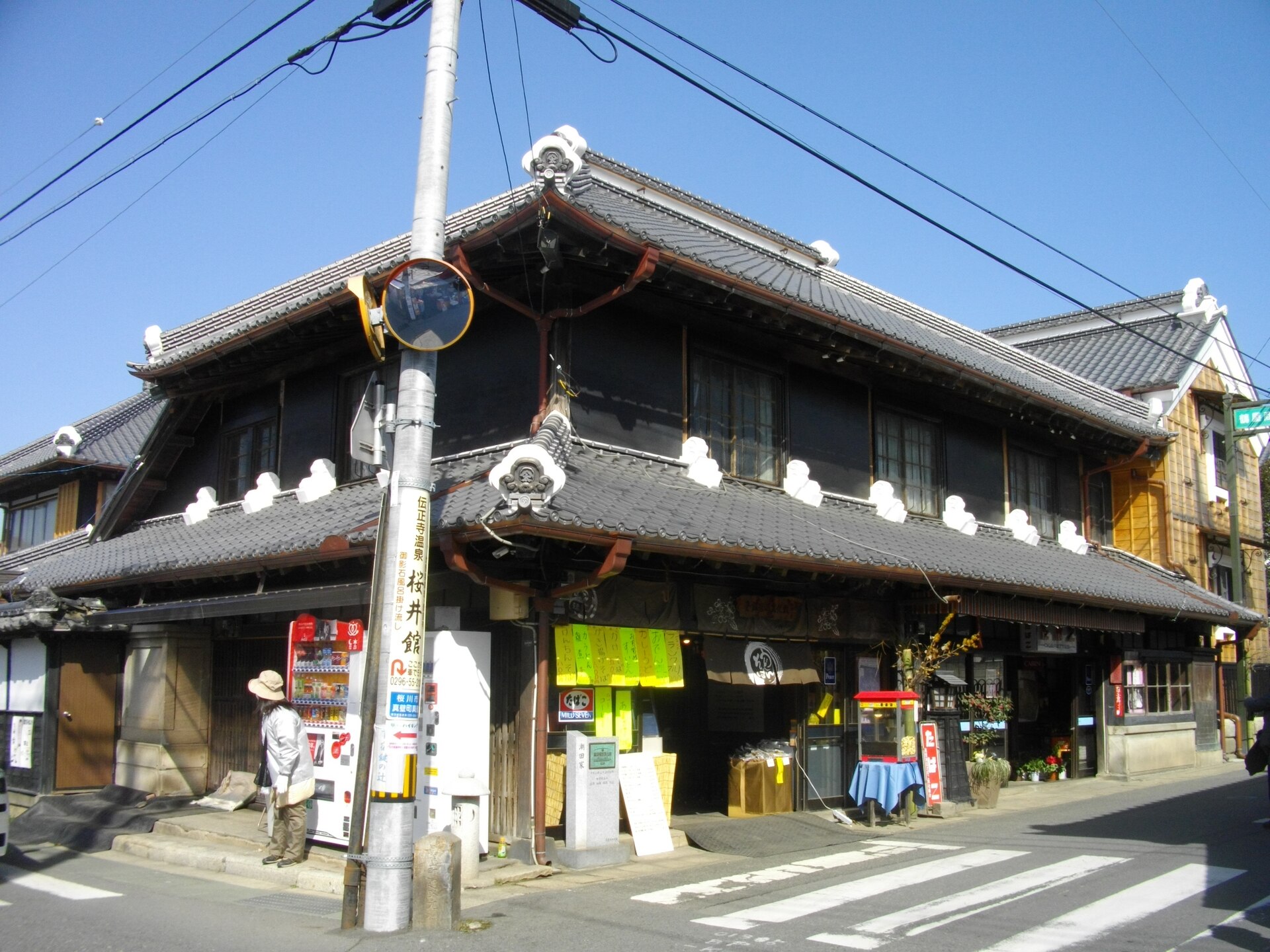
- Isaya Ryokana Meiji-period town house with its earthen storehouse, on the old through street
- Ushioda Housethe wide shopfront of the former draper Tsuruya, in heavy dark plaster
- Former Makabe Post Officea modern building long treated as the landmark of the street
How to actually get there
- Ueno Station → Oyama Station (JR Utsunomiya Line), then Oyama → Iwase Station (JR Mito Line).
- Iwase Station → Shimojuku bus stop (Sakuragawa city bus; only a few runs a day).
- From Shimojuku walk east to Makabe Denshokan, then work back west along the old street past Isaya Ryokan and the Ushioda House.
- Return to the Shimojuku stop for the bus back to Iwase Station.
- Ueno to Oyama, the Mito Line to Iwase, then the city bus
- Ueno Station →(JR Utsunomiya Line)→ Oyama Station →(JR Mito Line)→ Iwase Station →(Sakuragawa city bus)→ Shimojuku stop. Sakuragawa City's tourism association puts the whole trip at about two and a half hours. The bus leg is the part to plan around: official sources give it as anywhere from about 20 to about 40 minutes, because some runs take a longer loop through the north of the city.
- Back from Shimojuku via Iwase Station
- Take the city bus from Shimojuku back to Iwase Station and pick up the JR Mito Line for Oyama. Departures thin out through the evening, and the weekend timetable differs from the weekday one. Read the board at the stop when you arrive rather than assuming a service will be there later.
About the place
Makabe lies at the northern foot of Mount Tsukuba, in the city of Sakuragawa. The preservation district covers about 17.6 hectares of the old grid, and more than three hundred storehouses, warehouses and gates stand in and around it. Most front the street directly, in thick dark plaster under heavy tiled eaves. On the wider plots a side storehouse and a gabled gate sit beside the main house behind a wall, an arrangement particular to northern Kanto. The buildings remain in ordinary use, so the streets read as a working town rather than a preserved set.
How to enjoy it
From 4 February to 3 March each year, houses and shops across the town set out their hina dolls for the Makabe Doll Festival, and streets that are quiet the rest of the year fill with people. Outside that window the same frontages can be taken one by one, which is the pleasure of the place. Either way the bus timetable sets the shape of the day, so read the return departure at the stop before you start walking.
Background & history
The town grew out of the castle settlement of the medieval Makabe clan, and the grid that survives was completed in the early Edo period under the Asano lords. Makabe then worked as a goson, a market town serving the surrounding countryside, and shipped cotton north toward Tohoku. Fire destroyed much of it in 1837, after which merchants rebuilt in fire-resistant plaster and tile, which is why so many of the storehouses belong to one stretch of years. The district was named a national Important Preservation District in 2010.
Before you go
- Cash
- Walking the streets costs nothing. The city bus charges a single flat fare and takes nationwide IC cards such as Suica and PASMO as well as cash. Parking in the town is normally free, but a charge applies during the doll festival and the July Gion festival.
- Before you go
- The buildings are private homes and businesses, so look from the street unless a place is signed as open. The route is flat and paved. Bus timetables differ between weekdays, weekends and holidays, and one branch of the route runs at weekends and on holidays only.
- Another way
- From Tsukuba Station on the Tsukuba Express, take the Tsukuba city shuttle bus to the Tsukuba-san-guchi stop and change there to the Sakuragawa city bus for Makabe. Paying cash at that transfer earns a discount on the second fare.
- After you get off
- Iwase Station is the rail gateway and the city bus leaves from in front of it. Get off at Shimojuku, which stands on the preserved street itself, then walk east a couple of minutes to reach Makabe Denshokan.