North Okinawa · OgimiNo.813★★Open in map →
Kijoka Bashofu Hall
— Banana-fibre cloth woven in a northern Okinawan village
Bashofu, cloth spun from banana fibre, survives in one village in northern Okinawa. The municipal hall at Kijoka shows the whole run of the work, from the fibre through to the loom, in the place where it is still done.
- FromNago Bus Terminal
- ~3 min from the stopRoute 58 bus, then 3 min on foot
- Get off atDaiichi-Kijoka (Hentona line, route 67)
- On foot
- Kijoka Bashofu Hall
The sweet spot
This is a working village rather than a quiet one, and the hall is small enough that a coach can fill it. What makes it worth the trip north is that the craft is not being demonstrated for visitors here — it is being carried on, and you are watching the ordinary version of it.
Where it is
41 more notes in Okinawa · open the map →What to look for — in walking order
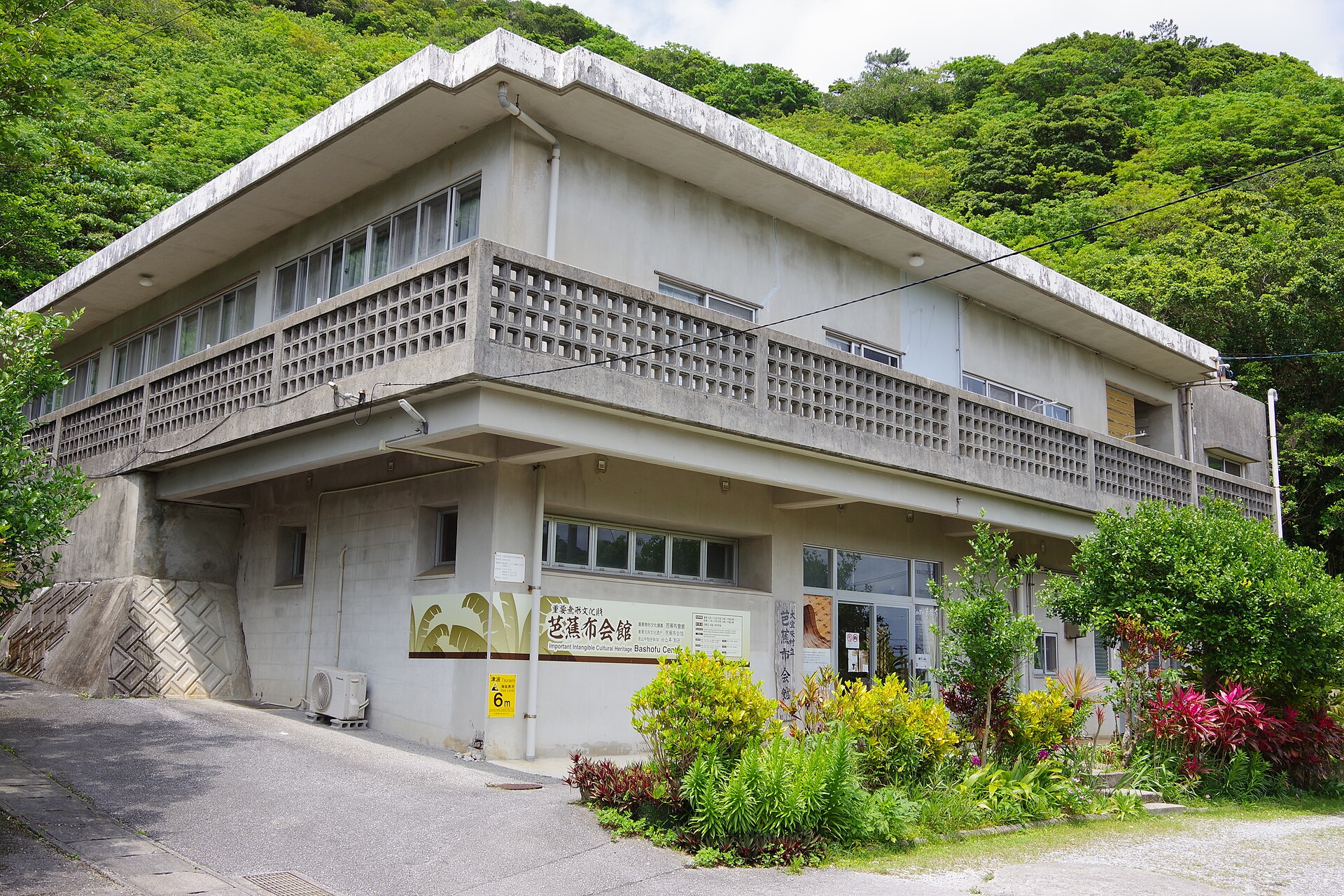
- The building and its plaquea low concrete hall with the cultural-property sign across its front wall
- The ground-floor exhibition roomfinished cloth, dye samples and the bamboo tongs used to strip the fibre
- The workroom abovethe looms and the process film, which is how the stages fit together
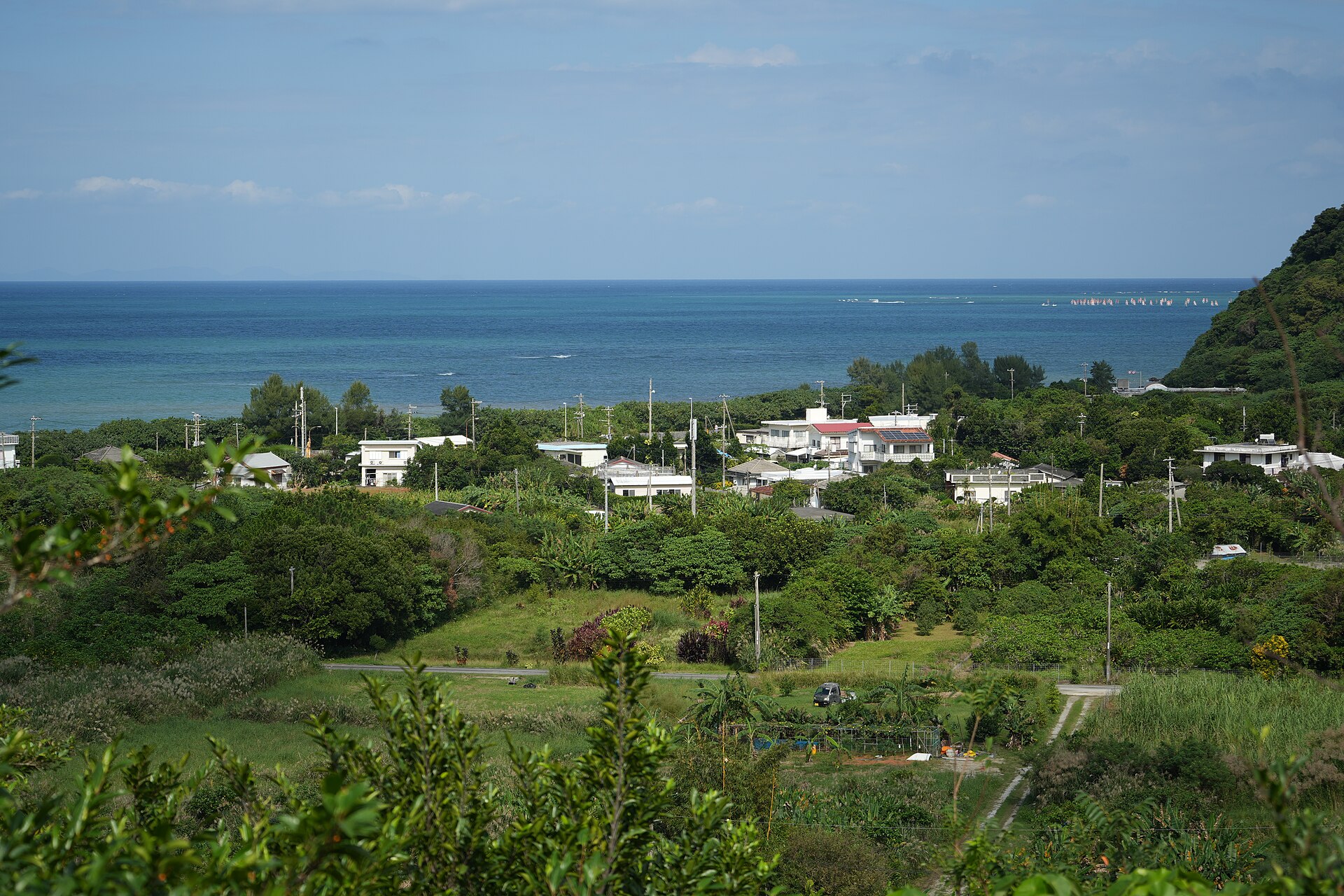
- The village and the sealanes of banana groves below the hall, with the East China Sea beyond the roofs
How to actually get there
- Nago Bus Terminal → Daiichi-Kijoka (Route 58 bus, Hentona line route 67).
- Cross to the inland side and walk up the lane away from the sea.
- Start with the process film, then the exhibition room, then the looms.
- Walk back down to Route 58 for the southbound bus.
- Route 58 bus north from Nago Bus Terminal
- Take a bus north from Nago Bus Terminal along Route 58 up the west coast and get off at Daiichi-Kijoka, a stop on the Hentona line, route 67. The hall is a short walk inland from there. Services are infrequent this far north, so plan around the timetable rather than the opening hours.
- Return towards Nago
- The southbound stop is on the other side of Route 58. Buses towards Nago run at long intervals and the last one is early by city standards, so check the posted time when you arrive rather than when you leave.
About the place
Bashofu is woven from the fibre of the ito-basho, a relative of the banana grown deliberately in Kijoka because wild plants give fibre too stiff to use. Getting from the plant to a finished bolt takes twenty-three separate stages, and weaving is the last and smallest of them — the society that keeps the craft puts the loom at about one per cent of the work. Everything before it is field work, boiling, scraping, joining and dyeing. The hall stands on the inland side of the village, a two-storey concrete building with a screen of pierced blocks along its upper floor, and the hills rise straight behind it.
How to enjoy it
Opening is from ten in the morning, until 17:00 from November to March and 17:30 from April to October, and entry is free. Watch the process film before looking at the finished cloth — the fibre makes no sense otherwise. Sunday is the one day the hall is shut, which catches out people who plan the north for a weekend.
Background & history
Under the Ryukyu Kingdom bashofu was worn at court and sent as tribute to China and to the Tokugawa house, while a coarser grade was everyday clothing across the islands, valued because it does not cling in the heat. The craft came close to disappearing after the Second World War and was rebuilt in Kijoka around the weaver Toshiko Taira, who had learned textile work on the mainland in the last year of the war. In 1974 the state designated Kijoka no Bashofu an Important Intangible Cultural Property, with the village preservation society recognised as the holder of the technique.
Before you go
- Cash
- Entry is free. There is parking for fifteen cars, charged. Luggage can be left at the desk at no cost, and the staff can handle enquiries in English.
- Before you go
- Closed on Sundays, over the old-calendar Bon period and at new year. The ground-floor exhibition room admits pets; the workroom upstairs does not. Storms on this coast can close the hall at short notice.
- Another way
- By car it is about 80 minutes from the Kyoda interchange on the Okinawa Expressway, or roughly two and a half hours from Naha Airport, all of it up Route 58.
- After you get off
- Daiichi-Kijoka sits on Route 58 at the edge of the village. Turn inland, away from the sea, and follow the lane uphill; the hall is on the right after a few minutes, below the wooded slope.