North Okinawa · HigashiNo.858★★Open in map →
Gesashi Bay Mangrove Forest
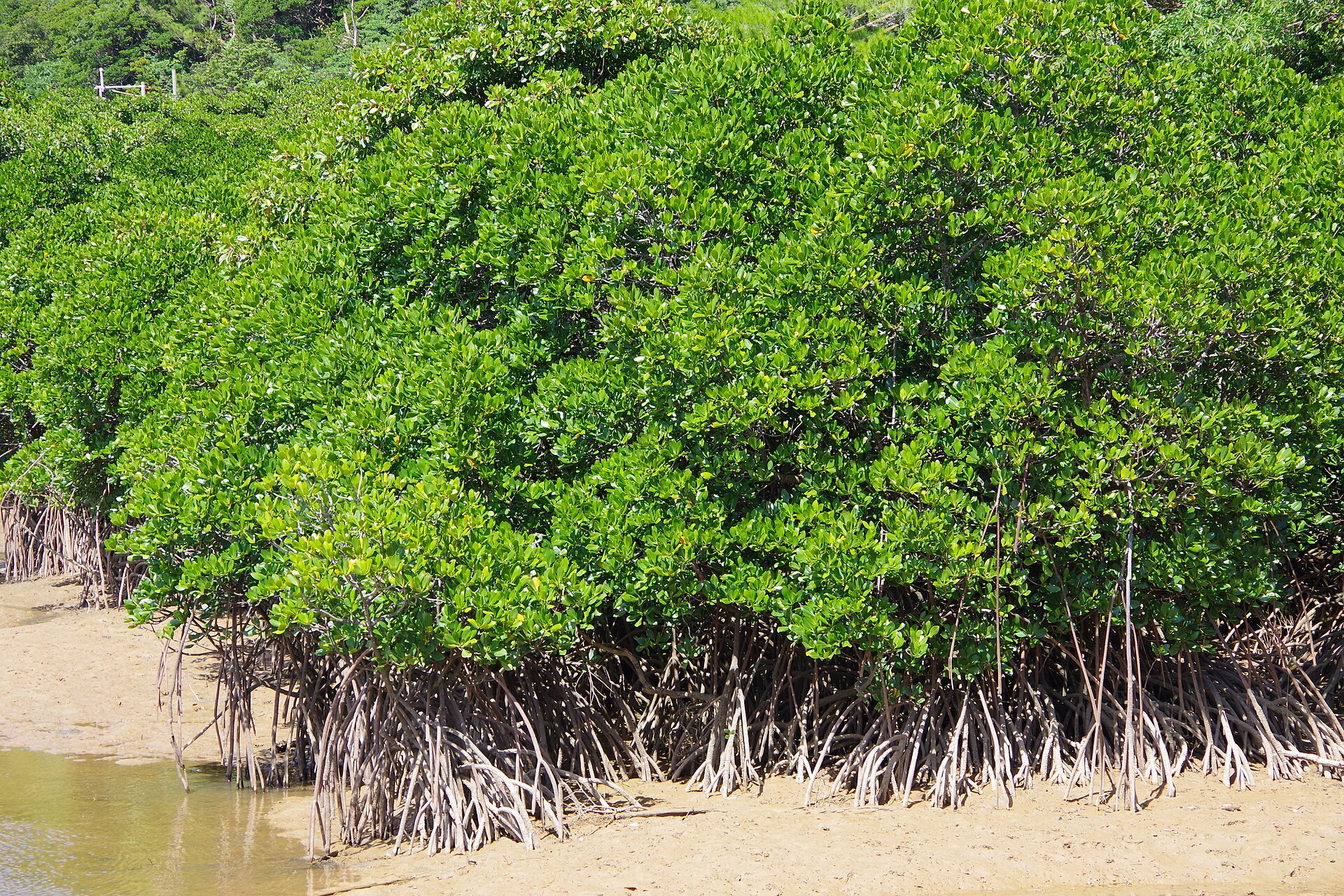
On Okinawa's Pacific coast the Gesashi River runs out through a stand of mangrove designated a national natural monument. A village boardwalk takes you in among the roots on foot, which on the main island is rare.
- FromKyoda IC, Okinawa Expressway
- ~1 hr from Kyoda ICCar, or a free village bus
- Get off atHigashi-son Fureai Hirugi Koen-mae (Higashi community bus)
- On foot
- Gesashi Bay Mangrove Forest
The sweet spot
This is a signposted village park with a car park and an office, not a secret. What keeps it quiet is that most visitors to northern Okinawa drive up the west coast to Churaumi and never cross to the Pacific side. The other filter is the tide. At high water the mud and its animals are under the surface and the forest reads as a plain green wall, so half of what people come for is simply not there.
Where it is
41 more notes in Okinawa · open the map →What to look for — in walking order
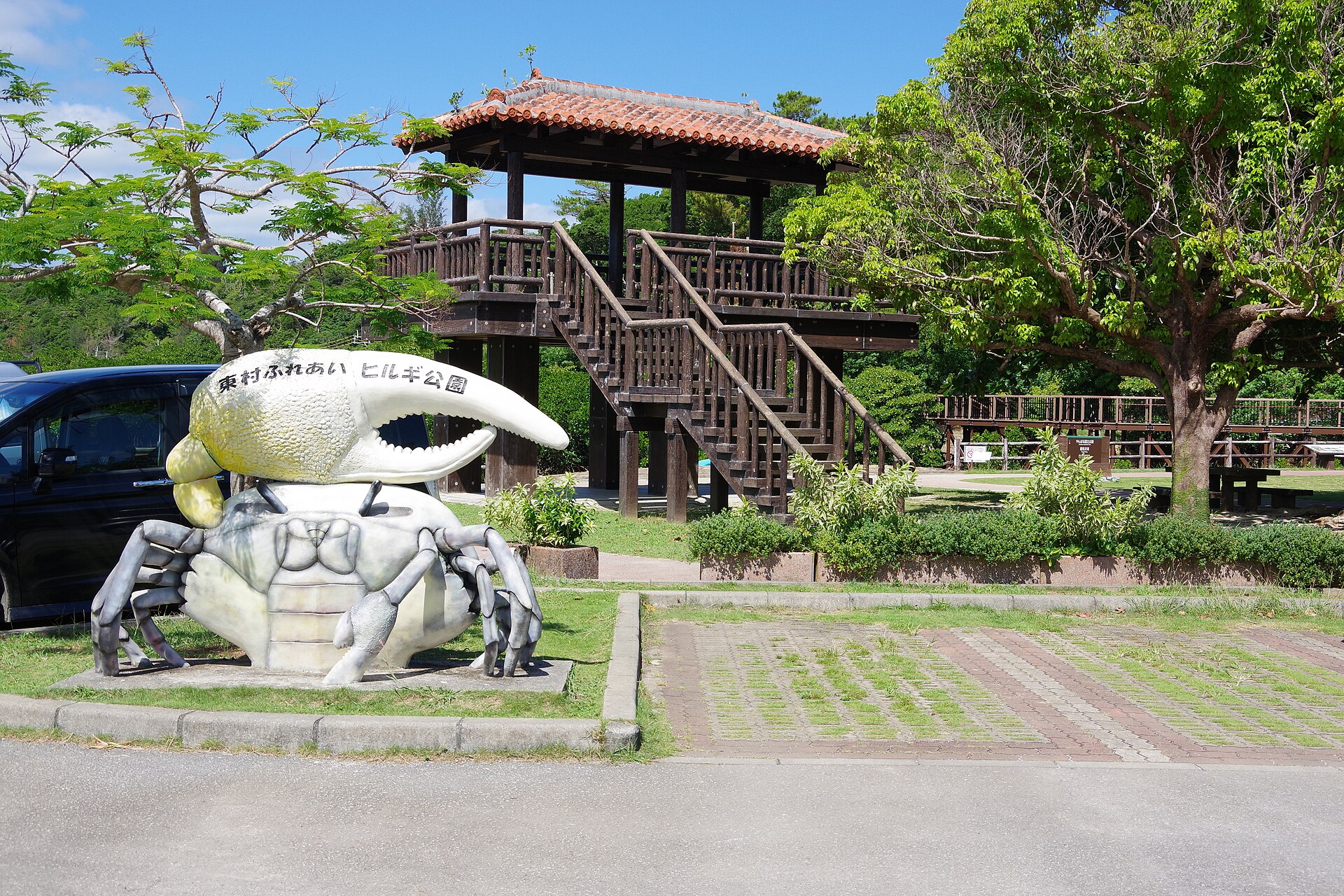
- Higashi-son Fureai Hirugi Parkthe village park at the road end, holding the car park, the office and the start of the walkway
- The raised boardwalka plank walkway carried out over the tidal mud into the stand
- The observation decka platform at the far end, level with the canopy over the river
- The flat beneath the rootsmud exposed at low water, pocked with burrows and breathing roots
- Gesashi River mouthopen water beyond the trees, where the guided canoes put in
How to actually get there
- Kyoda IC → cross to the Pacific coast → north into Higashi Village.
- Turn in at the signed entrance to Higashi-son Fureai Hirugi Park and pay at the car park.
- Walk past the office to the head of the boardwalk.
- Follow the walkway out to the observation deck and back.
- Drive from Kyoda IC across to the Pacific side
- There is no direct service from Naha or Nago to this coast, and the practical approach is a rental car: leave the expressway at Kyoda, cross the narrow neck of the island, and follow the Pacific shore north into Higashi. From Nago the road distance is twenty-six kilometres. The last stretch is two lanes through forest and is unlit after dark.
- Return towards Nago and the expressway
- The same road takes you back and it is the only sensible way out; there is no coastal shortcut south. Fuel and shops thin out north of the park, so fill the tank in Nago rather than assuming you will pass a station. If you came on the village bus, the return runs are few and finish early — read the posted timetable before you walk into the forest.
About the place
Mangrove is not one tree but a habit of growth: salt-tolerant species that root in tidal mud where nothing else will stand. The stand at Gesashi covers about ten hectares along the river above its mouth, which makes it one of the larger ones left on Okinawa's main island. Three species grow here — mehirugi, ohirugi and yaeyamahirugi — and the last of them reaches the northern edge of its range in this bay. The mud between the roots matters as much as the trees; whenever the tide is out it is worked over by fiddler crabs, soldier crabs and mudskippers.
How to enjoy it
Time the visit to a falling or low tide — the tide table decides whether you see mud and animals or only a water surface. The boardwalk is open through daylight and takes a quarter of an hour at an unhurried pace, so it slots into a longer drive rather than filling a day. Guided canoe trips go out onto the river itself and are booked separately.
Background & history
Mangrove is a tropical habit of growth and Okinawa sits near the northern edge of where it still works, so on this coast the forest survives only where a river keeps the water brackish and the mud deep. That is why the Gesashi stand was singled out for protection and carries a national natural monument designation rather than being treated as ordinary coastal scrub. The village built the park and the walkway around it afterwards, on the principle that a protected forest is better watched from a raised deck than trodden through. The bay now lies inside Yambaru National Park.
Before you go
- Cash
- The walkway itself is free to enter; the charge is for parking, posted at 500 yen a day for a car. The office also asks visitors for a small conservation donation. Canoe tours are booked and paid for separately, and cash is safer than a card this far north.
- Before you go
- The boardwalk is open through daylight and closes at dark. The office keeps shorter hours than the walkway, so arriving late means no staff rather than no access. Mosquitoes are constant in the warm months. After heavy rain the mud softens and the river runs brown, which spoils the water but not the trees.
- Another way
- Higashi Village runs a free community bus on the Takae–Genka line, with a stop named for the park, reached by connecting at Genka from a Nago Bus Terminal service. It is genuinely free and genuinely infrequent, so it works only if the day is built around its timetable.
- After you get off
- The stop is on Route 331 at the park frontage. Walk in past the car park to the office, and the boardwalk starts behind it, dropping towards the river.