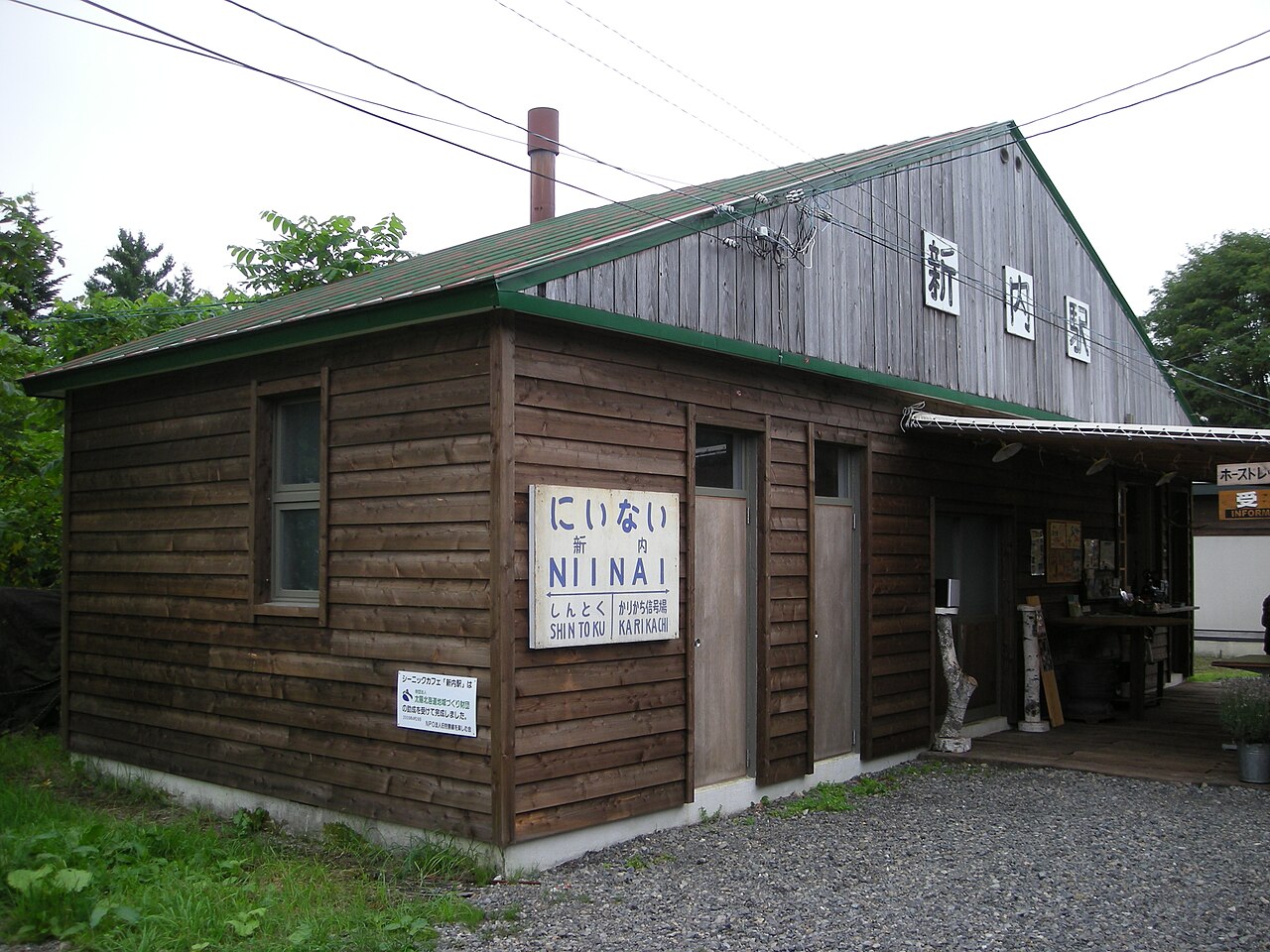
Hokkaido · Tokachi ShintokuNo.870★Open in map →
Former Karikachi Line Museum
The old railway over the Karikachi pass was abandoned when a tunnel route took its traffic, and the station at Niinai never reopened. Volunteers have turned the sleeping cars left in the yard into a museum, with the tunnels and embankments of the line surviving in the hills around it.
- FromShintoku Station (JR Nemuro and Sekisho Lines)
- ~20 min by carCar or taxi from Shintoku Stn
- Former Karikachi Line Museum
The sweet spot
Preserved railways in Japan usually sit beside a working line or inside a city park. This one sits where it always was, ten kilometres out of town, on a road that carries almost nobody. It is run by a volunteer association rather than a municipal museum service, so opening depends on the season and on people, and the winter here is long. Ordinary weekday quiet is not a selling point — it is simply what a closed station in Tokachi is like.
Where it is
102 more notes in Hokkaido · open the map →What to look for — in walking order
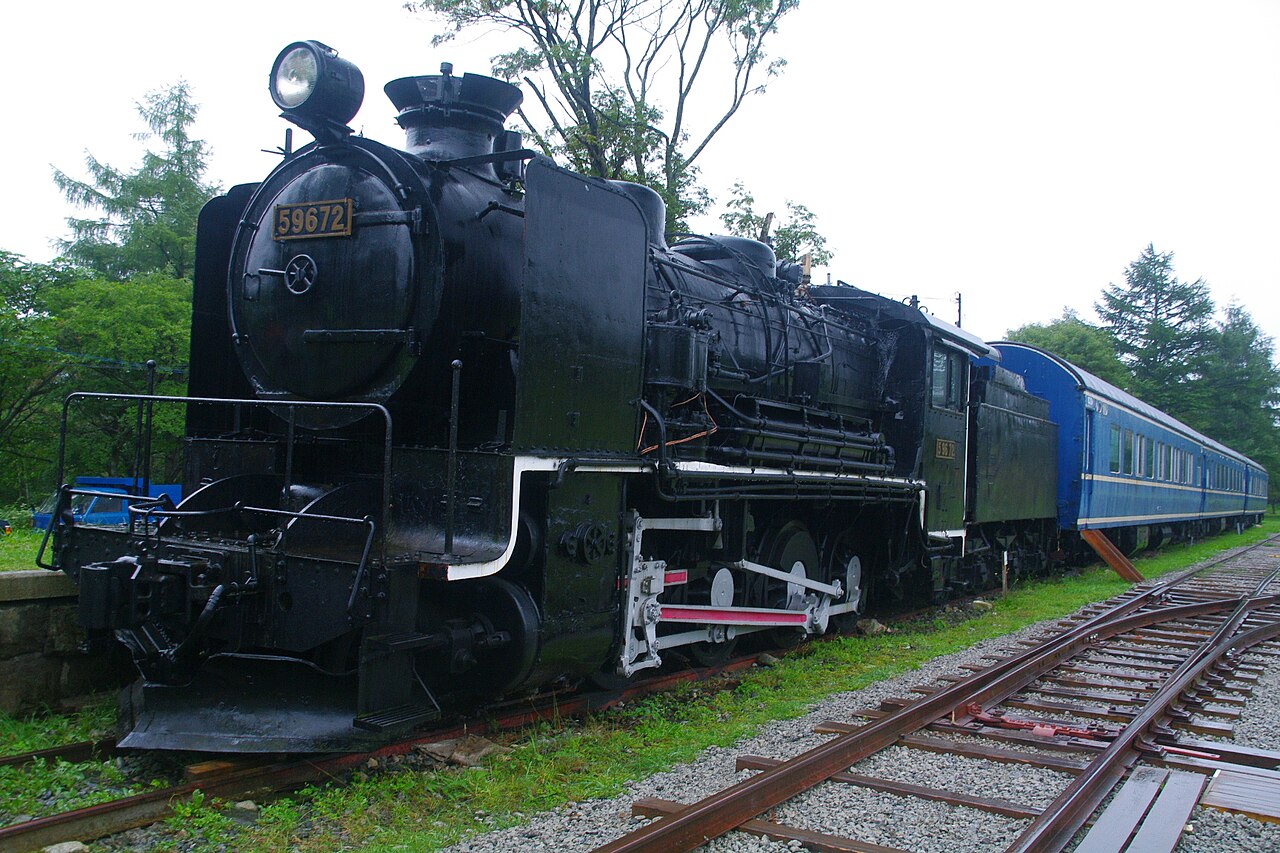
- Steam locomotive 59672a 9600-class freight engine of the kind that worked the pass, kept in the yard
- Narone 21 and Narone 22two first-class sleeping cars from the 20-series night expresses, berths still made up
- Nahane 20the third carriage, fitted out as the museum room with the line's records and a model layout
- The Niinai platform and yardthe station outline still legible under the grass, with track kept for the vehicles
- The old alignment beyond the yardembankment, great curve and tunnels running on into the hills, designated by the town
How to actually get there
- Sapporo or Obihiro → Shintoku Station on the Ozora or Tokachi limited express.
- Shintoku Station → the Niinai station site by taxi or car, north on Route 38.
- Start at the locomotive and the platform, then go inside the carriages for the museum.
- Walk out from the yard onto the old alignment before heading back to Shintoku.
- By car or taxi from Shintoku Station
- Shintoku is a limited-express stop, served by the Ozora and Tokachi trains from Sapporo and Obihiro, which makes it the practical way in. From the station the site lies north up the valley, twenty minutes or so by road, and there is no reliable service bus. A taxi from the station rank is the fallback; ask the driver to wait if you are on a tight connection.
- Back to Shintoku for the express
- The return is the same road. Limited expresses through Shintoku are spread through the day rather than frequent, so fix the train you intend to catch before you leave the station, and give the taxi a time to collect you. Nothing at the site can arrange transport for you.
About the place
Niinai station stands in open country north of Shintoku, on the alignment that used to carry trains up to the Karikachi pass. The pass is the watershed between Tokachi and the interior, and the old line climbed it on the surface, in long curves and on embankments, rather than boring through. That is why the view from the carriage was famous and why the route was eventually abandoned. What is left is a station with no trains: a platform, a yard, a steam locomotive and three sleeping cars from the night expresses, all held on a stub of track. The museum is inside the carriages.
How to enjoy it
Allow an hour and a half at the site, more if you intend to walk any distance along the old alignment. Come in the green half of the year and check with the volunteer group before travelling, because the site is not staffed to a published timetable. If you are working around limited-express times, the practical shape of the day is a late-morning arrival and an early-afternoon train back.
Background & history
The route over the pass was the original way between Tokachi and the rest of Hokkaido, and it climbed on the surface because tunnelling on that scale was out of reach when it was built. The carriage view it gave was talked about nationally. In 1966 a new line through a long tunnel took the traffic and the old alignment was closed the same autumn, taking Niinai station with it. The structures stayed. Shintoku Town has since designated the surviving railway remains as cultural property, together with the luminous moss growing inside the Niinai tunnel — the designated list runs to bridges, the great curve, the Niinai embankment and a set of stone arch culverts.
Before you go
- Cash
- The site is run by volunteers rather than a municipal museum. Any charge or donation is collected on the spot in cash, and there is no ticket machine. Bring what you need to eat and drink, because the nearest shops are back in Shintoku.
- Before you go
- Opening depends on the volunteer group and on the season, and Tokachi winters are long and heavy with snow, so treat the cold months as closed unless you have checked. The tunnels and embankments of the old line are unlit and unstaffed, and the moss inside the tunnel is a protected specimen, not an exhibit to touch.
- Another way
- From the Obihiro side, Shintoku is reached on the same limited expresses, so the approach is identical whichever direction you arrive from. Drivers coming over the pass on Route 38 pass the site's own turning.
- After you get off
- Shintoku Station is where the public transport ends. From the station forecourt it is a road journey north to the old station yard, which sits just off Route 38; the carriages and the locomotive are visible from the approach, standing on their own length of track.