Shimane · IzumoNo.809★★★Open in map →
Izumo Taisha Grand Shrine
Japan's shrine of marriage and human ties, on the Shimane coast, where worship follows a four-clap rule that almost no other shrine uses. The buildings are arranged as a route, and the route is the reading.
- FromIzumo-shi Station
- ~25 minIchibata bus or train
- Get off atIzumo-taisha-mae Station (Ichibata Taisha Line)
- On foot
- Izumo Taisha Grand Shrine
Where it is
14 more notes in Shimane · open the map →What to look for — in walking order
- Bronze Toriithe bronze gate that marks the start of the inner precinct
- Pine Approachan avenue of old pines along the way in
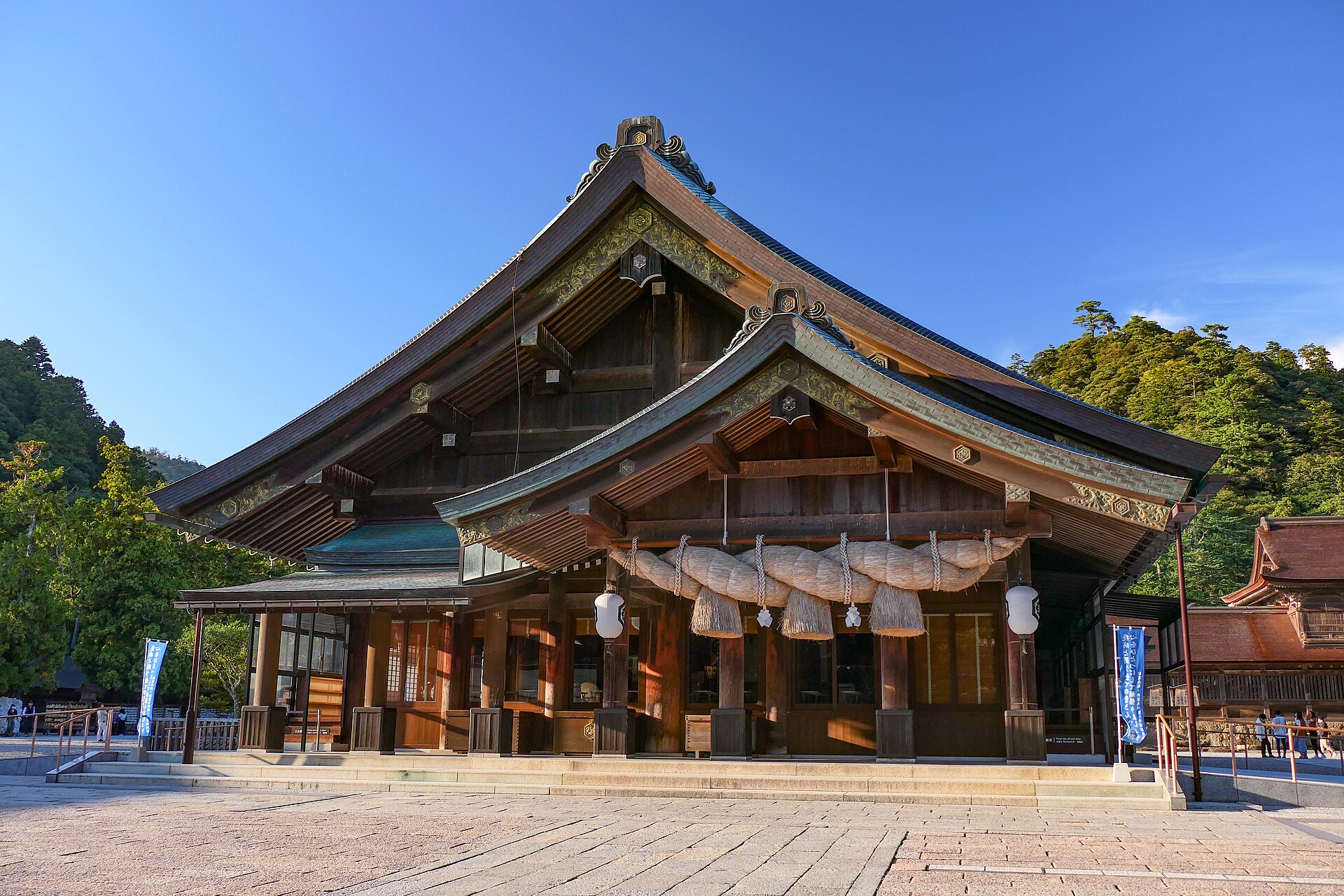
- Haiden Worship Hallthe hall where visitors actually pray, short of the sanctuary
- Yatsuashi-mon Gatethe fence gate where public worship of the main hall stops
- Soga-no-yashirosmall hall behind the main sanctuary, reached at the end of the loop
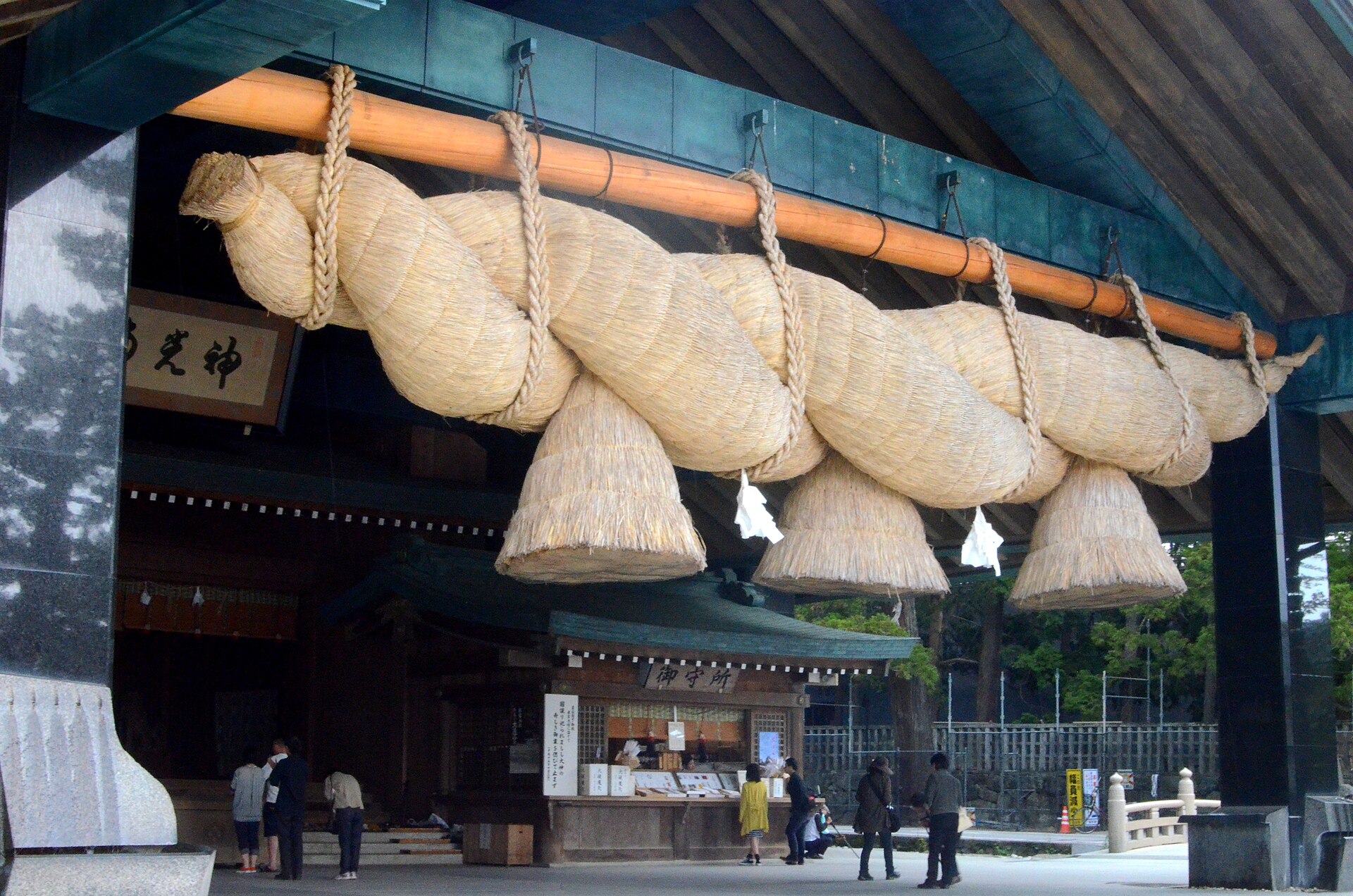
- Kagura Hallstraw rope 13.6 metres long, weighing 5.2 tonnes
How to actually get there
- Take the Ichibata Railway from Dentetsu-Izumoshi Station, next to JR Izumo-shi Station.
- Change at Kawato Station onto the Taisha Line and ride to the terminus.
- Walk up the approach street from Izumo-taisha-mae Station to the entrance.
- Enter at the bronze gate and follow the precinct in order to the halls behind.
- Izumo-shi Station → Izumo-taisha-mae
- Ichibata Railway from Dentetsu-Izumoshi, changing at Kawato onto the Taisha Line. Ichibata Bus also runs from the JR station forecourt straight to the shrine, about 25 minutes.
- Last services are early
- Both the local railway and the buses thin out in the evening, so fix your return before you start walking the precinct. Izumo-shi and Matsue are the two places to aim back at.
About the place
The main hall stands about 24 metres tall and is a National Treasure. It is not the building most visitors face. Public worship stops at the Yatsuashi-mon, the gate set in the inner fence, and the hall you actually stand before is the haiden in front of it. Enshrined inside is Okuninushi, read here as the deity of marriage and of human ties rather than of exams or commerce. The precinct is laid out as a sequence, from the bronze gate through the worship hall to the small halls behind. Knowing that order before you arrive changes what the visit is.
How to enjoy it
Bow twice, clap four times, bow once. Izumo uses four claps where nearly every other shrine uses two. The precinct was open from 6:00 to 19:00 at the time of checking, so an early arrival buys the pine approach before the coaches reach it.
Background & history
The present main hall was built in 1744 and has been carried through every rebuilding cycle since. Tradition describes far taller halls before it, which is why height stayed part of the shrine's reputation. In the tenth month of the old lunar calendar, most of Japan calls the month Kannazuki, the month without gods; Izumo calls the same month the month with gods, because the deities of the country are said to gather here. The Kamiari-sai rites run from the 11th to the 17th of that lunar month.
Before you go
- Cash
- The shrine grounds are free to enter. Carry cash for charms and goshuin, which are counter transactions.
- Before you go
- The precinct is open air throughout, and wind off the Sea of Japan bites in winter. Festival days can restrict parts of it.
- Another way
- Ichibata Bus from JR Izumo-shi Station runs direct and sets down closer to the entrance than the railway does.
- After you get off
- From Izumo-taisha-mae Station it is about a 10-minute walk to the shrine entrance, straight up the approach street.