Hyogo · Awaji IslandNo.1151★★Open in map →
Izanagi Jingu Shrine
The first-ranked shrine of the old province of Awaji, on the island the Kojiki names as the first part of Japan to be made. The grounds are free and open through the day, and the highway bus from Kobe stops minutes from the torii.
- FromKobe-Sannomiya
- ~1 hr 15 minHighway bus, no reservation
- Get off atIzanagi Jingu-mae stop (Sannomiya-Nishiura highway bus)
- On foot
- Izanagi Jingu Shrine
The sweet spot
This is a well-known shrine rather than a hidden one — the province's first shrine, and part of Awaji's Japan Heritage story. What keeps it unhurried is the island itself. No train line runs to it, and most visitors drive straight past on the expressway toward the whirlpools in the south. Arriving on the local highway bus leaves you at the foot of the approach with time to walk it slowly.
Where it is
31 more notes in Hyogo · open the map →What to look for — in walking order
- The great toriithe outer gate on the road, where the straight approach into the precinct begins
- Hojo no Shinchi ponda pond beside the approach, held to be what remains of the moat around the burial ground
- Hi no Michishirube monumenta sundial-like stone chart of the lines that run from this shrine to Ise and other famous shrines
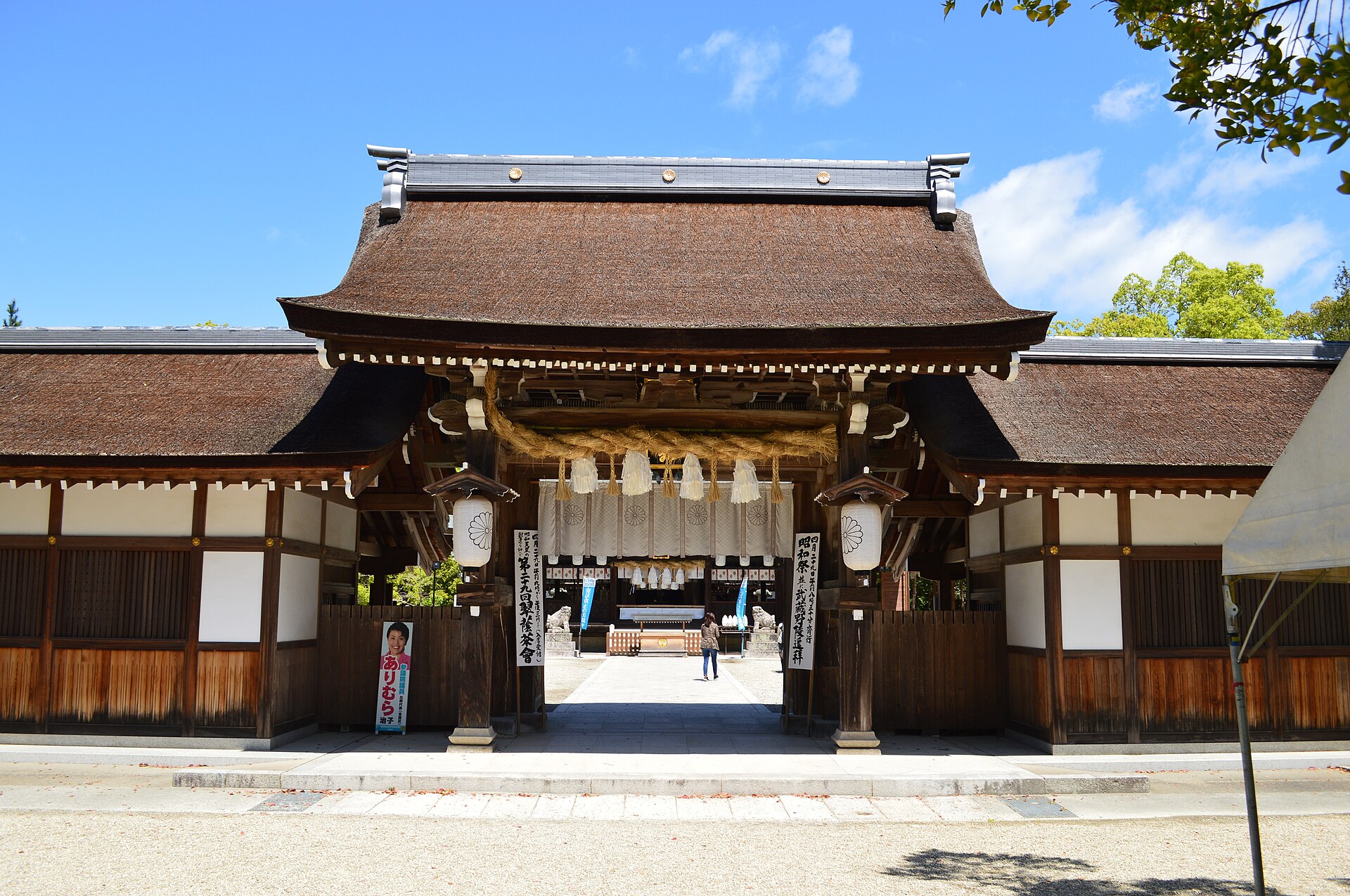
- Omote-shinmon gatethe thatched front gate that marks the edge of the inner ground
- Meoto Okusu camphortwo camphor trunks grown into one, around 900 years old, a prefectural natural monument with a small shrine at its foot
How to actually get there
- Kobe-Sannomiya bus terminal → Izanagi Jingu-mae (Sannomiya-Nishiura highway bus, about 70 min, no reservation).
- Izanagi Jingu-mae → the great torii (walk a few minutes north along the road).
- Great torii → thatched gate → worship hall (the approach runs straight; the twin camphor stands off to the side).
- Sannomiya-Nishiura highway bus, direct from Kobe
- Kobe-Sannomiya bus terminal →(Awaji Kotsu / Shinki Bus, Sannomiya-Nishiura line)→ Izanagi Jingu-mae, roughly 70 minutes. No reservation is taken and seats are first come, so allow for a full bus at busy times. The same buses call at Kosoku-Maiko, which is shorter if you are starting west of central Kobe.
- Return from Izanagi Jingu-mae
- Buses back toward Kobe use the stop on the opposite side of the road. Services thin out after early evening and the last one leaves well before midnight, so read the posted timetable when you arrive rather than at the end of the day.
About the place
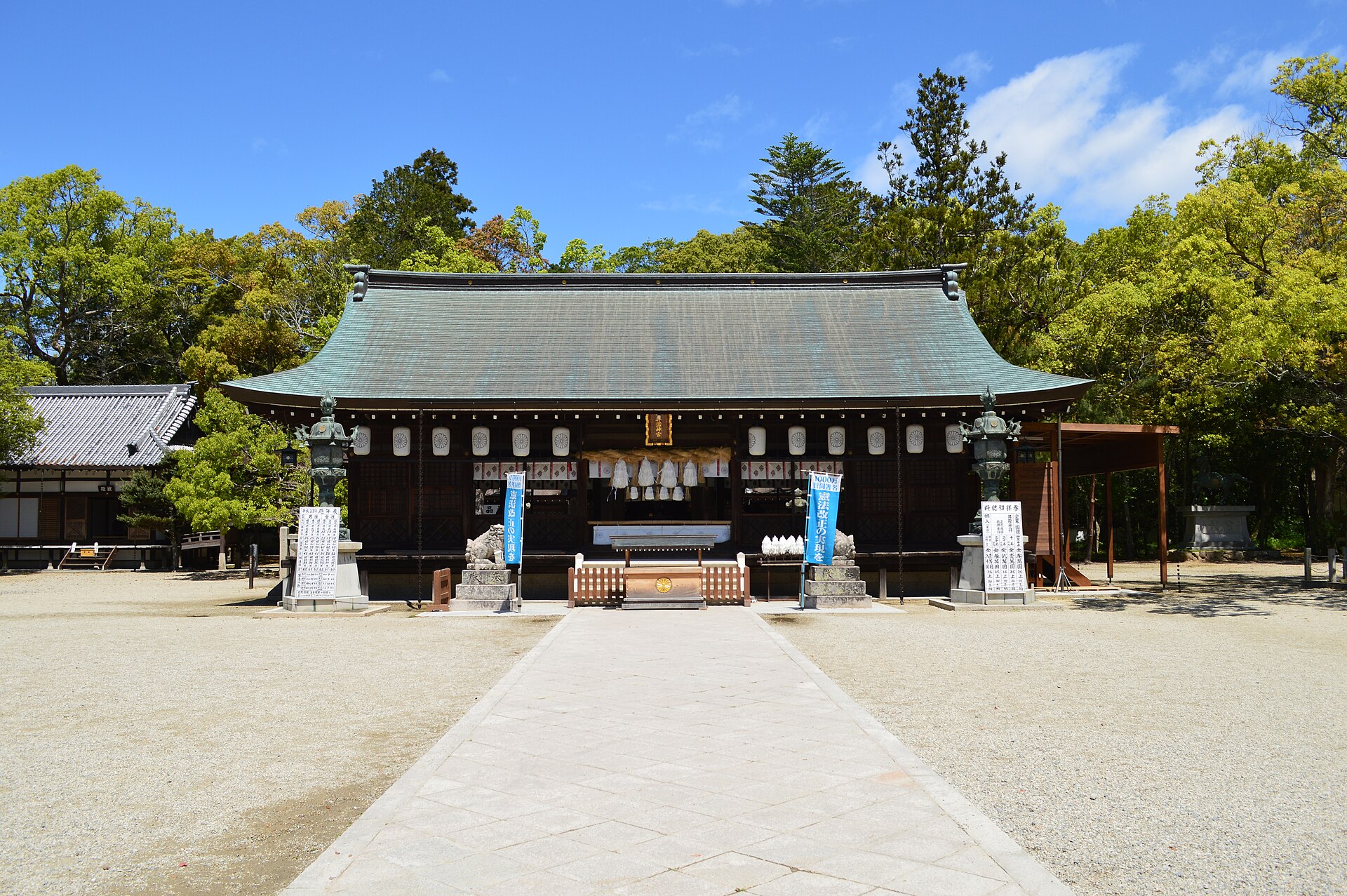
Izanagi Jingu stands inland on Awaji Island, in a district called Taga. It is the first-ranked shrine of the old province of Awaji, and it enshrines Izanagi and Izanami, the pair who in the Kojiki and the Nihon Shoki give birth to the islands of Japan. Tradition places the god's last years here, in a hidden palace raised on the island he had made first, and the shrine is said to have begun on that ground. The approach runs dead straight: a great torii, a second torii, the water basin, then a thatched gate. Beyond it a gravel court opens in front of the worship hall.
How to enjoy it
The grounds are open through the day and cost nothing, so the visit bends around the bus timetable rather than the other way round. Only the shrine office keeps set hours — 8:30 to 17:00 when checked — and that is where amulets and seal-stamps are handled. Read the sun-path monument before you walk in: it shows that Ise's inner shrine lies almost due east on the same latitude, and the dead-straight approach makes more sense once you know what it is lined up with.
Background & history
The written record runs deep. The Engishiki register of the tenth century lists the shrine at myojin-taisha, the top grade of officially recognised shrines, and documents from the late Heian and Kamakura periods already call it the first shrine of Awaji province. Under the Meiji state it was placed in the highest class of imperially supported shrines, and it was later granted the title jingu, the only shrine in Hyogo to carry it. Its grounds now sit inside Awaji's Japan Heritage story of the islands' birth.
Before you go
- Cash
- Entering the grounds is free. The highway bus is paid on board, so carry cash; both operators publish a fare table listing this stop, worth checking before you travel. There is no ticket window at the roadside stop.
- Before you go
- Awaji has no railway, so a missed bus means a long wait. The approach is open gravel with little shade, and the outer grounds have almost no cover when wind or rain comes off the strait.
- Another way
- By car it is about ten minutes north of the Tsuna-Ichinomiya interchange on the Kobe-Awaji-Naruto Expressway. Awaji's own community bus routes also call at the same stop.
- After you get off
- The stop sits on the main road south of the shrine. Cross to the shrine side and walk north for a few minutes; the great torii stands over the entrance and the approach runs straight in from there.