Southeast Chiba · IsumiNo.944★Open in map →
Isumi Railway Rapeseed Fields
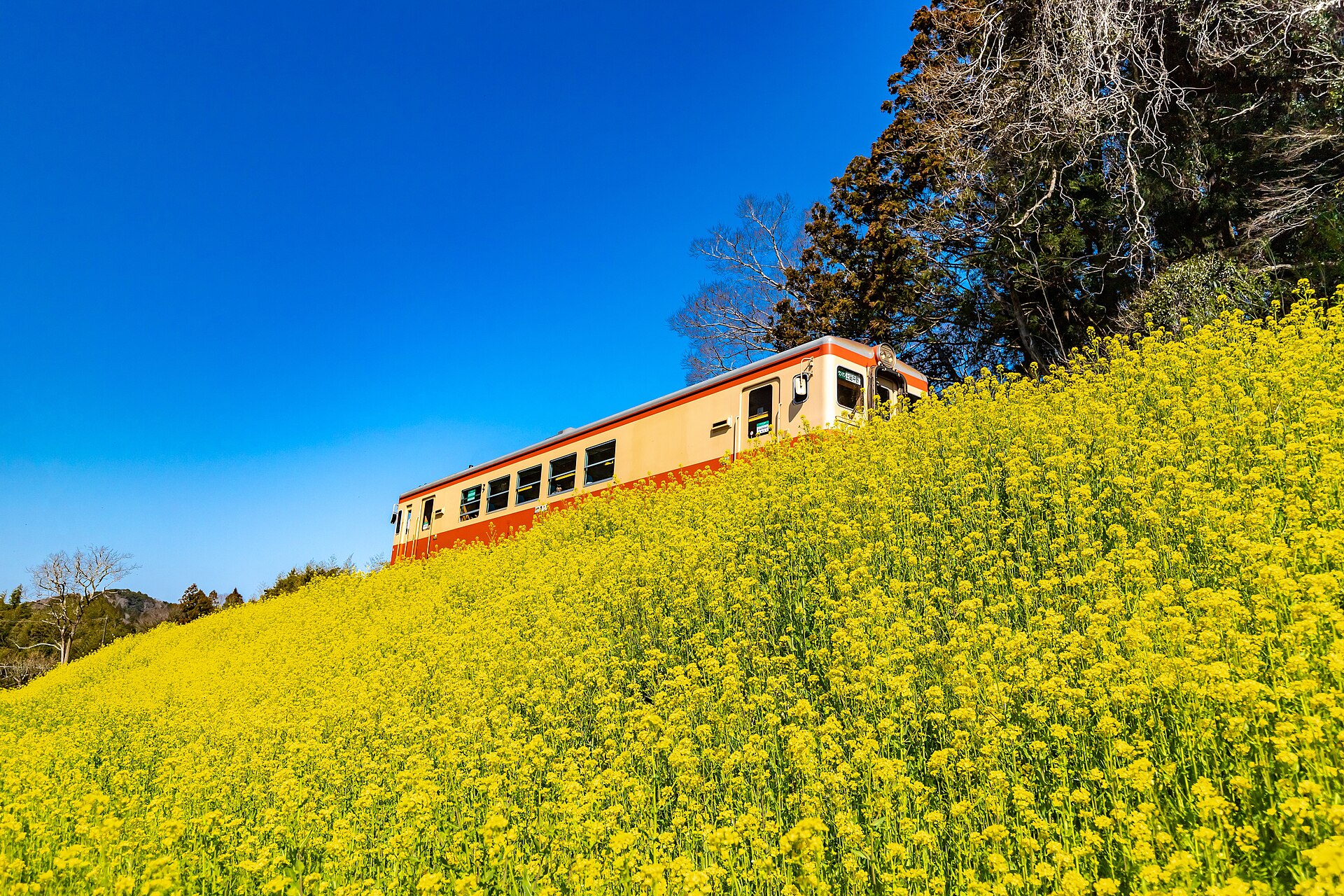
An ordinary rural railway that the people living along it turn yellow every spring, sowing rapeseed beside the rails each autumn. Trains are suspended after a derailment, but the flowers, the station and the trackside lane are all still there.
- FromTokyo Station
- ~1 hr 40 minJR limited express, then a replacement bus
- Get off atKuniyoshi Station (Isumi Railway)
- From there
- Isumi Railway Rapeseed Fields
The sweet spot
This is not a hidden spot. The flowering line is well known across Japan, and the season brings photographers. What is unusual right now is that the ride itself is unavailable — the railway is running replacement buses, so the flowers are met on foot rather than through a carriage window.
Where it is
50 more notes in Chiba · open the map →What to look for — in walking order
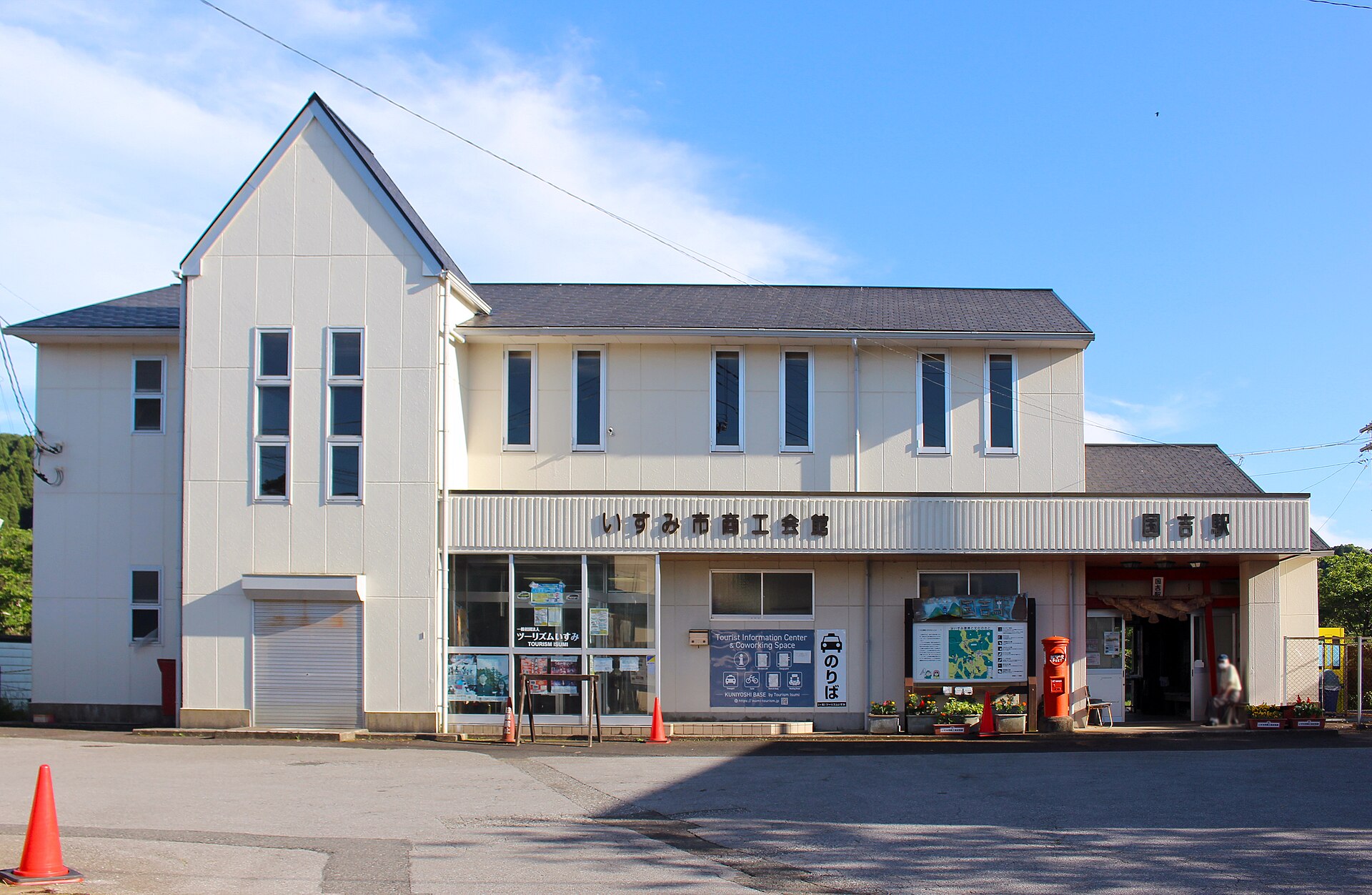
- Kuniyoshi Station buildingan unstaffed station hall shared with the Isumi City commerce association, with a tourist counter inside
- Preserved railcars Kiha 28 2346 and Kiha 30 62two old national-railway diesel cars kept on the siding beside the platform
- The sown embankmentsthe banks along the rails toward Kazusa-Nakagawa, where the seed goes in
- Kuniyoshi Shrine and Kazusa Izumo Taishaan old shrine south of the station, sharing its grounds with a branch of Izumo Taisha
How to actually get there
- Tokyo Station → Ohara Station (JR Sotobo Line, Wakashio limited express, no change).
- Ohara Station → Kuniyoshi Station (Isumi Railway replacement bus toward Kazusa-Nakano, about 20 min, 330 yen).
- Walk the station square, the platform and the siding with the old railcars, then take the lane beside the rails.
- Continue south on foot to Kuniyoshi Shrine and the Izumo Taisha branch in its grounds, then return for the bus.
- JR Sotobo Line to Ohara, then the replacement bus
- From Tokyo Station the Wakashio limited express runs along the JR Sotobo Line to Ohara with no change. At Ohara, move to the Isumi Railway replacement bus toward Kazusa-Nakano and ride to Kuniyoshi, about twenty minutes for 330 yen. Under the timetable revised on 1 April 2026 the bus leaves Ohara roughly once an hour through the day on weekdays, with fewer departures on Saturdays, Sundays and holidays.
- Back to Ohara on the same bus
- The replacement bus returns from Kuniyoshi to Ohara in a little over twenty minutes, and Ohara connects to the JR Sotobo Line for Tokyo. Weekday buses continue into the evening. On Saturdays, Sundays and holidays the last departure toward Ohara is in the late afternoon, so read the return times on the station notice before you walk out along the track.
About the place
The Isumi Line covers 26.8 kilometres between Ohara on the Pacific coast and Kazusa-Nakano inland, crossing the middle of the Boso Peninsula. The flowers along its banks are not the work of a contractor. Residents, schoolchildren and local groups sow the seed each October along the rails, and Otaki Town's official pages describe the line changing colour when it comes up. Kuniyoshi Station sits near the middle of that stretch. Its platform gives straight onto farmland, and the lane leaving the station square runs beside the same rails.
How to enjoy it
Otaki Town's official page puts the flowering from early March into early April, from seed sown the previous October. The replacement bus reaches Kuniyoshi from Ohara in about twenty minutes and runs through the day, so half a day out of Tokyo covers the station, the old railcars and a walk along the banks. Check the return times first — on Saturdays, Sundays and holidays the last bus back toward Ohara leaves in the late afternoon.
Background & history
The route began as the state-run Kihara Line and passed to Isumi Railway in 1988, a third-sector company backed by the prefecture and the towns it serves. Chiba Prefecture's own review papers note that national rail had marked the line for conversion to buses before that handover. In October 2024 a derailment on the section between Kuniyoshi and Kazusa-Nakagawa halted services across the whole railway. Isumi Railway's notice of June 2025 sets a target of resuming the Ohara to Otaki section around autumn 2027.
Before you go
- Cash
- The platform, the preserved railcars on the siding and the lanes beside the rails cost nothing to look at. The replacement bus charges the ordinary Isumi Railway fares, and the company's commuter passes, one-day passes and Boso cross-peninsula ticket are honoured on it as they are — show them to the driver. Kuniyoshi is an unstaffed station, so fares are settled on board.
- Before you go
- Rapeseed is a spring flower, and outside the season the banks are green or bare. No trains call here while the line is suspended, so the replacement bus is the only public service to the station. The lanes beside the rails are working farm roads, and the ballast and the track itself are not walking ground.
- Another way
- The same replacement bus reaches Kuniyoshi from the inland side, starting at Otaki. Kominato Bus services link Otaki with Kazusa-Nakano, where the Kominato Railway joins the line, so the peninsula can be crossed and the station approached from the far end.
- After you get off
- Kuniyoshi Station is the destination itself, and the replacement bus sets down in the station square. The platform is behind the building, the preserved railcars stand on the siding alongside it, and the rails run out from there into farmland.