Northwest Saga · AritaNo.508★★Open in map →
Arita Porcelain Town
— Where Japanese porcelain began, in Saga
The valley town in western Saga where porcelain was first made in Japan. One old road runs through the Uchiyama preservation district past kilns, merchant houses and lanes walled with recycled kiln brick, and it can be walked end to end between the town's two stations.
- FromHakata Station
- ~1 h 30 minJR limited express, 16 round trips daily
- Get off atKami-Arita Station (JR Sasebo Line)
- On foot
- Arita Porcelain Town
The sweet spot
Arita is a famous name because of the ware, so the town is not a hidden one. What keeps the road calm is the calendar. For one week at the start of May it fills for the ceramic fair, and for the rest of the year it is an ordinary working street of kilns, showrooms and houses where people live.
Where it is
14 more notes in Saga · open the map →What to look for — in walking order
- Izumiyama quarrythe cut hillside where the porcelain stone was found, a designated national historic site
- The great ginkgo at the Kuchiya checkpoint sitean enormous tree beside the old road, on the site of the domain's former control post
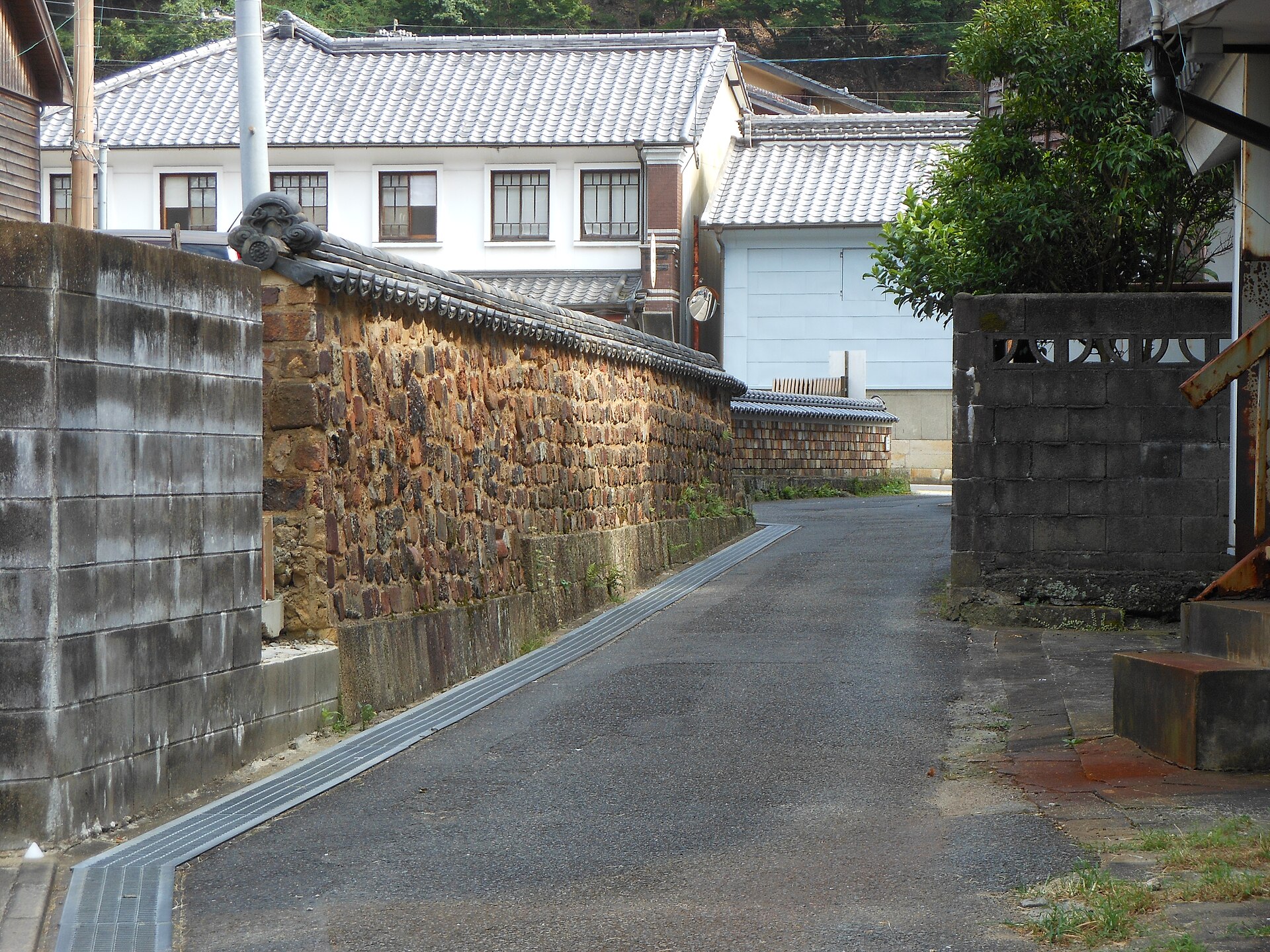
- Tonbai-bei back laneswalls packed with fire brick and kiln tools salvaged from the climbing kilns, in the Kamikohira lanes
- Sueyama Shrineporcelain torii, guardian lions and railings, reached across the railway crossing
- Arita Ceramic Museuma stone ware-warehouse in the preservation district, showing Meiji-era work from the local kilns
How to actually get there
- Hakata → Arita (limited express Midori / Huis Ten Bosch, JR Sasebo Line).
- Arita → Kami-Arita (Sasebo Line local, one stop east).
- Kami-Arita Station → Izumiyama quarry → the tonbai back lanes → Sueyama Shrine (on foot, heading west).
- Carry on past Arita Ceramic Museum and down to Arita Station for the return.
- Limited express from Hakata, then one local stop
- The Midori limited express, coupled for part of its run with the Huis Ten Bosch, covers Hakata to Sasebo in about one hour fifty minutes and stops at Arita on the way; there are sixteen round trips a day. Get off at Arita and take the Sasebo Line one stop east to Kami-Arita, which puts you at the upper end of the old road. You can also simply start walking from Arita Station and take the road uphill instead.
- Return from Arita Station
- Walking the district westward brings you out at Arita Station, so the return needs no backtracking. The same limited expresses run from there toward Hakata, and the Matsuura Railway Nishi-Kyushu Line also terminates at the station. Kiln showrooms close well before the last express, so check the evening departures if you intend to keep browsing.
About the place
Arita lies in a narrow valley in the hills of western Saga, and porcelain has been fired here since the early seventeenth century, when Korean potters working under the domain found porcelain stone at Izumiyama. The trade grew along a single road, and the stretch of it through the Uchiyama district is now a nationally designated preservation district for groups of traditional buildings. Kiln buildings, merchants' houses, white-walled warehouses and showrooms stand shoulder to shoulder along it. Behind them run the tonbai-bei: back lanes walled with the fire brick and kiln furniture salvaged from dismantled climbing kilns, packed into red clay. Ware from these kilns left the country through the port of Imari, which is why it was long sold abroad under that name.
How to enjoy it
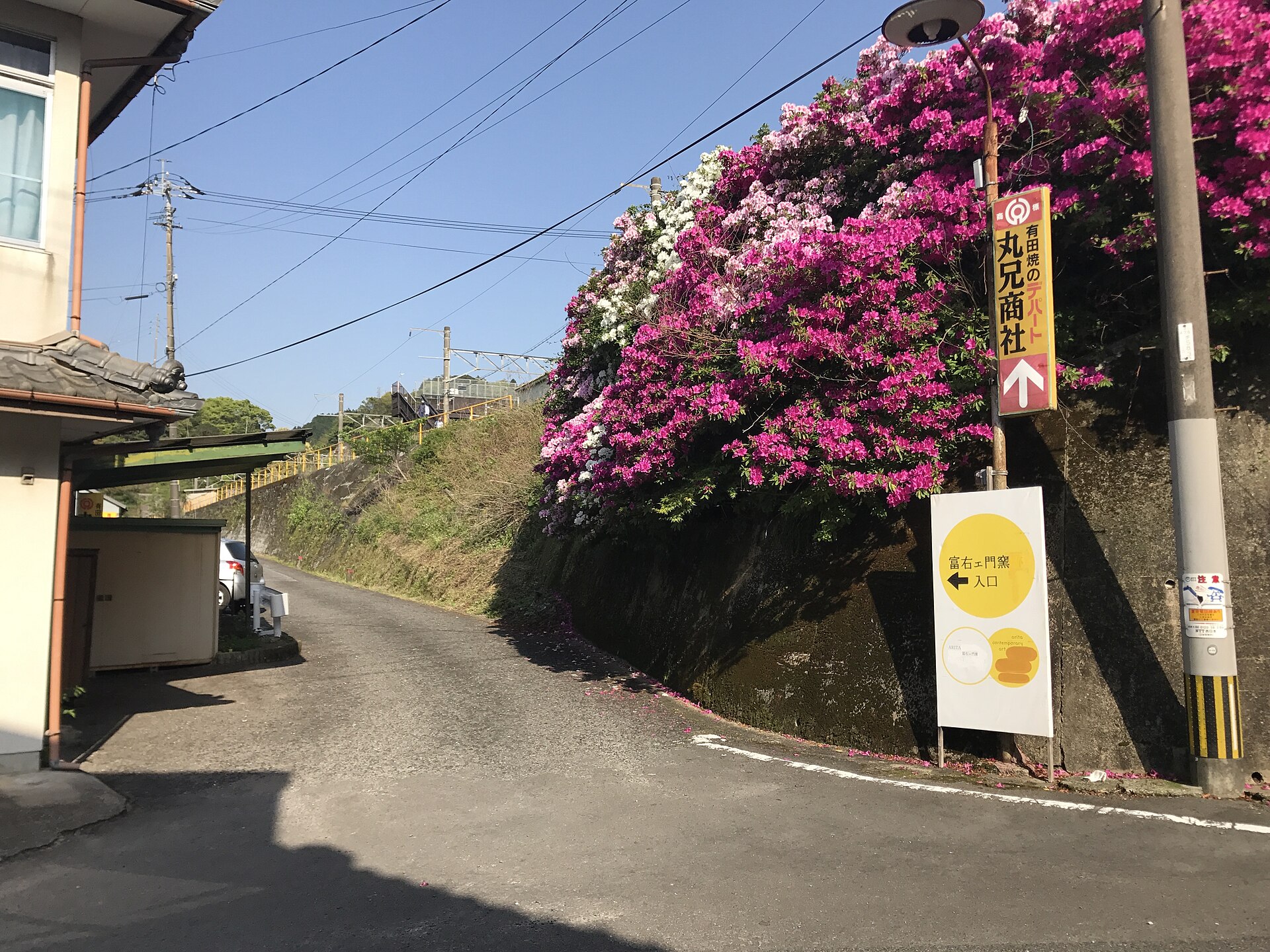
From Kami-Arita Station it is about fifteen minutes on foot to the Izumiyama quarry and about twenty to Sueyama Shrine, which leaves the rest of the walk running gently downhill to the other station. Arita Ceramic Museum opens 9:00 to 16:30. Once a year, from 29 April to 5 May, the entire road becomes the Arita Ceramic Fair, and the same walk turns into a market you cannot see the far end of.
Background & history
Sueyama Shrine, set above the road at the middle of the district, was founded around 1658 and enshrines Ojin together with Yi Sam-pyeong, the potter credited with finding the stone at Izumiyama. Its great torii is not stone but porcelain, painted in underglaze blue, and the precinct also holds porcelain guardian lions, water jars and railings given by the kilns. The approach crosses the Sasebo Line on a level crossing, because the railway was cut straight past the shrine gate. Further down the road, Arita Ceramic Museum occupies a former stone ware-warehouse that is itself listed within the preservation district.
Before you go
- Cash
- The road, the back lanes and the shrine cost nothing. Arita Ceramic Museum charges 120 yen for adults and is free for high-school age and under. Kiln showrooms sell direct from the premises, and the smaller ones are easier with cash.
- Before you go
- Arita Ceramic Museum is closed on Mondays, moving to Tuesday when Monday is a public holiday, and over the New Year. The walk itself is on public road and is open at any hour, but the showrooms follow shop hours, so a late arrival gets the buildings and not the ware.
- Another way
- Arita is also reached along the same Sasebo Line from Sasebo and from the Nagasaki side, and Arita Station is the terminus of the Matsuura Railway Nishi-Kyushu Line from Imari. A town community bus loops the local routes for a flat fare if the walk back uphill is not wanted.
- After you get off
- From Kami-Arita Station it is a short walk down to the old road. Turn west and the preservation district begins almost immediately, running on down the valley toward Arita Station.