Aichi · Chita PeninsulaNo.455★★Open in map →
Tokoname Pottery
A waymarked walk through Tokoname's old kiln quarter, where retaining walls are built from clay drainpipes and shochu bottles. It starts at the Ceramic Hall, five minutes from the station and two stops from the airport.
- FromCentral Japan International Airport
- ~10 minMeitetsu Airport Line, ~5 min
- Get off atTokoname Station (Meitetsu Tokoname / Airport Line)
- On foot
- Tokoname Pottery
The sweet spot
Tokoname is a known name in Japanese ceramics, so nothing here is undiscovered. What airport traffic misses is how close it is: two stops down the line, near enough to fit a long layover, and the quarter the route crosses is still a place of work rather than a preserved set.
Where it is
27 more notes in Aichi · open the map →What to look for — in walking order
- Maneki-neko Streetthe approach from the station, lined with ceramic beckoning cats set into the wall above the road
- Tokoname Ceramic Hallthe start and finish of both courses, doubling as the tourist desk with luggage storage
- Takita Housethe residence and offices of a shipping agent from the last years of the Edo period, a city-designated property
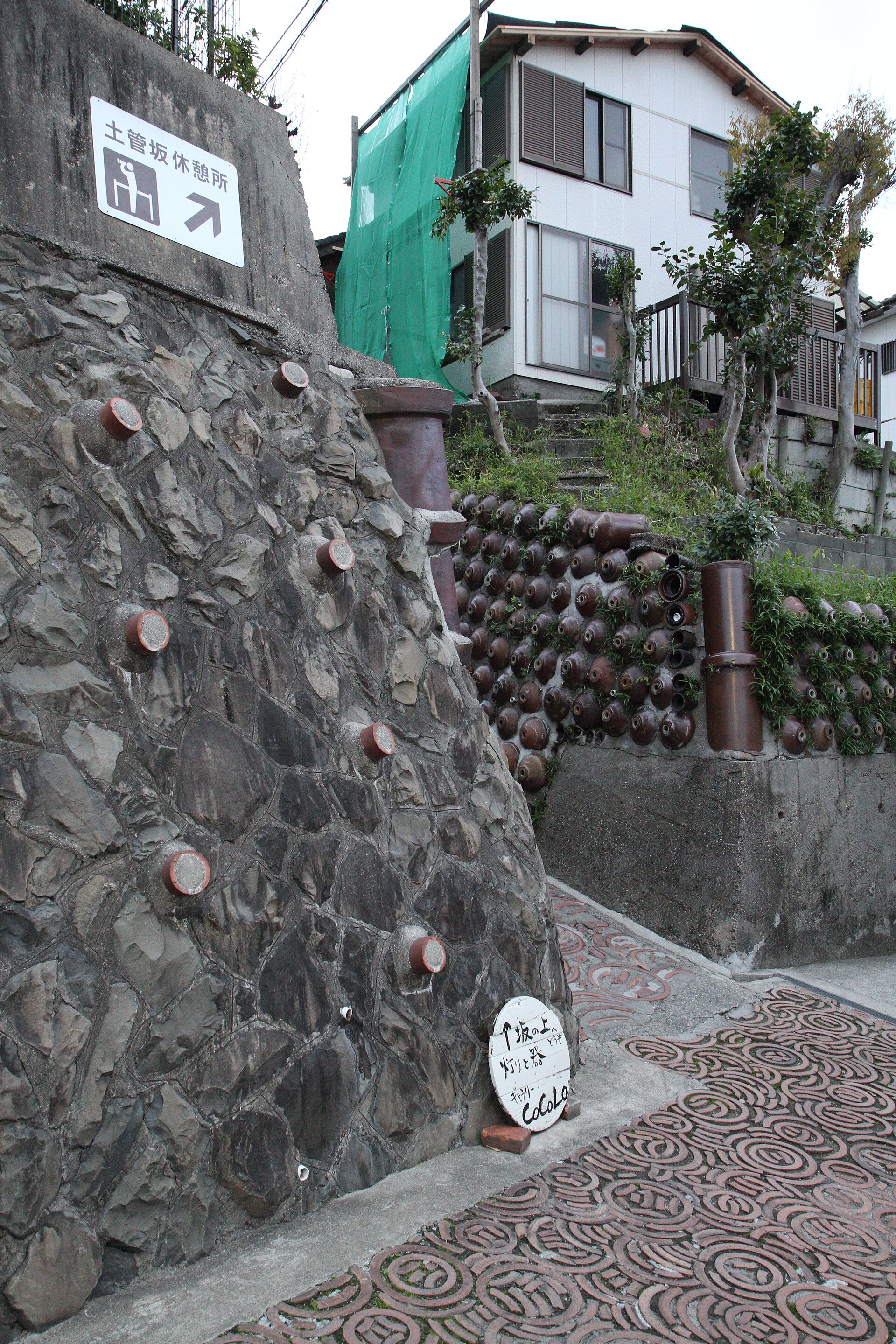
- Dokanzakaa short slope walled on both sides with clay drainpipes and shochu bottles set into the retaining banks
- The Toei climbing kilna stepped multi-chamber kiln on the hillside, designated an important tangible folk-cultural property
How to actually get there
- Central Japan International Airport → Tokoname Station (Meitetsu Airport Line, two stops, about 5 minutes, 330 yen; Mu-Sky does not stop).
- Tokoname Station → Tokoname Ceramic Hall (walk about 5 minutes).
- Walk the A course: Maneki-neko Street, Takita House, Dokanzaka, the Toei climbing kiln, then back to the hall.
- For the long B course, carry on to the tile and ceramics museum before looping back.
- Meitetsu Airport Line from Centrair
- Central Japan International Airport Station →(Meitetsu Airport Line, two stops via Rinku-Tokoname)→ Tokoname Station, about 5 minutes, 330 yen. The Mu-Sky limited express does not call at Tokoname for most of the day, so take a limited express, semi-express or local instead. From the station it is about a 5-minute walk to the Ceramic Hall, where both courses begin.
- Return from Tokoname Station
- Trains toward the airport and toward Nagoya run through the day from the same station. If you are heading for a flight, remember that Mu-Sky is not an option from Tokoname: board a limited express or semi-express and allow a few extra minutes for the change of pace. The walk is a loop, so you end back within five minutes of the platform.
About the place
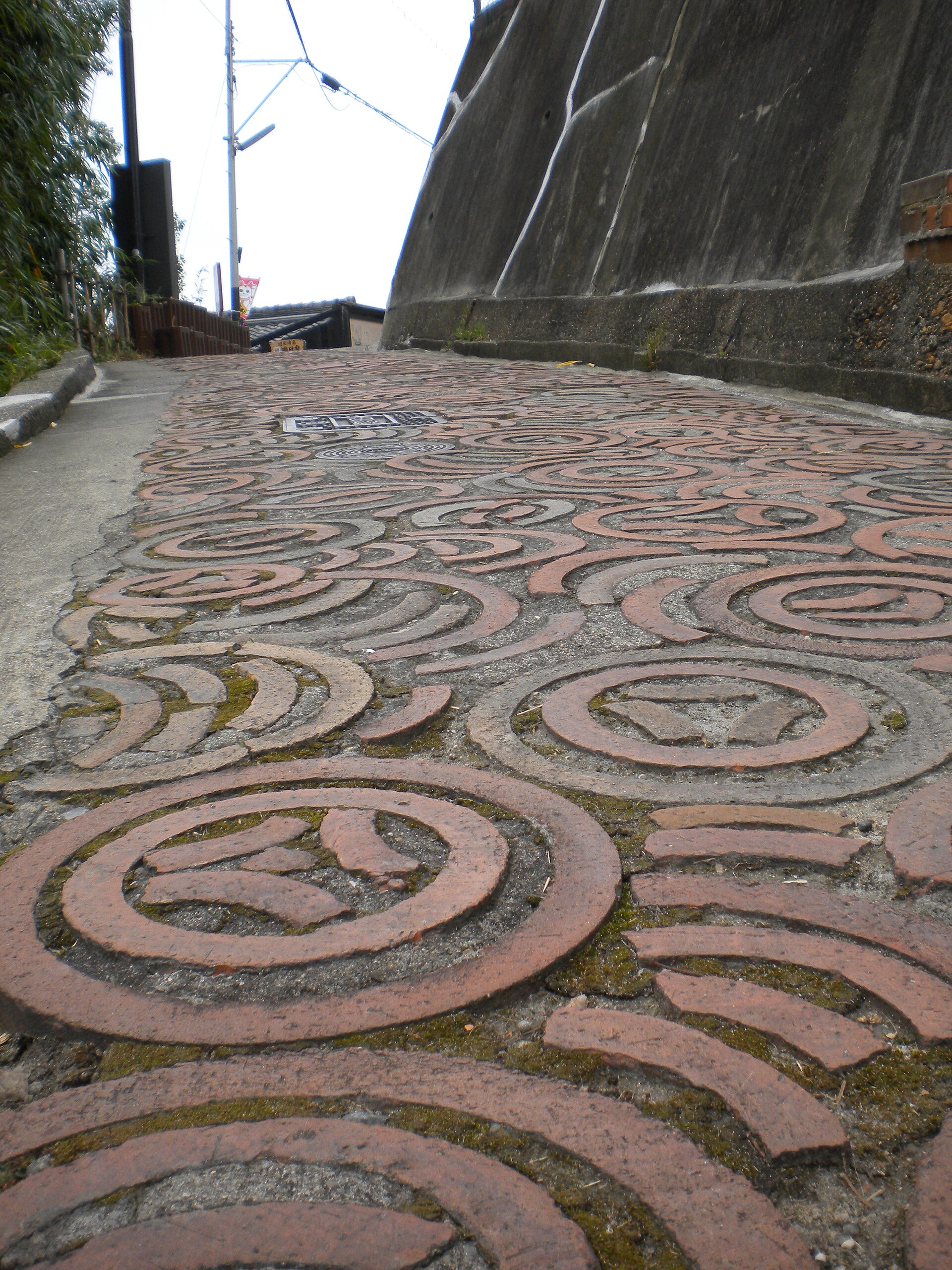
Tokoname sits on the Chita Peninsula, on the same railway that serves the airport. It is counted among the Six Ancient Kilns of Japan, and potters have worked here since the closing years of the Heian period. The old production quarter is now waymarked as the Yakimono Sanpomichi, a pottery walk of about 1.6 kilometres in its short form. Brick chimneys rise over workshops walled in black boards, and the retaining walls and paving are built from clay pipes and bottles that never left the town. The walk itself costs nothing and begins at the Tokoname Ceramic Hall.
How to enjoy it
The short A course takes about an hour on foot; the long B course, which reaches the tile and ceramics museum, takes about two and a half. The hall and the two ticketed buildings open in the morning and shut in the late afternoon, so start before mid-afternoon rather than after lunch. Weekdays suit the route best, because the lanes are narrow and most of the buildings along them are private homes and working studios.
Background & history
Kilns have burned on this slope since the end of the Heian period, around 1100, when Tokoname grew out of a family of kilns spreading south from Sanage. For centuries the work was storage rather than tableware: bowls, jars and large vats fired hard and unglazed. The red shudei teapot the town is now known for came late, perfected in 1854. From the early 1870s Tokoname turned to standardised clay drainpipes for a country laying its first sewers, and it is that industry, more than the teapots, that built the walls and slopes the walk crosses.
Before you go
- Cash
- The walking route is free. Takita House charges a small admission, waived for children through junior high; the Ceramic Hall is free to enter and also handles tourist information and luggage. Car parks near the route charge by the day.
- Before you go
- Takita House and the kiln workshop hall close on Wednesdays and over the New Year; the Ceramic Hall stays open all year apart from the New Year period. The A course lanes are narrow with no through route for cars, and the slopes are surfaced with fired clay rings rather than concrete.
- Another way
- From Meitetsu Nagoya, take a Tokoname Line limited express through to Tokoname Station, 750 yen. Mu-Sky services run past without stopping, so check the train type before boarding.
- After you get off
- From Tokoname Station, walk about 5 minutes to the Tokoname Ceramic Hall. Both marked courses start and finish there, and the route map is handed out at the desk.