Nagasaki · Suwa ShrineNo.1265★★★Open in map →
Nagasaki Kunchi
— Suwa Shrine's autumn festival of dragon dances
The autumn grand festival of Suwa Shrine, Nagasaki's guardian shrine. The neighbourhoods on duty offer dragon dances, ship floats and other pieces shaped by the port's foreign trade. Paid seats exist, but the shrine steps and the streets offer free views.
- FromNagasaki Station
- 6 min tram + 5 min walkTram, about 6 min from the station
- Get off atSuwa-jinja tram stop (Nagasaki Electric Tramway)
- On foot
- Nagasaki Kunchi
Where it is
20 more notes in Nagasaki · open the map →What to look for
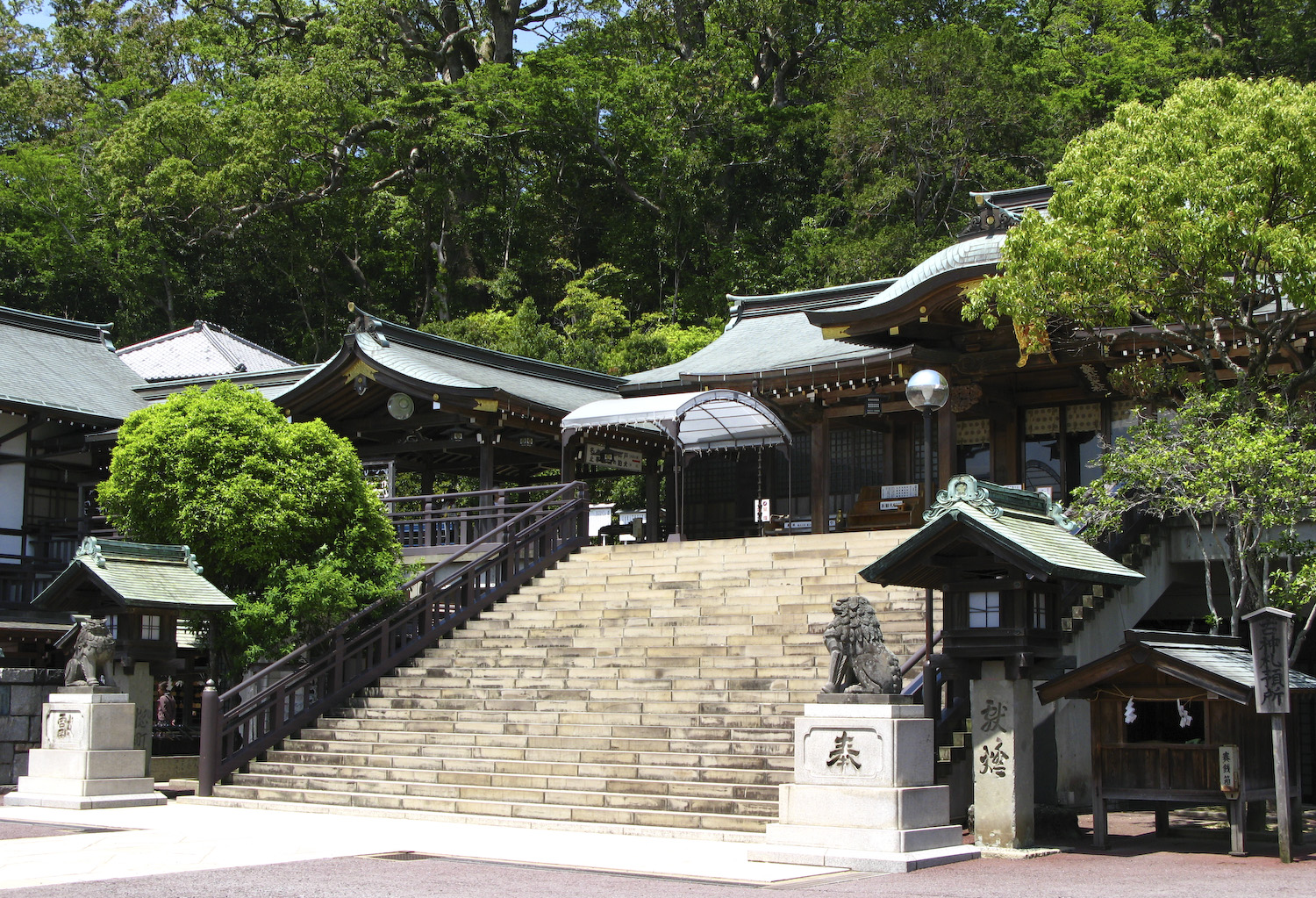
- Suwa Shrine dance groundthe shrine's own stage, where each troupe dances first, with the free Nagasaka step seats facing it
- Otabishothe temporary shrine in Motofunamachi where the portable shrines rest, busy with festival stalls
- Yasaka Shrinea venue in Kajiyamachi whose box seats sit close to the performers
- Central Park viewing standthe promotion association's stand in Nigiwaimachi, where tickets are sold per person
- Niwasaki-mawari streetscity-centre doorways and shopfronts where troupes give short dances and music
How to actually get there
- Nagasaki Ekimae tram stop → Suwa-jinja (tram bound for Hotarujaya, about 6 min).
- Suwa-jinja stop → Suwa Shrine (underground passage to the approach, about 5 min on foot).
- Suwa Shrine dance ground → Nagasaka steps (free seats, lottery ticket required).
- After the shrine, follow the street-performance map to meet troupes in the city centre.
- Tram from Nagasaki Station
- From the Nagasaki Ekimae tram stop, take a tram bound for Hotarujaya and get off at Suwa-jinja, about 6 minutes. An underground passage leads from the stop to the shrine approach, and the shrine is about 5 minutes' walk from the stop.
- Back to Nagasaki Station
- Walk back down to Suwa-jinja stop and ride the same line in the other direction to Nagasaki Ekimae. Street performances take place around the city centre during the festival days, so check the map before heading back — a troupe may be on your route.
About the place
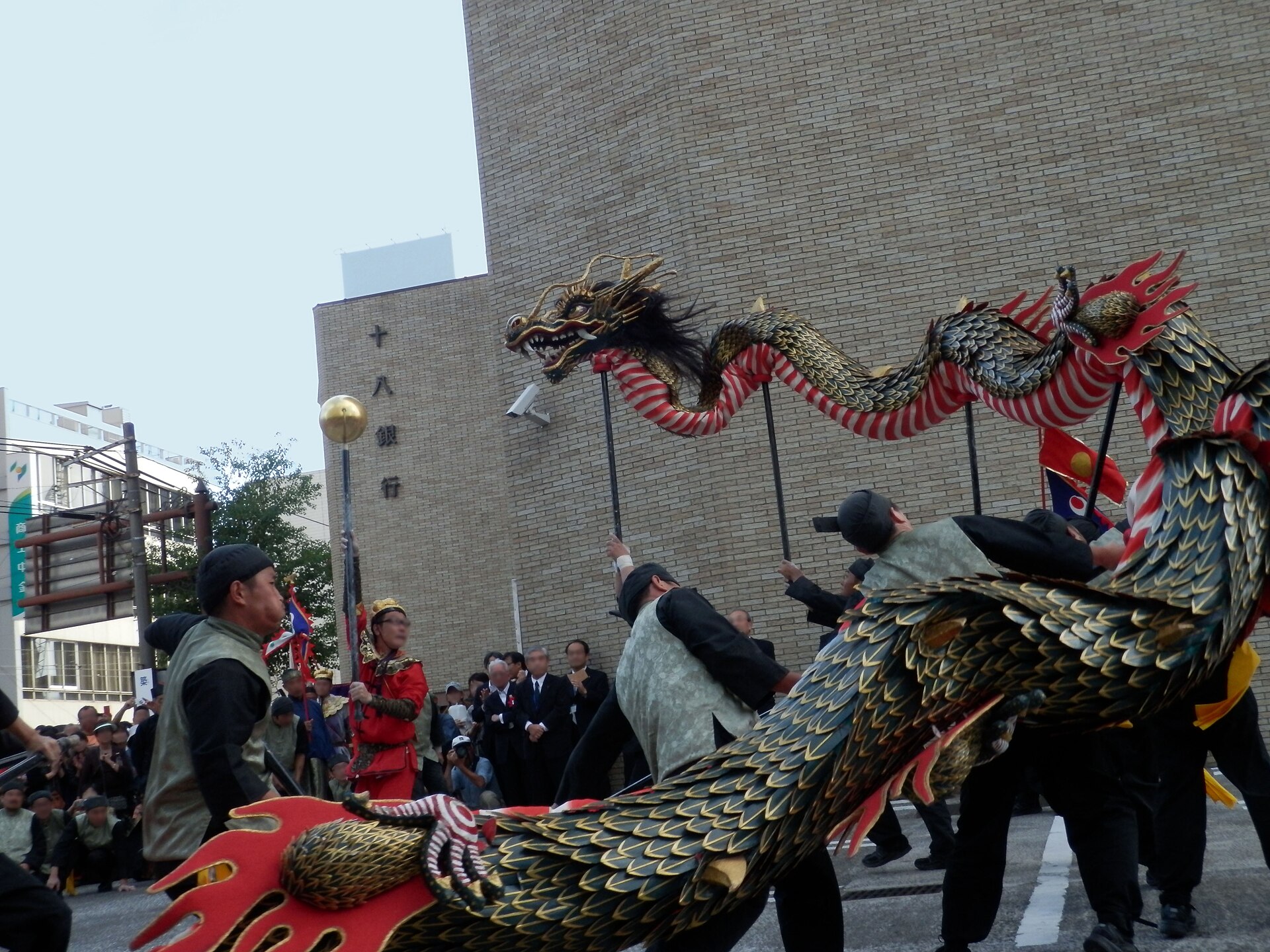
Nagasaki Kunchi is the autumn grand festival of Chinzei Taisha Suwa Shrine, the guardian shrine of the city. At its heart are the hono-odori: dances and floats offered to the shrine by the neighbourhoods on duty that year. Many pieces carry the flavour of the port's old trade with China, Portugal and the Netherlands. The best known is the ja-odori dragon dance, alongside a spouting whale, Chinese-style ships and the Kokkodesho drum float. Each neighbourhood's procession is led by its kasaboko, a large umbrella-shaped standard. The neighbourhoods are divided into seven groups, and each group takes its turn only once every seven years. The line-up therefore changes from one year to the next.
How to enjoy it
The festival is held on 7, 8 and 9 October each year: the portable shrines go down to the Otabisho on the 7th and return on the 9th, with dances at the venues on all three days. For the free Nagasaka seats, apply in advance for the lottery run by the shrine's seating committee; without seats, follow the street-performance map published before the festival. When a troupe starts to leave, the local way to ask for an encore is to shout "Motte koi!" — bring it back.
Background & history
The festival dates its beginning to 1634, when two courtesans, Takao and Otowa, offered a sung dance called komai before the shrine. The shrine itself had been founded in 1625 by Aoki Kensai, with the backing of the Nagasaki magistrate. Over the centuries the offerings grew into the neighbourhood dances seen today. In 1979 the hono-odori were designated an Important Intangible Folk Cultural Property of Japan. The dances were not held as usual from 2020 to 2022, and the festival returned to its normal form in 2023.
Before you go
- Cash
- Watching the street performances costs nothing, and the Nagasaka step seats are free with a lottery ticket. Box seats at Suwa Shrine, the Otabisho and Yasaka Shrine, and seats at the Central Park stand, are sold in advance by each venue's own organisers. Check the official ticket page for this year's prices and sale dates.
- Before you go
- The dances are traditionally held over three fine-weather days, so rain can shift the schedule. The programme and the neighbourhoods on duty change every year, so check the shrine's and the promotion association's current schedules before planning your days.
- Another way
- By bus, ride from the Nagasaki Ekimae East Exit stop for about 3 minutes to the Rekishi Bunka Hakubutsukan (history and culture museum) stop. The shrine is about 10 minutes on foot from there.
- After you get off
- From Suwa-jinja tram stop, take the underground passage that comes up on the shrine approach, then walk up to the shrine, about 5 minutes in all.