North Yamaguchi · NagatoNo.606★★★Open in map →
Motonosumi Shrine
A privately founded shrine on a Nagato headland, where a run of red gates steps down a grass slope to the edge of the sea. Short opening hours, a paid car park, and no railway station within walking distance.
- FromNagato-shi Station
- ~40 minJR then taxi
- Get off atNagato-Furuichi Station (JR San'in Line)
- From there
- Motonosumi Shrine
Where it is
13 more notes in Yamaguchi · open the map →What to look for — in walking order
- The upper precinctthe small shrine buildings on the high ground, with open sea in front of them
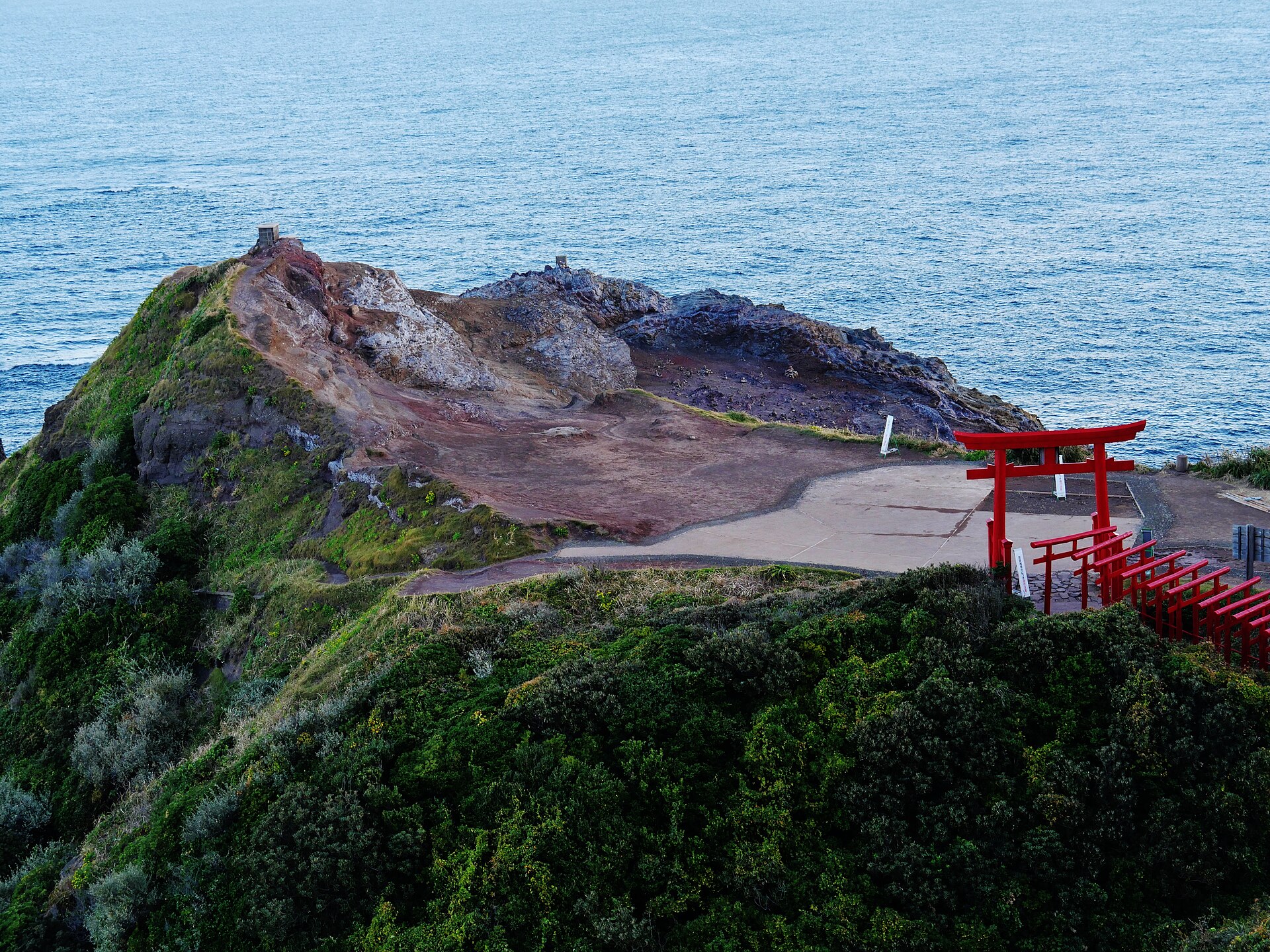
- The torii corridorvermilion gates set close together, stepping down the slope toward the water
- Ryugu no Shiofukithe sea cave at the foot of the cliff that throws spray when the swell is running
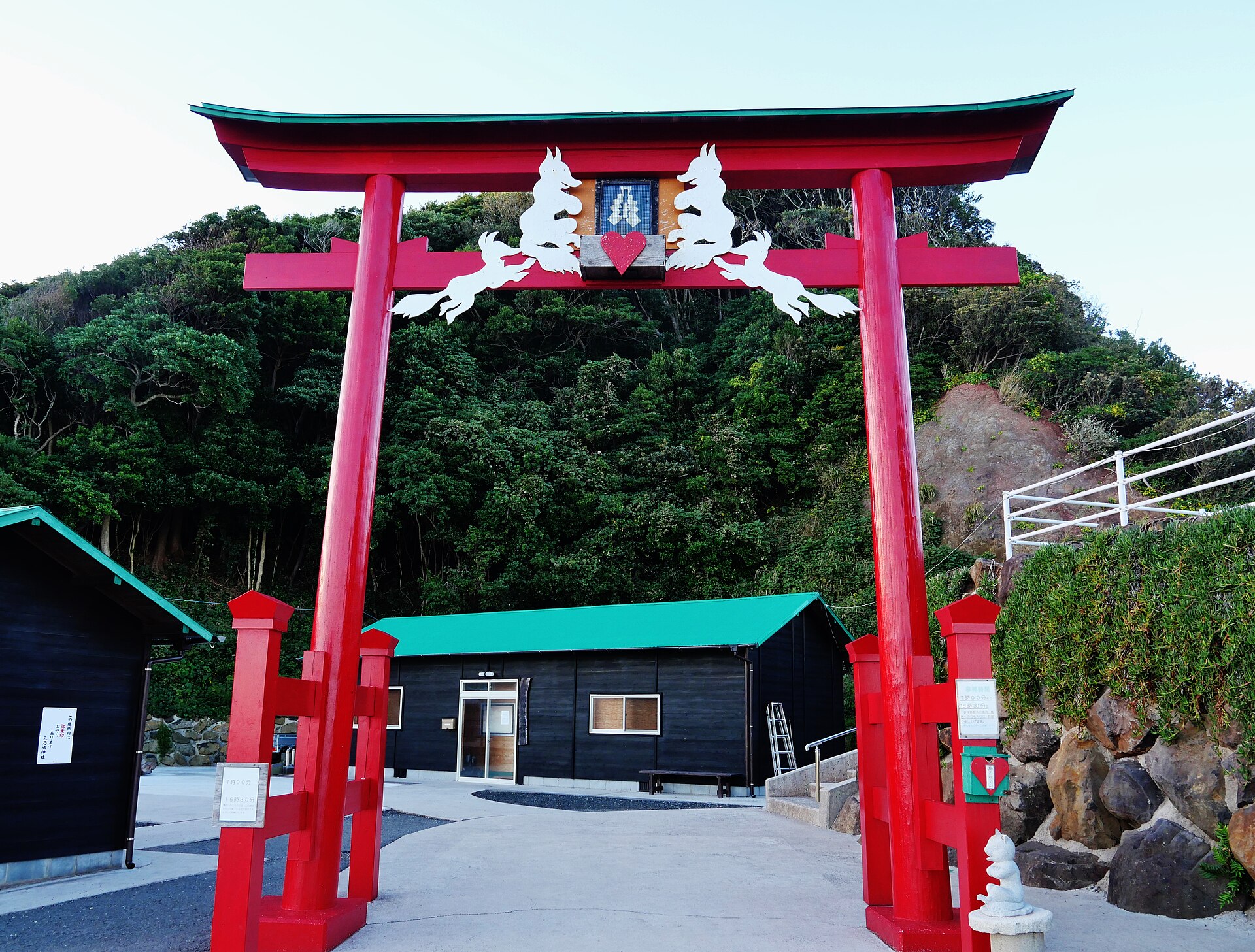
- The grand toriia tall gate near the rear exit with an offertory box set into the top of it
How to actually get there
- Nagato-shi Station → Nagato-Furuichi Station (JR San'in Line).
- Nagato-Furuichi Station → the shrine car park (taxi, about 20 minutes).
- Walk down through the gates from the upper precinct toward the water.
- Look down on the blowhole, then come back up by the rear approach and the grand torii.
- Taxi from Nagato-shi Station
- Nagato-shi Station →(taxi, about 40 minutes)→ the shrine car park. The cheaper version is to take the San'in Line west to Nagato-Furuichi Station and pick up a taxi there, which the prefectural and city tourism sites both put at about 20 minutes. There is no bus to the gate, so the taxi leg is not optional.
- Return from the shrine
- Nothing scheduled runs past the gate, so arrange the return before you walk down the slope, or ask the driver who brought you to wait. San'in Line services through Nagato-Furuichi are infrequent, so fix the train you intend to catch first and work backwards from it.
About the place
The shrine sits on a headland on Yamaguchi's Sea of Japan coast, on ground that falls straight into the water. From the upper precinct a run of 123 vermilion torii threads down the hillside for more than a hundred metres, set close enough that walking through them feels like a tunnel with the sea at the far end. Below the last gate the cliff drops to a sea cave, where swell driven into the rock pushes spray back out through a blowhole. An American news network put the place on a list of Japan's most beautiful in 2015, and it has been busy ever since.
How to enjoy it
The grounds run from half past nine to half past four, so treat this as a midday visit and leave enough time to walk down and climb back. Rough water suits the place: the blowhole only works when the swell is up, so a windy day beats a calm one. The offertory box in the top of the grand torii is meant to be difficult, and missing it is part of the exercise.
Background & history
The shrine is recent by Japanese standards. In 1955 a local fishing-net owner, Okamura Hitoshi, said a white fox had appeared at his bedside and told him to enshrine it on this ground, and the shrine was built on that instruction. The gates came later still. They were donated one by one from 1987 over about ten years, until the line reached the length it holds today. The blowhole the shrine looks down on is older than either of them.
Before you go
- Cash
- Entry to the shrine is free. The car park is not: cars pay by the hour up to a capped daily rate, motorbikes a flat charge, and coaches more again. Bring coins, and do not count on a card reader on a headland this remote.
- Before you go
- The grounds close in the late afternoon and are not open at night. The slope is open ground with the sea on three sides, and the headland takes the full weather off the Sea of Japan, which in winter means wind rather than rain.
- Another way
- By car it is about an hour from the Mine interchange of the Chugoku Expressway. Tourism offices also name Hitomaru Station as a taxi starting point, at much the same distance as Nagato-Furuichi, and Hagi-Iwami Airport is the nearest air link.
- After you get off
- From Nagato-Furuichi Station the last leg is by taxi, inland through the hills and back out to the coast. The road ends at the car park on the high ground, and the torii begin just below it.