West Aomori · TsugaruNo.931★★Open in map →
Kamegaoka Stone Age Site
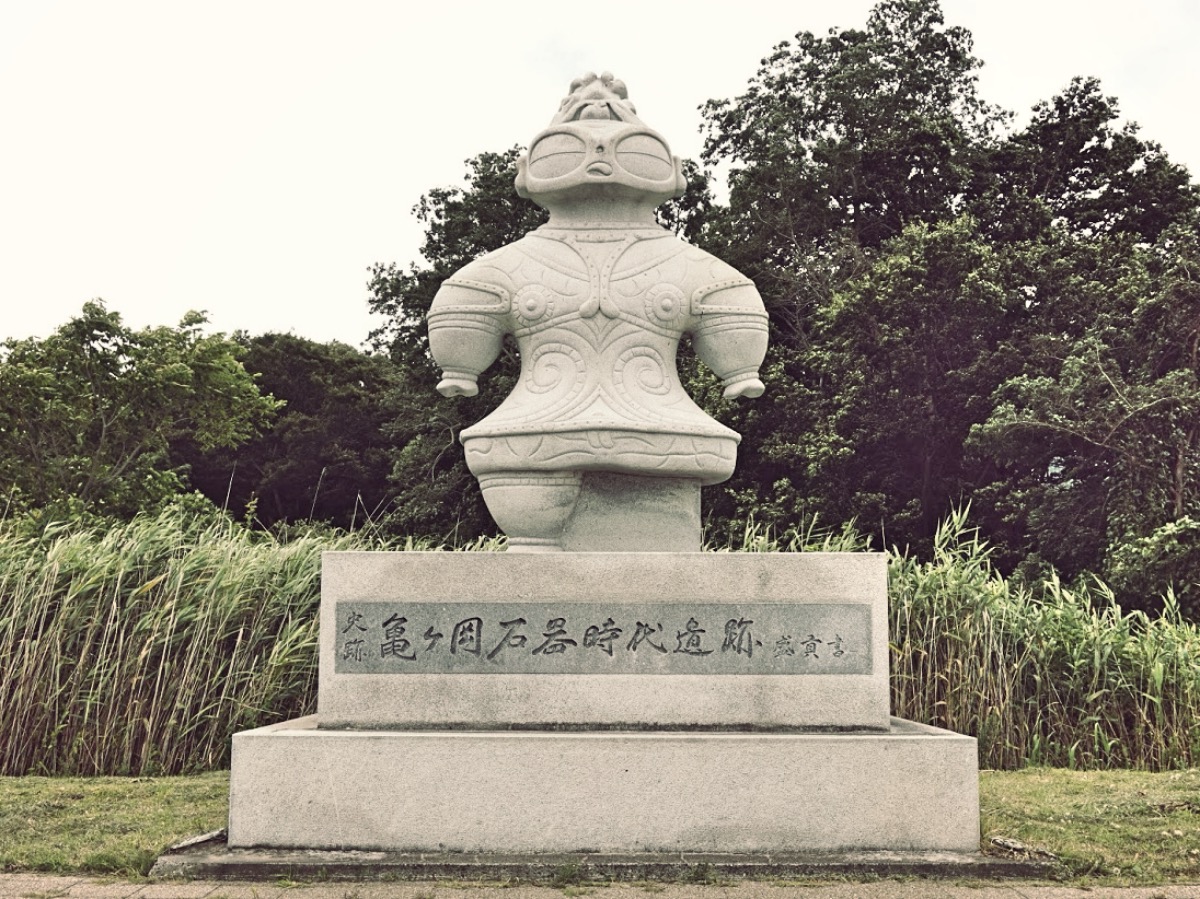
The late-Jomon cemetery in Tsugaru that produced Japan's best-known clay figure, the goggle-eyed dogu, and then lent its name to an entire culture. It is free to walk, with the World Heritage marker standing out in open ground.
- FromGoshogawara Station
- ~30 minJR Gono Line, then by car
- Get off atKizukuri Station (JR Gono Line)
- From there
- Kamegaoka Stone Age Site
The sweet spot
It is a World Heritage property that looks nothing like one. There is no museum on the ground and no ticket gate, only a low ridge, a stone figure and the boards. Aomori's Jomon circuit mostly runs to the reconstructed village at Sannai-Maruyama, so here you set your own pace.
Where it is
34 more notes in Aomori · open the map →What to look for — in walking order
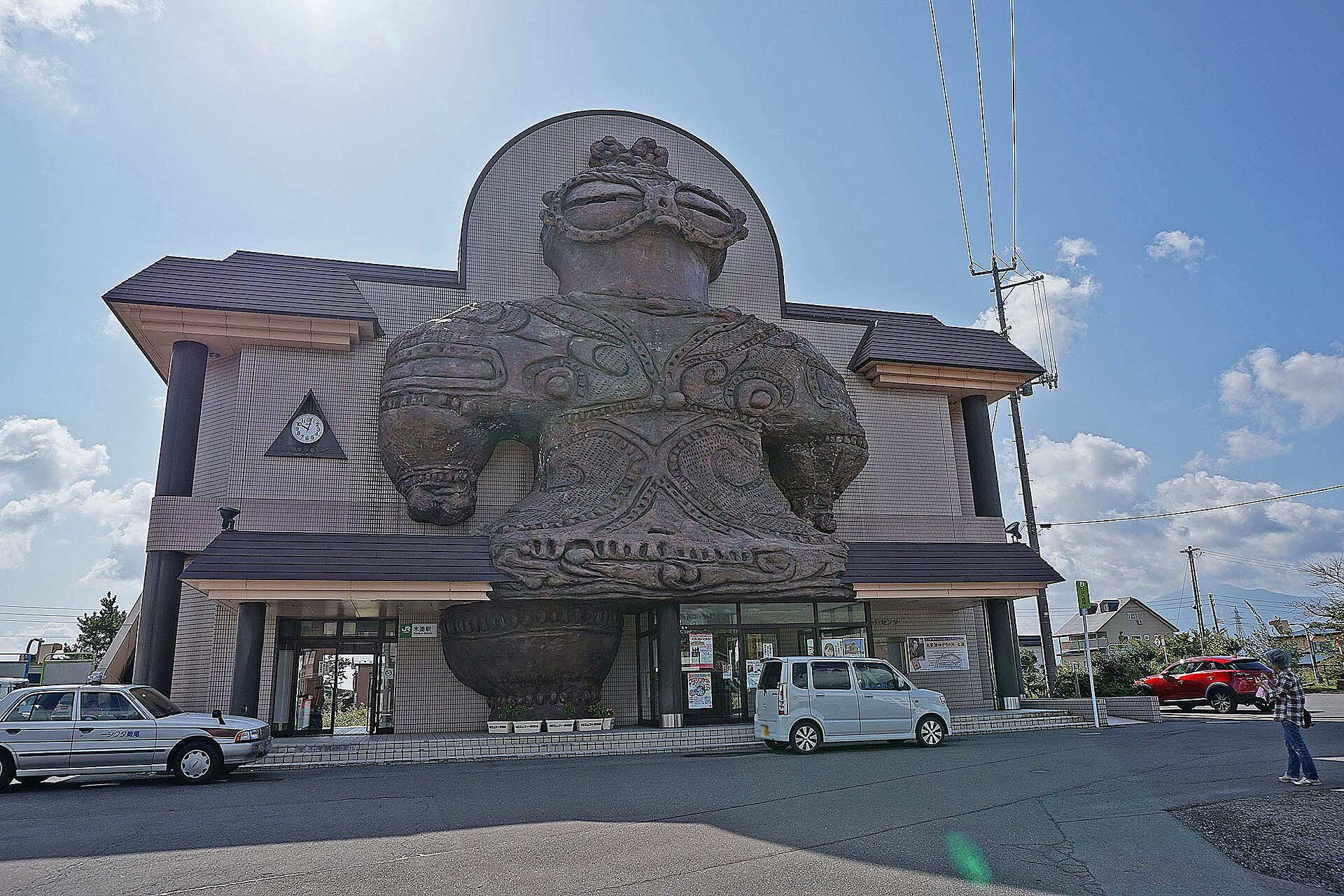
- Kizukuri Stationa station front built as a 17.3-metre goggle-eyed clay figure, its eyes wired to light for arriving trains
- Jomon Site Information Centrethe hut beside the car park, with site maps and volunteer guides in the warm season
- The burial ridgethe sand rise where clustered pit graves were found, facing the basin of the old Lake Jusan
- The wetland below the ridgepeat ground that preserved lacquered pottery, basketry and wooden objects
- Tashiyano Shell Mounda second World Heritage component close by, with shell-bracelet workshops and Hokkaido obsidian
How to actually get there
- Goshogawara Station → Kizukuri Station (JR Gono Line, one stop).
- At Kizukuri Station, look up at the goggle-eyed figure filling the station front.
- Kizukuri Station → Kamegaoka site by taxi or rental car.
- On site, start at the car park and information hut, then the ridge, then Tashiyano Shell Mound.
- Gono Line from Goshogawara, then a car for the last leg
- Goshogawara Station →(JR Gono Line, one stop, 6.2 km, about 6 min)→ Kizukuri Station. From there the site is roughly 20 minutes by car, and no bus covers that leg, so use a taxi or a rental car. Goshogawara itself is reached on the Gono Line from Hirosaki, or from Shin-Aomori by changing at Kawabe.
- Back to Goshogawara from Kizukuri
- Return the same way: car or taxi to Kizukuri Station, then the Gono Line back to Goshogawara. This is a rural line rather than a city one, so read the platform timetable and settle your return train before you head out to the site.
About the place
Kamegaoka lies on the eastern edge of the Byobusan dune belt in Tsugaru, western Aomori. Graves were cut into the sand ridge, and the boggy ground below it served as a disposal area and a ritual space. That airless peat kept what normally rots away: lacquered pottery, basket-cored lacquerware, wooden goods and jade beads. Archaeologists read the place as a shared cemetery serving several settlements around it, because the pit graves far outnumber the dwellings. What stands on the ridge today is grass and farmland, a stone figure and a row of interpretation boards.
How to enjoy it
Treat the station as the first exhibit: the clay figure fills the wall before you reach the platform. Then take the car leg out to the ridge and let the boards explain what the sand and the peat each held on to. The information hut keeps daylight hours and shuts for the deep-snow months, so the maps and the volunteer guides belong to the warm half of the year.
Background & history
The burial ground was in use around 3,000 years ago, in the closing centuries of the Jomon period. In 1887 a large figure with narrow slitted eyes was dug up here; the term shakoki-dogu, or goggle-eyed figure, comes from the resemblance to Inuit snow goggles, and the original is held by the Tokyo National Museum. The site became a National Historic Site in 1944, and in 2021 it was inscribed as one component of the Jomon Prehistoric Sites in Northern Japan.
Before you go
- Cash
- The site and the information hut are free to enter as confirmed at the time of writing. The archaeology room at Jomonkan charges admission. Carry cash for the taxi leg.
- Before you go
- The Jomon Site Information Centre is closed from December through March, and the ridge stays under snow into the spring. The site is open ground with no roof over it, so plan it for daylight.
- Another way
- From Goshogawara Station you can also take the Konan Bus on the Shiura-chosha line and get off at Kamegaoka, about 34 minutes, which brings you close to the site without a car. Departures are few, so check the timetable at the station before you commit to it.
- After you get off
- Kizukuri Station is well outside walking distance of the site. Arrange a taxi at the station forecourt or drive it, and look up at the giant clay figure on the station front before you set off.