Aichi · Atsuta, NagoyaNo.1041★★Open in map →
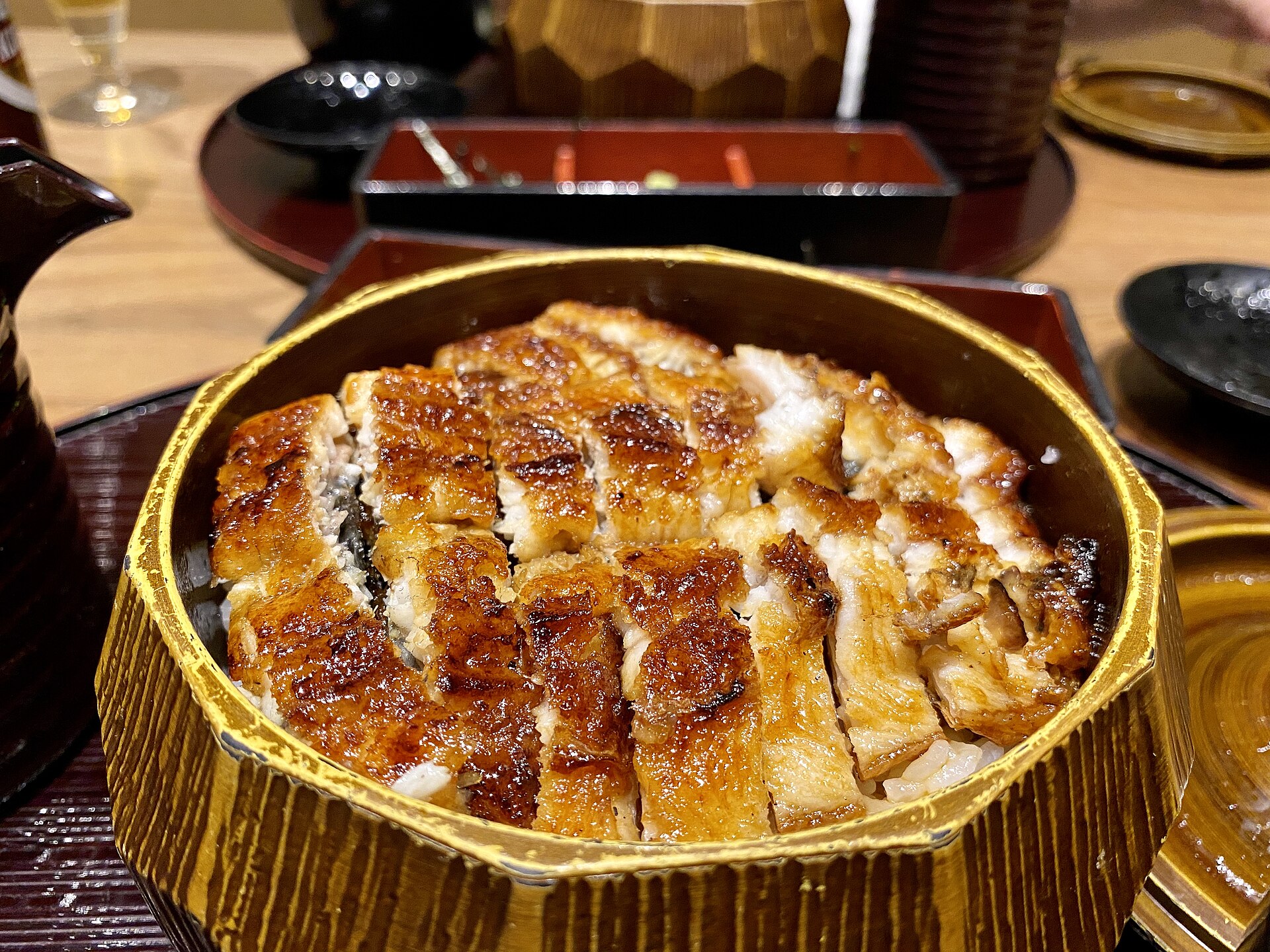
Hitsumabushi
— Nagoya's grilled eel, eaten three ways
Grilled eel chopped over rice in a wooden tub, eaten three ways: plain, with condiments, then as a broth-soaked bowl. The dish belongs to Atsuta, the shoreline post town at the foot of Nagoya's great shrine.
- FromNagoya Station
- ~20 minSubway, then 8 min walk
- Get off atAtsuta-Jingu-Denmacho Station (Meijo Subway Line)
- On foot
- Hitsumabushi
The sweet spot
Hitsumabushi is not hidden — it is on menus around Nagoya Station and in the department stores, and that is where the queues form. What few people do is eat it in Atsuta and then keep walking the last few hundred metres to the old landing, which stays quiet on an ordinary afternoon.
Where it is
27 more notes in Aichi · open the map →What to look for — in walking order
- Atsuta Jingu's south gatethe shrine's southern approach, the reason a post town grew on this shore
- The old Tokaido streetthe narrow street running south from the gate toward the water
- The stone lanterna tall lantern on the landing, once a night light for boats crossing the bay
- The bell towera rebuilt tower whose bell once marked the hours for waiting travellers
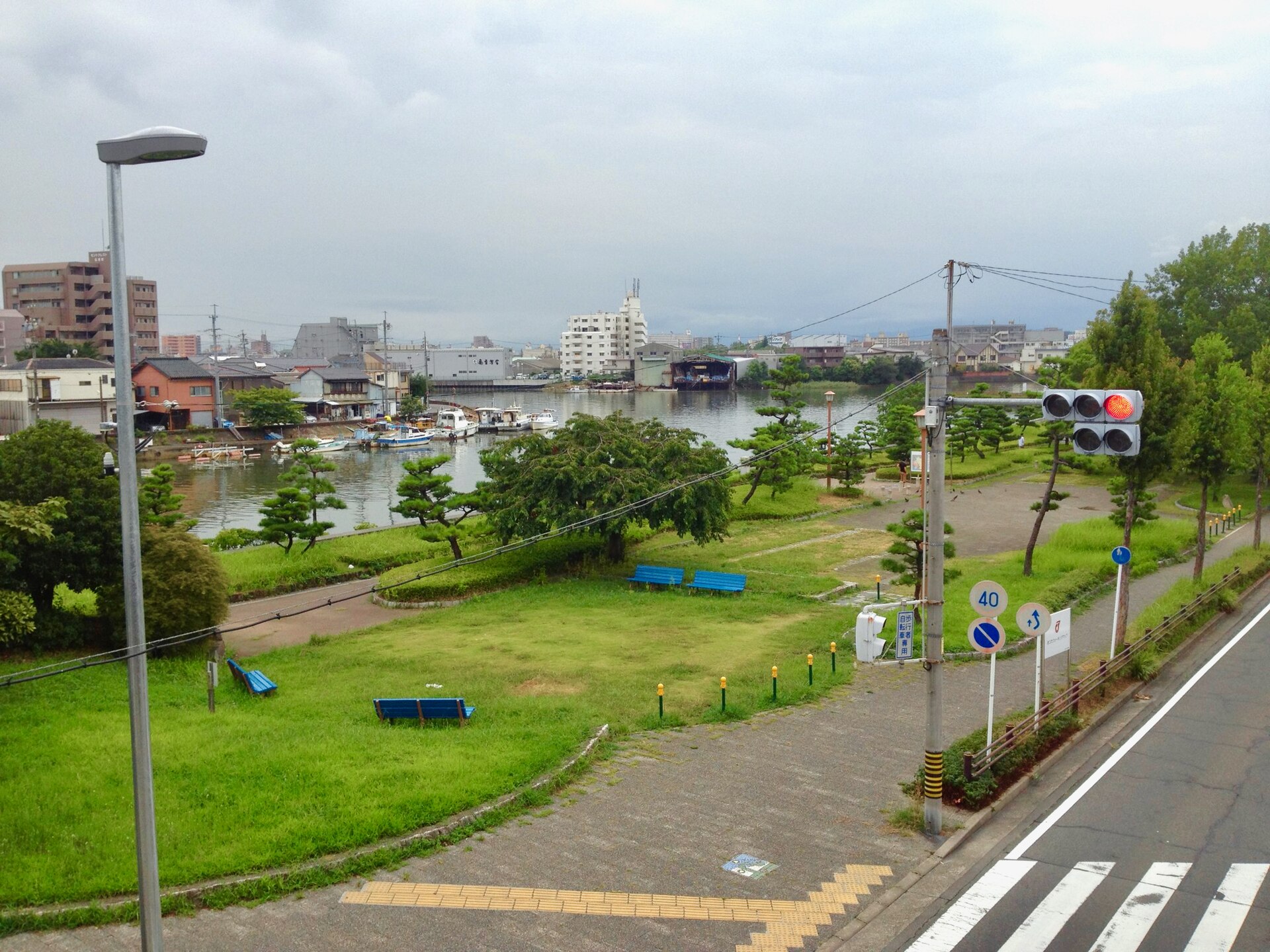
- The waterfront edgethe park's stone waterside at the mouth of the Horikawa, where the Kuwana boats tied up
How to actually get there
- Nagoya Station → Kanayama (JR, a few minutes).
- Kanayama → Atsuta-Jingu-Denmacho (Meijo subway line, three stops).
- Station → Atsuta Jingu's south gate (walk ~4 min north).
- South gate → the old Tokaido street → Miya no Watashi Park at the water (walk ~10 min).
- Meijo subway line via Kanayama
- From Nagoya Station take a JR train a few minutes to Kanayama, then change to the Meijo Line, the city's loop. Atsuta-Jingu-Denmacho is three stops on, past Nishi-Takakura and Atsuta-Jingu-Nishi. Both legs run frequently, so no timetable planning is needed.
- Return from Atsuta-Jingu-Denmacho
- Ride the loop back to Kanayama for JR trains to Nagoya Station, or stay on it as far as Sakae. Meitetsu's Jingu-mae station is also walkable, on the shrine's east side, and its trains run towards Central Japan International Airport.
About the place
Atsuta was the last stop on the Tokaido before the water. Travellers heading west did not walk on from here; they boarded a boat across Ise Bay to Kuwana, a passage of seven ri that gave the crossing its name, Shichiri no Watashi. The landing is now Miya no Watashi Park, an open space at the mouth of the Horikawa with a stone lantern, a bell tower and steps down to the tideline. Between that shore and Atsuta Jingu's south gate lies the neighbourhood where hitsumabushi was invented, and the eel house credited with it still trades on the same streets.
How to enjoy it
Treat it as a lunch and a walk: the south gate, the old street and the landing make a loop of well under an hour on flat ground. Eel is grilled to order, so allow more time at the table than the map suggests. The lantern is lit after dark, which makes an early-evening meal work just as well.
Background & history
Atsuta stood at the gate of its shrine and at the terminal of the Tokaido's only official sea route, so it fed travellers for centuries. The eel restaurant credited with hitsumabushi opened here in 1873, and its three-way service — plain, then with condiments, then with broth — became the way the dish is eaten everywhere. On the shore, the stone lantern that guided boats was raised in 1654 and rebuilt on the landing in 1955, beside a tower whose bell once told travellers the hour.
Before you go
- Cash
- The park is open ground with nothing to pay. Restaurants differ in whether they take cards, so carry some cash for the meal. IC cards work on the subway and on JR.
- Before you go
- The park faces the water and is exposed to wind, with little shade. The lantern and the bell tower are outdoor monuments with no gate or closing time, and the streets around them are residential, so keep the noise down in the evening.
- Another way
- JR's Atsuta Station on the Tokaido Main Line is also walkable, but it is farther, about 1.3 km to the north in a straight line. Meitetsu's Jingu-mae is a longer approach, through the shrine grounds from the east side.
- After you get off
- From Atsuta-Jingu-Denmacho, the shrine's south gate is a few minutes north; the park is about eight minutes south-west, down the old Tokaido street to the water.