Minamiaizu · OzeNo.561★★Open in map →
Hinoemata Village
— Farmers' kabuki and the road into Oze
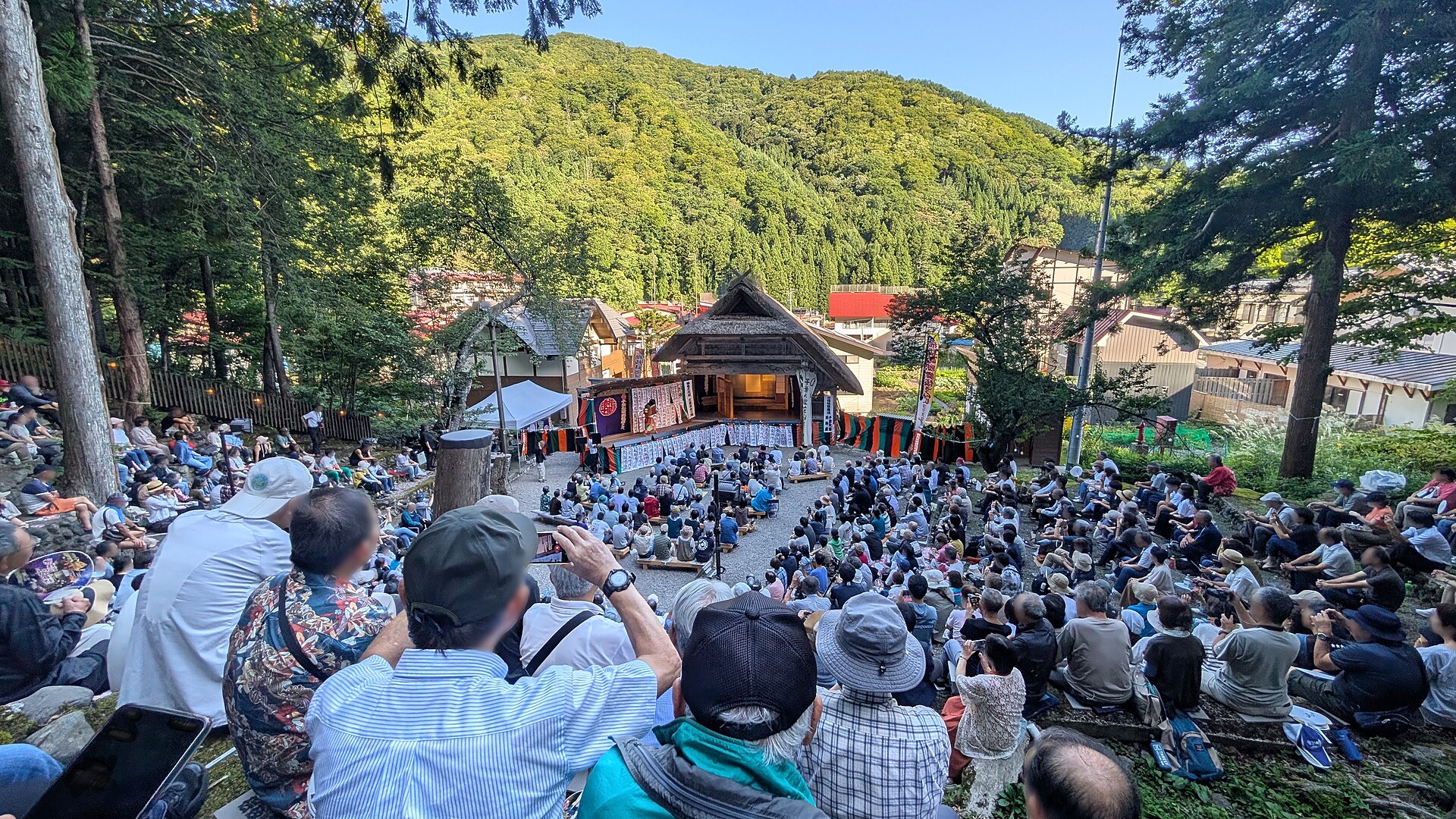
A mountain village at the Fukushima entrance to the Oze wetlands, with a thatched kabuki stage on its shrine grounds and a bank of stone steps for an auditorium. The villagers' own troupe performs on a few fixed festival days; the rest of the year the stage simply stands there.
- FromAizu-Tajima Station
- ~1 hr 30 minAizu bus, green season
- Get off atHinoemata Yakuba-mae bus stop (Aizu Bus)
- On foot
- Hinoemata Village
The sweet spot
This is not an undiscovered village. It is the Fukushima gateway to Oze, and on performance days and hiking weekends the road is busy. What is unusual is the ratio: a settlement this small carrying a theatre tradition this old, and doing it as an offering to the shrine rather than as a show that runs on demand.
Where it is
20 more notes in Fukushima · open the map →What to look for — in walking order
- Michi-no-Eki Oze Hinoematathe roadside station at the north end, with the village's public hot spring and pool complex
- The Route 352 streetthe single line of houses, their roofs kept to one rust-red colour by village agreement
- Kabuki Densho-kan Chibanoyathe troupe's exhibition hall beside the shrine's stone torii, holding costumes and records
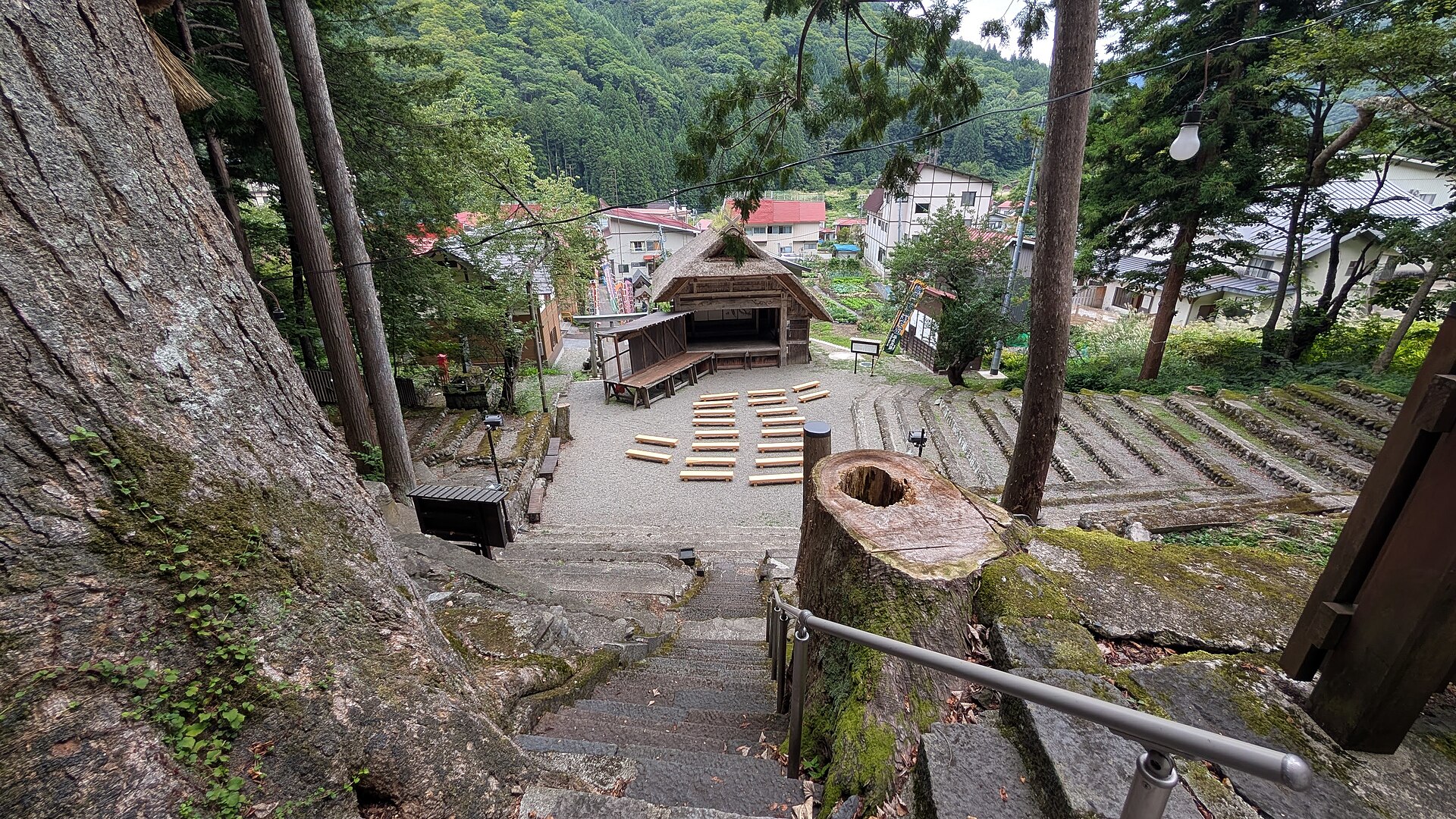
- Hinoemata-no Butaithe thatched stage on the shrine grounds, with a kabuto-zukuri roof and a fixed double stage inside
- The stone-step auditoriumthe steep banked seating facing the stage, with the shrine itself at the top row
How to actually get there
- Asakusa → Aizu-Tajima Station (Tobu and Aizu Railway through services).
- Aizu-Tajima Station → Hinoemata Yakuba-mae (Aizu Bus, about an hour and a half; four services a day in the green season).
- Bus stop → the village shrine, walking south along Route 352.
- Shrine torii → the exhibition hall, then the stone steps and the stage above them.
- Aizu Bus from Aizu-Tajima Station
- Aizu-Tajima is the railhead, reached from Asakusa on the Tobu through services. The Aizu Bus route to Hinoemata and Oze Numayama-toge takes about an hour and a half to the village, with four departures a day in the green season. The route now runs from Aizu-Tajima rather than Aizu-Kogen Ozeguchi, so older timetables mislead.
- Returning the same day is tight
- Buses back down the valley are as few as the ones coming up, and the last one leaves in the afternoon. Most people stay a night — the village turned to guesthouse-keeping decades ago and much of the accommodation is family-run. If you must return the same day, buy your seat for the down journey before you walk to the stage.
About the place
Hinoemata lies in the far south-west of Fukushima, where the Hinoemata river runs between Aizu-Komagatake and Hiuchigatake. Almost all of the village's land is forest, and the houses gather on the one narrow shelf of flat ground beside National Route 352. On the shrine grounds at the southern end stands the stage: a thatched building with a kabuto-zukuri roof, a gable form particular to this village, facing the shrine rather than the audience. The slope in front of it has been banked into stone steps, and that is where people sit. Everything — actors, costumes, scenery — is made and worn by villagers.
How to enjoy it
The three performance days are fixed: 12 May at the Atago shrine festival, 18 August at the shrine's own festival, and the first Saturday of September for the Kabuki Evening, which is the one aimed at visitors. Around those dates the village fills, so book a room early or come on an ordinary day, when you can climb the stone steps alone and see how the stage faces the shrine rather than the seats. Pair it with Oze if you are here in the green season; the shuttle to the pass leaves from the same road.
Background & history
Kabuki reached this valley in the Edo period and stayed. The stage burned with the rest of the village in the fire of 1893 and was rebuilt around 1897, and that rebuilt building was designated an Important Tangible Folk Cultural Property of Japan in 1976 — one of a pair with the Omomo stage in the next town. The performance tradition itself was designated an Important Intangible Folk Cultural Property of Fukushima Prefecture in 1999. The troupe carrying it, Chibanoya Hanakomaza, keeps about thirty members, drawn from a village whose surnames come down almost entirely from three families.
Before you go
- Cash
- The bus company's cross-Oze pass is sold only through a smartphone app, not at the station kiosk and not on board, so set that up before you travel. The Aizu-Tajima to Numayama-toge return ticket is handled at the station shop instead. In the village itself carry cash. Performance details are published each year by the tourism association — check them rather than assuming a schedule.
- Before you go
- This is a designated heavy-snow area. The bus drops to a skeleton service in winter, and Route 352 westward into Niigata is closed from late autumn until early summer. The Oze shuttle beyond the village runs in the green season only, roughly late May to late October, and private cars cannot continue to the pass.
- Another way
- From the Niigata side, the Oze-guchi boat landing on Lake Okutadami connects to the shuttle over Numayama-toge in the green season only, and the seats must be reserved in advance. By car the approach is Route 352 from Minamiaizu; the road west of the village is not a through route in winter.
- After you get off
- From the Hinoemata Yakuba-mae stop, walk south along Route 352 a few hundred metres to the stone torii of the village shrine. The exhibition hall stands beside the torii, and the stage is up the steps behind it.