Chiba south · Kyonan / HotaNo.105★Open in map →
Ezuki Narcissus Road
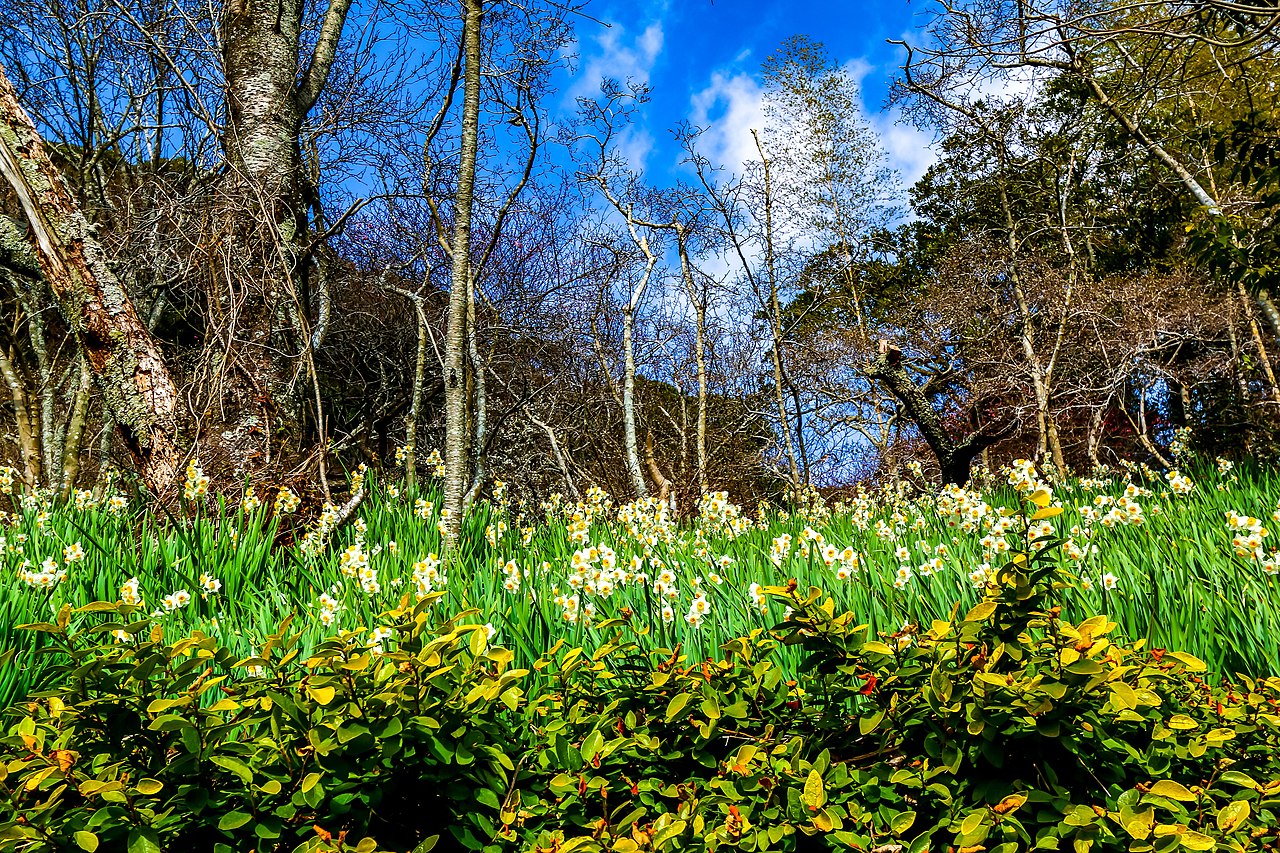
A country road through the Ezuki hamlet in southern Chiba, lined on both sides with wild narcissus that bloom through the depths of winter — one of Japan's three great narcissus-growing areas.
- FromTokyo Stn
- ~2 hr 10 mintrain (infrequent) + walk
- Get off atJR Hota Stn
- On foot
- Ezuki Narcissus Road
The sweet spot
Winter is not the season most people associate with the Boso peninsula, and this is a working farm road with no gate or ticket — so few foreign visitors come, and there is little English guidance. People come for the peak of the scent, not for a set festival date.
Where it is
50 more notes in Chiba · open the map →What to look for — in walking order
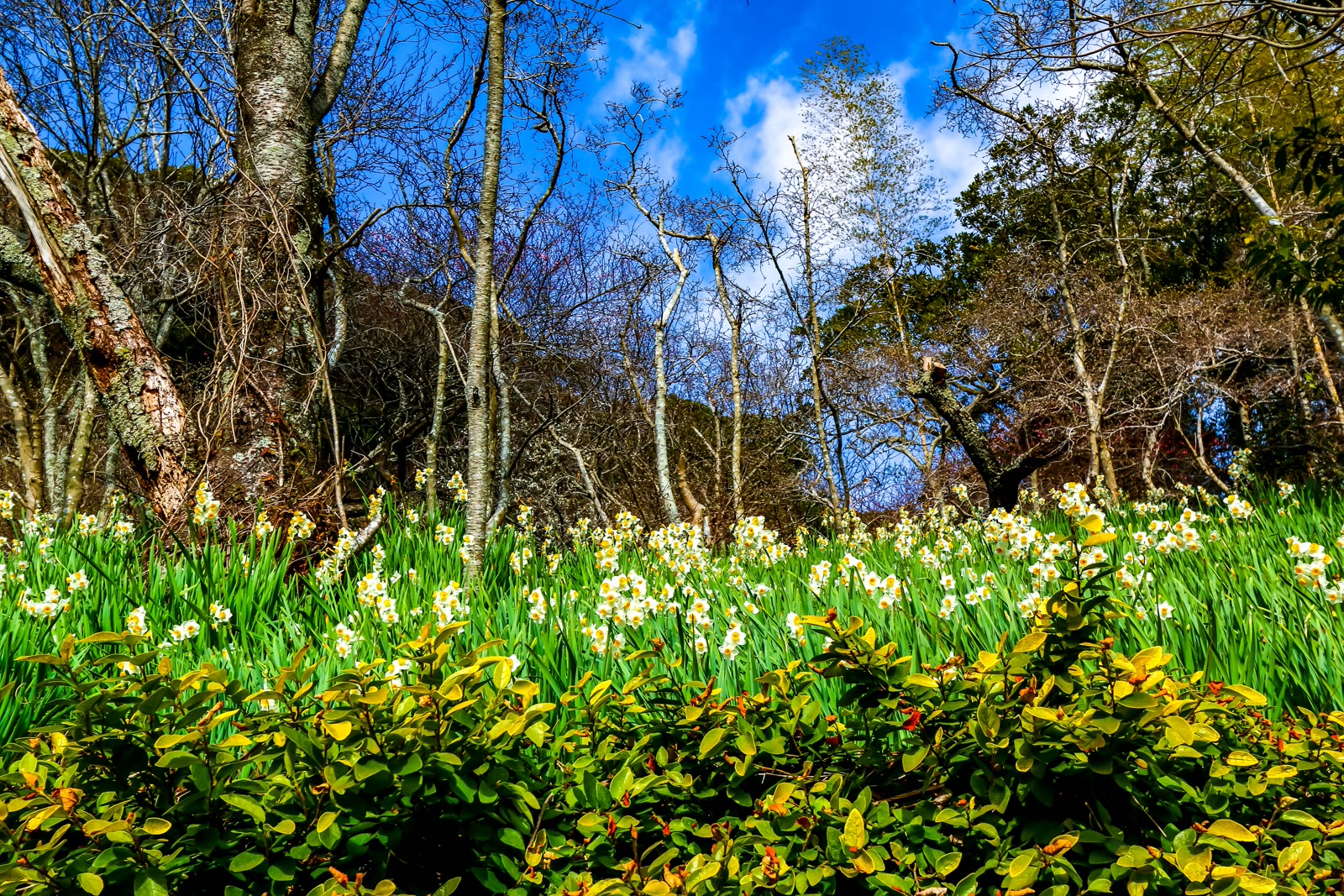
- Roughly 3 km of bloomsnarcissus lining both sides of the road through the hamlet
- Scent before sighttall-stemmed local narcissus prized for a notably strong fragrance
- One of Japan's big threeKyonan ranked alongside Echizen and Awaji as a great narcissus-growing area
- Narcissus Festivalannual stalls selling local produce and flowers at the peak of bloom
How to actually get there
- Tokyo Stn → Chiba Stn (JR Sobu Line Rapid, ~50 min)
- Chiba Stn → Hota Stn (JR Uchibo Line, ~65 min)
- Hota Stn → Ezuki Narcissus Road entrance (walk, ~15 min)
- Tokyo → Chiba → Hota (JR Sobu + Uchibo lines)
- Tokyo Stn →(JR Sobu Line Rapid, ~50 min)→ Chiba Stn →(transfer to JR Uchibo Line, ~65 min)→ Hota Stn →(walk ~15 min)→ Ezuki Narcissus Road. Total about 2 hours 10 min. A slightly different route runs Tokyo →(JR Keiyo Line)→ Soga →(JR Uchibo Line)→ Hota for a similar time. Uchibo Line trains run only about 1–2 per hour, so check the next departure before you set out.
- Return the same way
- Take the JR Uchibo Line back from Hota Stn to Chiba or Soga, then a JR line on to Tokyo. Uchibo Line trains are sparse, so check the return times posted at Hota Station when you arrive and note the last useful train before you start walking the lane.
About the place
For about three kilometres this town road winds through Ezuki, a small farming hamlet on a hillside, with narcissus crowding both edges. The local narcissus are known for strong scent and tall stems, and the cold air tends to carry the fragrance to you before the flowers come into view. Kyonan ranks alongside Echizen in Fukui and Awaji in Hyogo as one of Japan's three great narcissus-growing areas. Walked end to end, the lane takes roughly 30 to 40 minutes, and the town holds an annual Narcissus Festival while the flowers are at their peak.
How to enjoy it
The narcissus are usually at their best from mid-December to the end of January. Reach the road by walking about 15 minutes from JR Hota Station; the lane is walkable end to end in about 30 to 40 minutes. Free parking is available in the town for drivers.
Background & history
Kyonan's link to the narcissus is traced to the Ansei era (1854–1860), when flowers grown in the town's Motona area were shipped by boat to Edo and sold as 'Motona flowers.' The town has grown them ever since, and today close to ten million narcissus are shipped from Kyonan to market each year. The Ezuki lane is one of several spots in the town, alongside Sakuma Dam Park and the Kuzure Narcissus Township.
Before you go
- Cash
- Rural stations and festival-season stalls are often cash-only — carry some coins and small notes.
- Before you go
- The narcissus bloom mid-December to end of January; the inland valley is cold in winter, so dress warmly.
- Another way
- For drivers, the town offers free parking; a bike rental is also available at the Michi-no-Eki Hota Shogakko roadside station near Hota Stn.
- After you get off
- From Hota Station, walk inland toward the hamlet; it is about 15 minutes on paved roads to the start of the flowered lane.