North Okinawa · MotobuNo.658★★★Open in map →
Bise Fukugi Tree Road
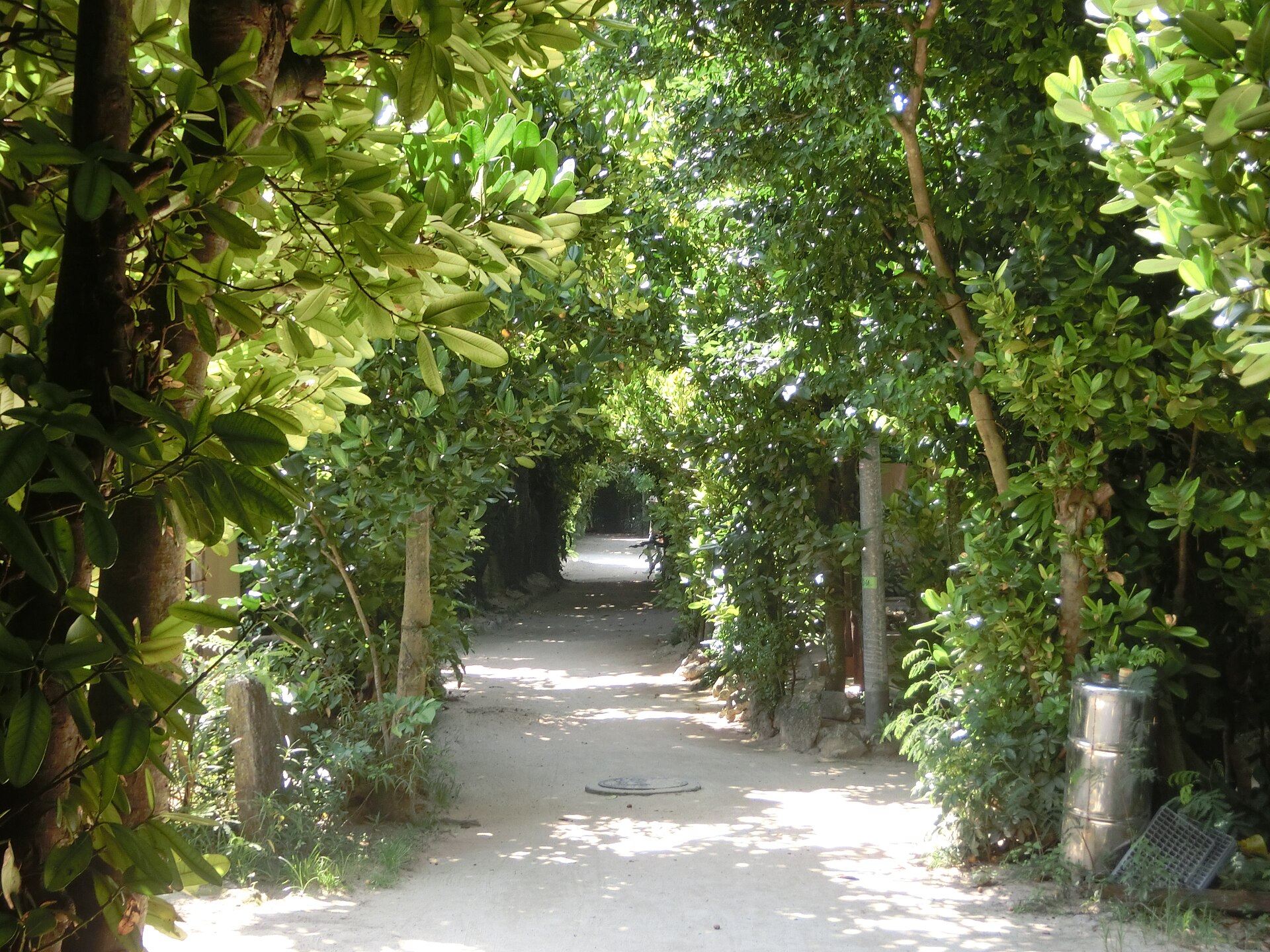
The lanes of an Okinawan hamlet on the Motobu peninsula, running between house lots screened by fukugi — the evergreen the islands plant as a windbreak. The main lane leads north through the village and ends at Cape Bise.
- FromNaha Airport
- ~1 h 50 minBus routes 65, 66 and 70
- Get off atBise-iriguchi bus stop (Motobu Peninsula routes 65 and 66, Bise route 70)
- On foot
- Bise Fukugi Tree Road
Where it is
41 more notes in Okinawa · open the map →What to look for — in walking order
- Bise hamlet entrancewhere the coast road is left behind and the first fukugi close in over the lane
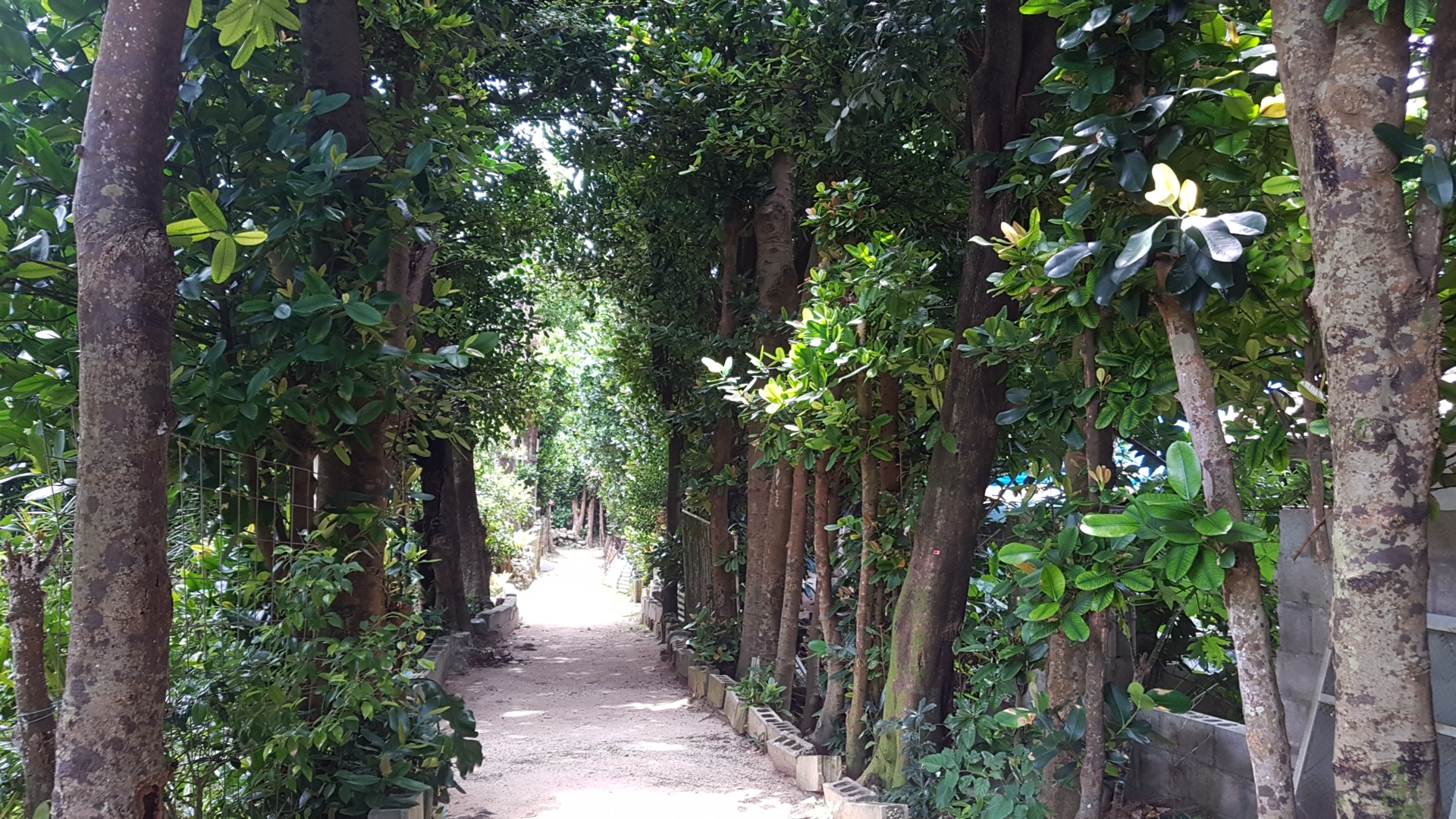
- The main fukugi lanea straight corridor of evergreens screening the house lots on both sides
- The side lanesnarrower turnings off the main corridor, each a working street of the hamlet
- Cape Bisethe north end, where the trees stop and the shallow reef flat opens to the sea
How to actually get there
- Naha Airport → the Motobu peninsula (about 1 h 50 min by road, per the prefectural tourism site).
- Bus routes 65, 66 or 70 → Bise-iriguchi stop.
- Bise-iriguchi → the hamlet (about 5 minutes on foot).
- Walk the main lane north through the village to Cape Bise, then return through the side lanes.
- North from Naha by road or bus
- The Okinawa prefectural tourism site allows about an hour and fifty minutes by road from Naha Airport, and about forty-five minutes on ordinary roads from the Kyoda interchange at the end of the expressway. By bus, the Motobu Peninsula routes 65 and 66 and the Bise route 70 all call at Bise-iriguchi, on the road at the edge of the hamlet.
- Return from Bise-iriguchi
- The same routes — 65, 66 and 70 — serve the return from Bise-iriguchi toward the peninsula's main roads. Timetables are posted at the stop. Read yours before you walk into the hamlet, because the lanes are a slow walk in both directions and there is no shortcut back.
About the place
Bise sits at the northern tip of the Motobu peninsula, a short way up the coast from Ocean Expo Park and the Churaumi Aquarium. Its lanes run in deep shade. Fukugi trees stand close on both sides, planted as windbreaks around the house lots, and the light comes through the canopy in pieces. Almost every house here still stands inside its own screen of trees, which is what the Okinawa prefectural tourism site records about the hamlet. The main lane runs north through the village and comes out at Cape Bise, where the trees stop and the reef flat opens to the sea. People live along it: these are the hamlet's streets before they are anybody's walk.
How to enjoy it
The canopy holds the lanes in shade even at midday, which is what makes this walkable in Okinawan heat when open ground is not. Walk the main lane north to Cape Bise first, then let yourself get lost in the side turnings on the way back — the hamlet is small enough that you cannot go badly wrong. Keep to a resident's pace and a resident's volume; the doorways are a few steps from the trees.
Background & history
Fukugi is an evergreen of the Ryukyu Islands, and planted in rows it grows into a solid green wall that blunts wind and salt spray. Bise used the tree the way Okinawan hamlets long did: a belt of fukugi around each house lot, and the gaps between those belts left as the village's streets. Almost all of the houses here still stand inside their own screen of trees. What survives is not a park designed for visitors but a working settlement whose windbreak happens to have become the reason people come.
Before you go
- Cash
- There is no ticket gate on the lanes and nothing to pay to walk them. A car park serves the hamlet, and the Motobu Town Tourism Association lists a sightseeing cart operating among the trees for those who would rather ride than walk.
- Before you go
- The lanes are narrow and unlit, and they are residents' streets before they are a route — houses, gardens and washing lines sit directly behind the trees. The Motobu peninsula lies on Okinawa's typhoon track from summer into autumn, when the coast road and the bus services along it can both be disrupted.
- Another way
- Come from Ocean Expo Park. The Churaumi Aquarium sits just south along the same coast, close enough that most visitors reach Bise as part of the same afternoon rather than as a separate trip.
- After you get off
- From Bise-iriguchi the prefectural tourism site allows about five minutes on foot to the hamlet. Head toward the sea and the fukugi close over the lane; keep north and the main lane carries through the village to Cape Bise.