West Harima · AkoNo.1147★★Open in map →
Ako Castle and Oishi Shrine
— The Chushingura castle town on the Harima coast
The ruined castle the forty-seven ronin served, with its moat and gates rebuilt over a ground plan that survives almost whole. The shrine that enshrines them stands inside the third bailey, linked to the station by a single street.
- FromHimeji Station
- ~35 minJR rapid, direct from Himeji
- Get off atBanshu-Ako Station (JR Ako Line)
- On foot
- Ako Castle and Oishi Shrine
The sweet spot
This is a famous story in a well-signposted town, so it is not a secret. What gets missed is the order. Most visitors are dropped at the castle gate and read the shrine as an annexe, when the well by the station, the street, the gate and the shrine are the sequence events actually ran in.
Where it is
30 more notes in Hyogo · open the map →What to look for — in walking order
- Ikitsugi Wella well on a small plaza minutes from the station, where the riders from Edo drank before reporting
- Oshiro-dorithe straight street from the well to the main gate, and the route the December parade takes
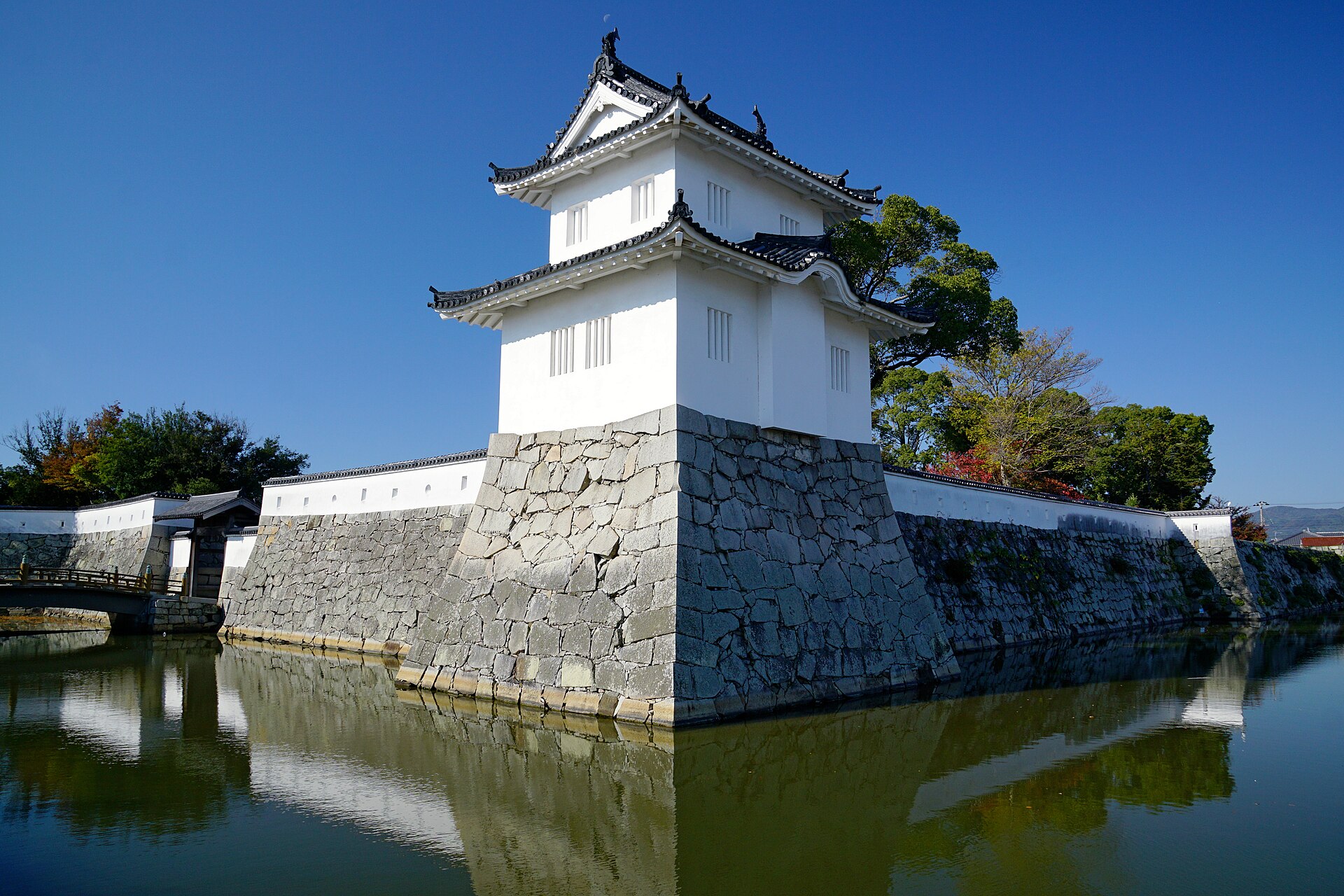
- The Ohte gate and corner turretwhite plaster and stone rising out of the moat at the main entrance
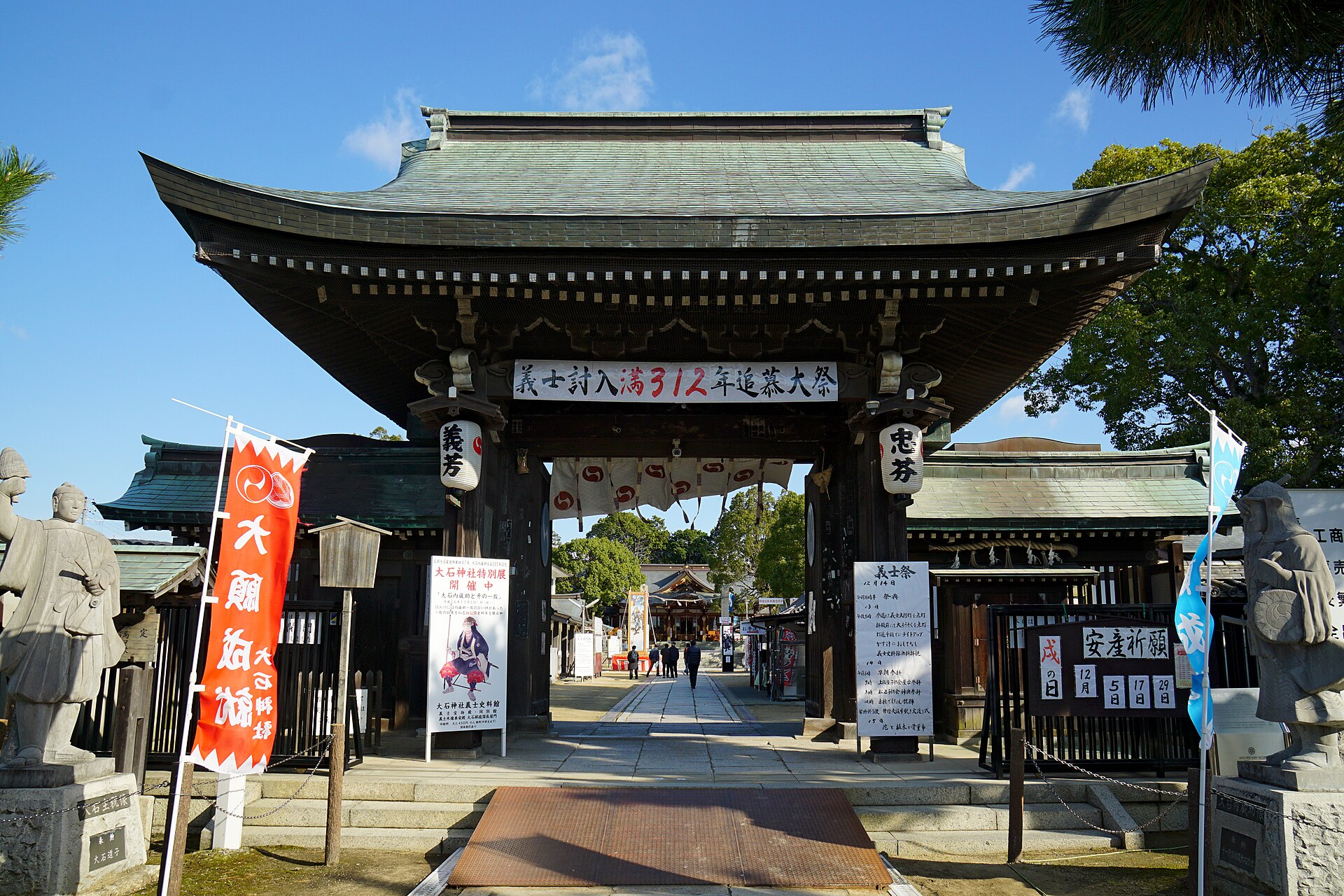
- Oishi Shrinestone figures of the retainers lining the approach, beside the chief retainer's surviving gatehouse
- The inner bailey gate and gardena rebuilt square gate opening onto a pond garden and the stone platform at the centre
How to actually get there
- Himeji Station → Banshu-Ako Station (JR Ako Line, rapid or local, about 35 min, terminus).
- Banshu-Ako Station → Ikitsugi Well and its plaza (walk south, about 5 min).
- Oshiro-dori to the Ohte gate, then on to Oishi Shrine inside the walls (about 15 min from the station).
- Through the inner bailey gate to the garden and the keep platform, which stop admitting in late afternoon.
- JR Ako Line, direct from Himeji
- Himeji Station →(JR Ako Line, Shin-Kaisoku rapid or local, about 35 min)→ Banshu-Ako Station, the terminus. Some rapids run through from Osaka and Kobe with no change at all. From the station the well is about 5 min on foot and the shrine about 15, and the route is essentially one street.
- Returning from Banshu-Ako Station
- Banshu-Ako is the end of the line, so trains toward Himeji start here and you board an empty carriage. Locals run one to two an hour through the day. The through rapids to Osaka are concentrated in the morning and evening, so outside those hours plan on changing at Himeji.
About the place
What paid for Ako was salt. The lord who built the castle also opened tidal salt fields here on a large scale, which is why the castle sits flat on the shore rather than on a hill, and the story of Ako salt is recognised as Japan Heritage along with the castle site itself. The castle was designed as a coastal flatland fort of irregular concentric form, its baileys wrapped one inside another, and that ground plan survives almost entire: moat, stone bases, a rebuilt corner turret and gates, and open grass where the buildings stood. The site is a national historic site and its two gardens a national place of scenic beauty.
How to enjoy it
The inner and second bailey gardens open at 9:00 and stop admitting at 16:00, while the moat, the main gate and the streets have no hours at all — so walking in from the station early costs nothing and puts you at the gate as the gardens unlock. On 14 December the memorial festival sends its procession from the castle gate down Oshiro-dori to the plaza with the well, which is the way you walked in, reversed. The shrine's treasure hall keeps its own hours and charges to enter.
Background & history
Work began in 1648 under Asano Naganao and finished in 1661. The plan was drawn by his retainer Kondo Masazumi, with the military scholar Yamaga Soko advising on the second bailey. In 1701 the lord, Asano Naganori, drew his sword inside Edo Castle, was ordered to take his own life the same day, and the domain was dissolved; two of his samurai rode the news home from Edo by relay palanquin. His retainers took their revenge on a winter night nearly two years later. The shrine that enshrines them was founded in 1912.
Before you go
- Cash
- Walking the castle grounds and both gardens costs nothing. The shrine precinct is open freely; its treasure hall charges an admission fee. The Ako Line is inside the ICOCA IC-card area, so the card you use in Osaka works through to the terminus.
- Before you go
- The gardens close over the new year period. The upper room of the inner bailey gate is opened only on some weekends, and not in midsummer or midwinter. The moat, the walls and the streets have no gate and no closing time.
- Another way
- The Ako Line also comes in from Okayama on the west side, so Ako can be slotted between Himeji and Okayama instead of being an out-and-back. By car it is about 10 min from the Ako interchange on the Sanyo Expressway, with free parking at the castle.
- After you get off
- Leave Banshu-Ako Station and walk south. The well and its small plaza come up within about 5 min, and Oshiro-dori runs on from there straight to the castle's main gate.