Ehime · TobeNo.947★★Open in map →
Tobe Ware Village
— Ehime's blue-and-white porcelain district
A porcelain district on the southern rim of the Matsuyama plain, where the ware is white, slightly thick and painted in cobalt blue. The kilns are scattered, but the public buildings line up along one short walking path.
- FromMatsuyamashi Station
- ~50 minIyotetsu bus from Matsuyama
- Get off atTobeyaki Dento Sangyo Kaikan-mae (Iyotetsu Bus)
- On foot
- Tobe Ware Village
The sweet spot
Tobe ware is well known across Japan as everyday tableware, but the district that makes it sits off the standard Ehime route, a round trip south of the city's main sights. The town also reads as car-only from a map, because its kilns are dispersed across several valleys. The walkable part is small, and it is not obvious until you are standing on it.
Where it is
29 more notes in Ehime · open the map →What to look for — in walking order
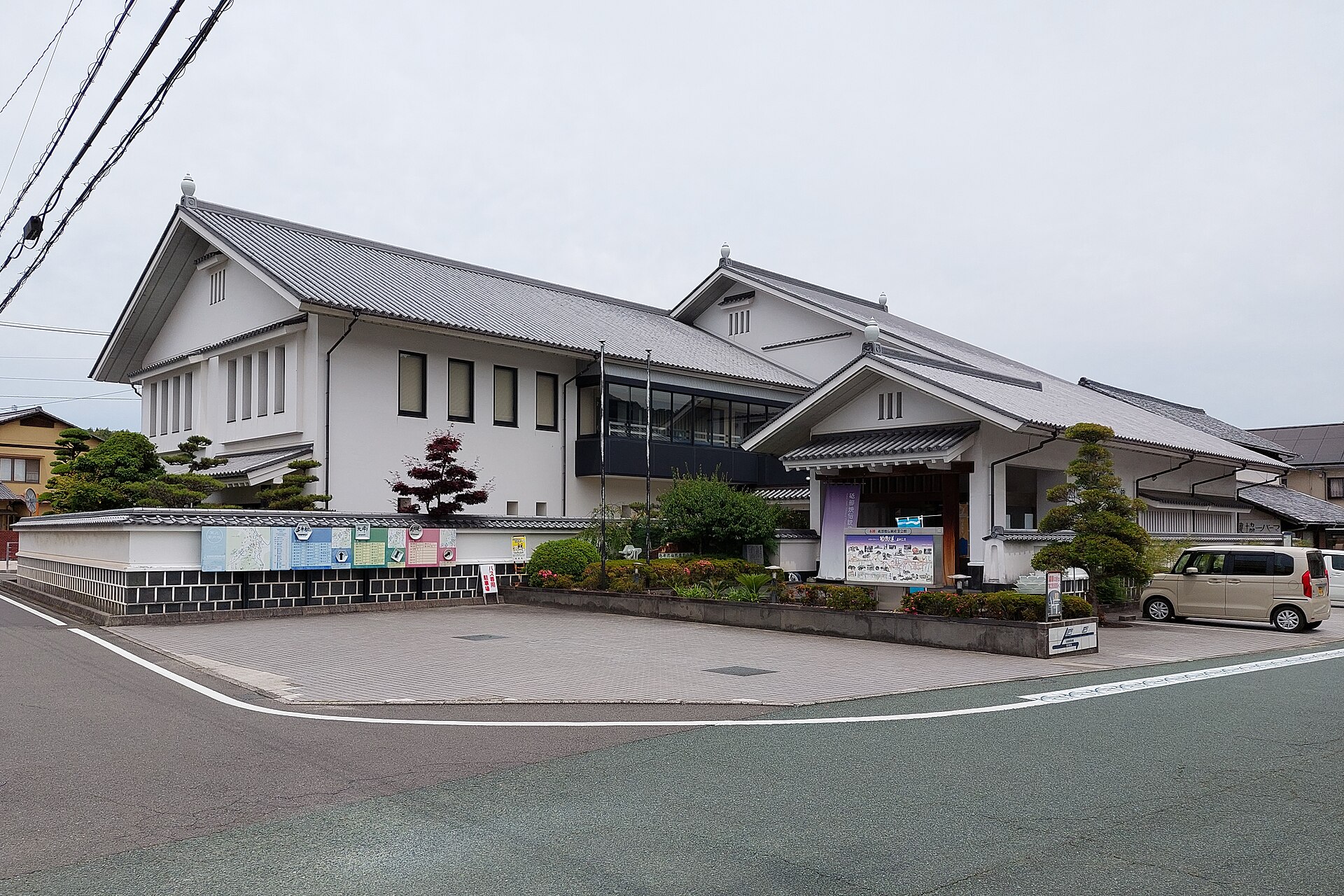
- Tobe-yaki Traditional Industry Hallwork from around eighty kilns shown and sold together, with historical pieces and process panels
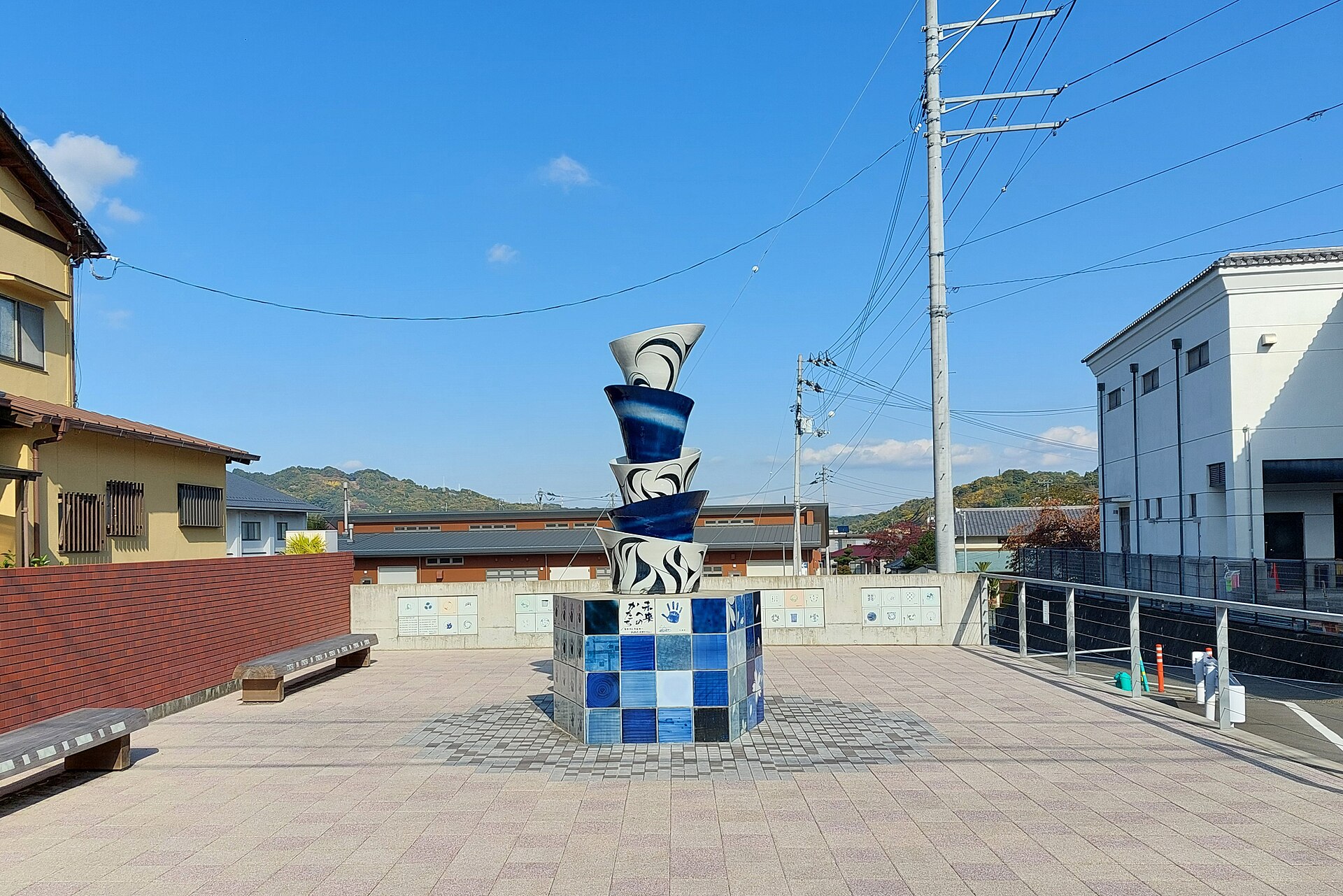
- The porcelain torch monumenta stack of blue-and-white vessels on the open square beside the hall
- Toban no Michia walking path with painted porcelain tiles set into its pavement and side walls
- Toso-ga-okaa low hill with the memorial stone to Sugino Josuke and a wall of dated shards
- Tobe Ceramic Art Centrethe town-run workshop for wheel, hand-building and painting sessions
How to actually get there
- Matsuyamashi Station → Tobeyaki Dento Sangyo Kaikan-mae (Iyotetsu bus, Morimatsu–Tobe route, about 45 minutes).
- Cross to the Traditional Industry Hall and the porcelain monument on its square (about a minute on foot).
- Follow the tiled path south-west past Toso-ga-oka to the town's ceramic workshop, then walk back to the same stop.
- Iyotetsu bus from Matsuyamashi Station
- Take an Iyotetsu bus on the Morimatsu–Tobe route from Matsuyamashi Station, bound for Danso-guchi or Oiwabashi, and get off at Tobeyaki Dento Sangyo Kaikan-mae. Tobe Town puts the ride at about 45 minutes. The hall is a minute from the stop. Pay on the bus and check the fare on the display as you board.
- Return from the same stop
- The stop back toward Matsuyamashi Station is on the same road. These are ordinary town services rather than a tourist shuttle, so read the posted timetable before you commit to the far end of the walking path.
About the place
Tobe lies at the southern edge of the Matsuyama plain, across the Shigenobu River from the city. Porcelain has been its industry since the late Edo period, and kilns are still scattered through the valleys. Because they are spread out, the usual way to see them is by car. The town has also strung its public sites together as a walking trail, the Tokaido Gojusan-tsugi, with 53 marked points along Routes 33 and 379. The stretch around the Traditional Industry Hall is the part that works on foot: close enough together that you can carry a bowl home from one end of it.
How to enjoy it
Tobe Town lists the hall as open 9am to 5pm, closed on Mondays and from 29 December to 1 January. The workshop at the other end of the path keeps a different closing day, so confirm both before you set the date. The bus from Matsuyama takes most of an hour each way, which makes this a half-day of its own rather than something wedged between two other stops.
Background & history
The Ozu domain ordered porcelain to be made at Tobe in 1775. Two years later, in 1777, the potter Sugino Josuke succeeded in firing it, and Tobe ware began. A better grade of porcelain stone was found at Kawanobori in 1818, and the body of the ware improved with it. The national government designated Tobe ware a traditional craft in 1976, and Ehime Prefecture listed it as an intangible cultural property in 2005.
Before you go
- Cash
- The hall charges admission — Tobe Town listed 300 yen for an adult when checked, with reductions for students and for over-65s. The monument and the tiled path are outdoors and free. Carry cash for the bus fare and for the workshop.
- Before you go
- The hall closes on Mondays, or the next weekday when a Monday falls on a public holiday, and over the New Year period. The ceramic workshop closes on a different day of the week, so check it separately. The path and the monument are open ground and depend on the weather.
- Another way
- By car, leave the Matsuyama Expressway at the Matsuyama interchange and follow Route 33 south; sources put the drive at ten to fifteen minutes. There is parking at the hall.
- After you get off
- From the Tobeyaki Dento Sangyo Kaikan-mae stop the hall is right there, about a minute on foot. The tiled path and the workshop run on from it to the south-west.