Hida · TakayamaNo.1161★★Open in map →
Takayama Jinya
— Japan's only surviving shogunate magistrate's office
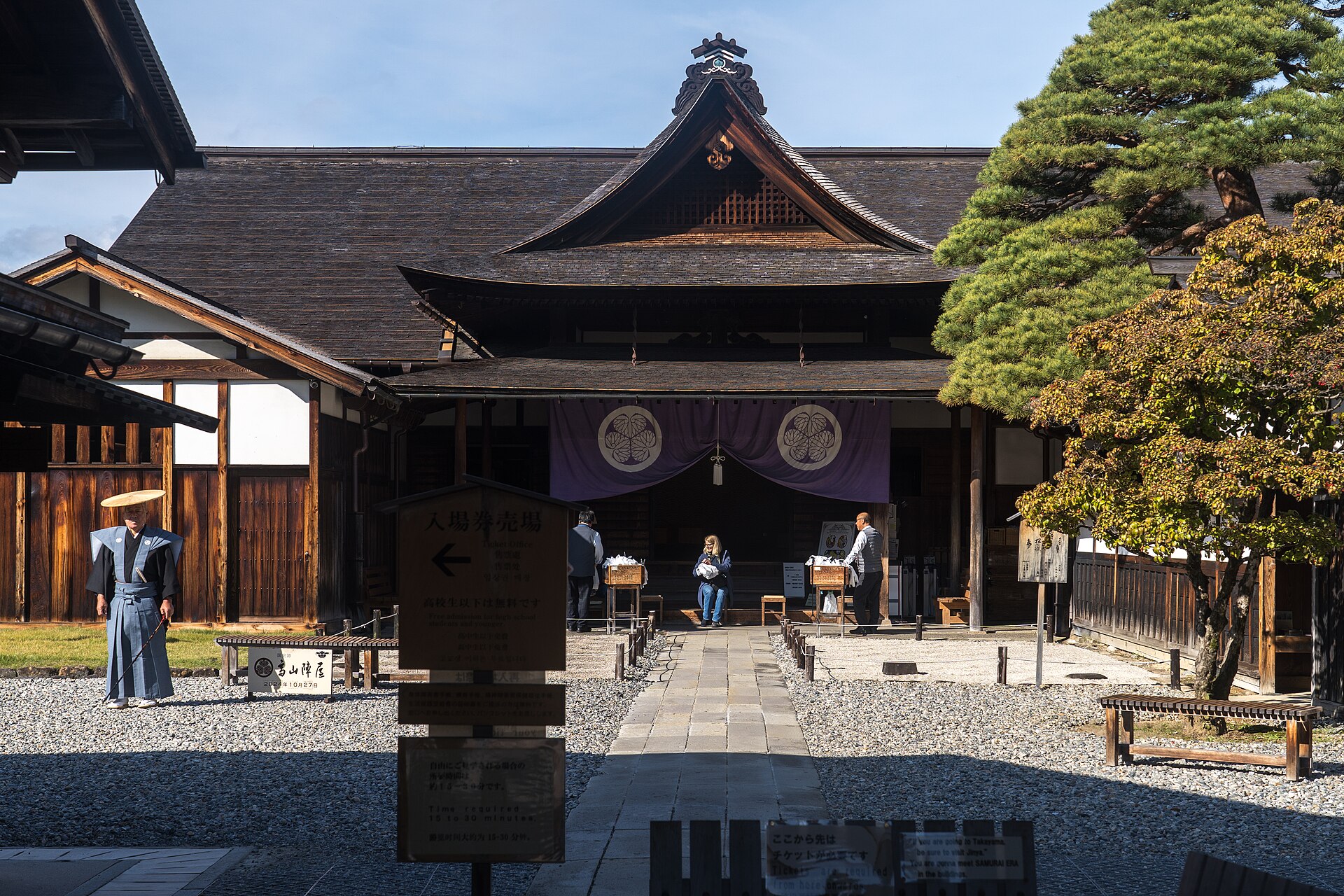
A working government office of the Edo shogunate, still standing in a Takayama side street with its rice storehouses behind it. The shogunate built these across the country to run the provinces it held directly, and this is the one that survived whole.
- FromTakayama Station (JR Takayama Main Line)
- ~10 minWalk from the station, ~10 min
- Takayama Jinya
The sweet spot
The Jinya is on every Takayama itinerary and it sells tickets, so it is not an undiscovered building. What varies is when you meet it. The compound opens earlier than the shops in the old town across the bridge, and the market at its gate is trading before that, so the first hour of the day is the one hour when both the office and the market can be taken slowly. Later the same rooms are shared with groups who have finished the merchant streets.
Where it is
18 more notes in Gifu · open the map →What to look for — in walking order
- The main gatean original surviving building, opening onto the plaza where the market sets up
- The entrance daislaid with seigaiha, the wave pattern read as a wish for lasting peace
- Oshirasuthe floor where suspects were questioned and judgment was handed down
- Ohiromathree rooms opened into one, the largest space in the compound and its formal hall
- The rabbit nail coversrabbits set over the nail heads along the lintels, a charm for children and against fire
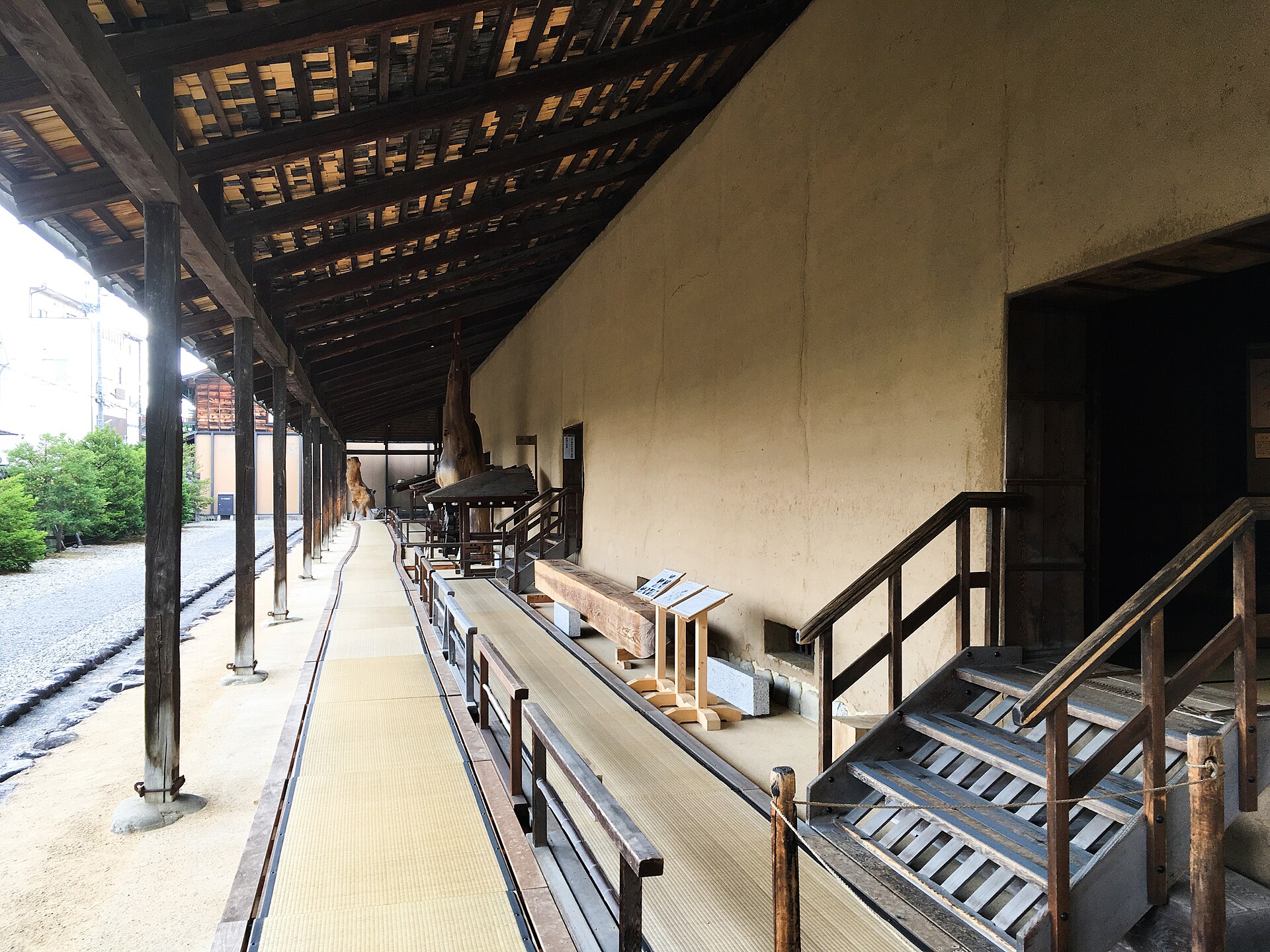
- The Onkura granarythe tax-rice storehouses at the back, among the oldest of their kind still standing
How to actually get there
- Takayama Station east exit → the Jinya on foot, about 10 minutes east on flat streets.
- Reach the plaza in front of the main gate while the market is still trading.
- Go in after the gate opens at 8.45 and work through the office rooms and the courtroom floor.
- Follow the corridor at the back to the granary range, then cross Nakabashi into the old town.
- On foot from Takayama Station
- Takayama Station east exit, or the Nohi bus centre beside it, then east on foot for about 10 minutes on flat streets. No transfer and no ticket for the walk itself; admission is paid at a booth inside the front gate. The route ends at an open plaza, so the gate is in sight before you reach it.
- Return to Takayama Station
- Walk back west, the same ten minutes, for the Limited Express Hida south toward Nagoya or north toward Toyama, or for the long-distance coaches at the Nohi centre. This is a mountain line with only a handful of through services a day, so read the departure board when you arrive in town rather than when you want to leave.
About the place
The Jinya stands a short walk east of the station, on the near bank of the Miya River and one bridge short of the preserved merchant streets. What is here is not a castle or a lord's residence but an administrative plant: an entrance hall, offices for the clerks, a courtroom floor, the governor's living rooms, and a range of storehouses for the rice taken as tax. The shogunate ran about sixty of these across the provinces it held directly, and every other one was pulled down, rebuilt, or converted past recognition. This is the only site where the buildings themselves came through. The plaza outside the front gate is not empty either.
How to enjoy it
The gate opens at 8.45, and the market on the plaza outside has been trading since early morning and clears around noon. Arrive a little before nine and the two come in the right order: the stalls first, then the compound at the start of its own day. Leave time to follow the corridor to the granary at the back, where the visit stops being rooms and becomes structure.
Background & history
In 1692 the shogunate placed the province of Hida under its direct rule and set up this office to administer it. The rice granary at the back is older than the office itself: built in the Keicho years and moved here in 1695 from the town's castle. In 1777 the post was raised from daikan to the senior rank of gundai, and twenty-five holders in all were sent out from Edo. Shogunate rule ended in 1868, but the buildings were too useful to give up, and they went on housing government offices until 1969.
Before you go
- Cash
- Admission is charged for adults at a booth inside the front gate, and is free for high-school students and younger. The plaza and the market outside cost nothing. The stalls are run by farming households, so bring cash as well as a card.
- Before you go
- Doors close at five in the afternoon from April through October and half an hour earlier from November through March, with entry stopping half an hour before closing, and the compound also shuts over the New Year. The visit itself is indoors, so weather matters less here than out in the streets — but the walk to the gate is uncovered, and this is a mountain town under snow in winter.
- Another way
- A loop bus through the central streets, the Machinami service, runs from beside Takayama Station and stops at Takayama Jinya-mae, which helps with luggage or in snow. Long-distance coaches also arrive at the Nohi bus centre next to the station, and the walk east from there is the same one.
- After you get off
- From Takayama Station's east exit, walk east for about ten minutes. The Jinya's main gate faces an open plaza on the near bank of the Miya River, one bridge short of the preserved merchant streets.