Aomori · SannaiNo.832★★★Open in map →
Sannai-Maruyama Site
— A Jomon village rebuilt on its excavated ground
A Jomon settlement excavated on a terrace above Aomori Bay and rebuilt at full scale over its own post holes, with the pottery and figurines held in a museum at the entrance. It is a World Heritage site.
- FromShin-Aomori Station (Tohoku Shinkansen)
- ~15 minShuttle bus, ~15 min
- Sannai-Maruyama Site
Where it is
34 more notes in Aomori · open the map →What to look for — in walking order
- Jomon Jiyukanthe entrance building, with the ticket desk and the passage out to the excavation
- Sanmaru Museumthe on-site galleries holding the pottery, figurines and jade brought out of this ground
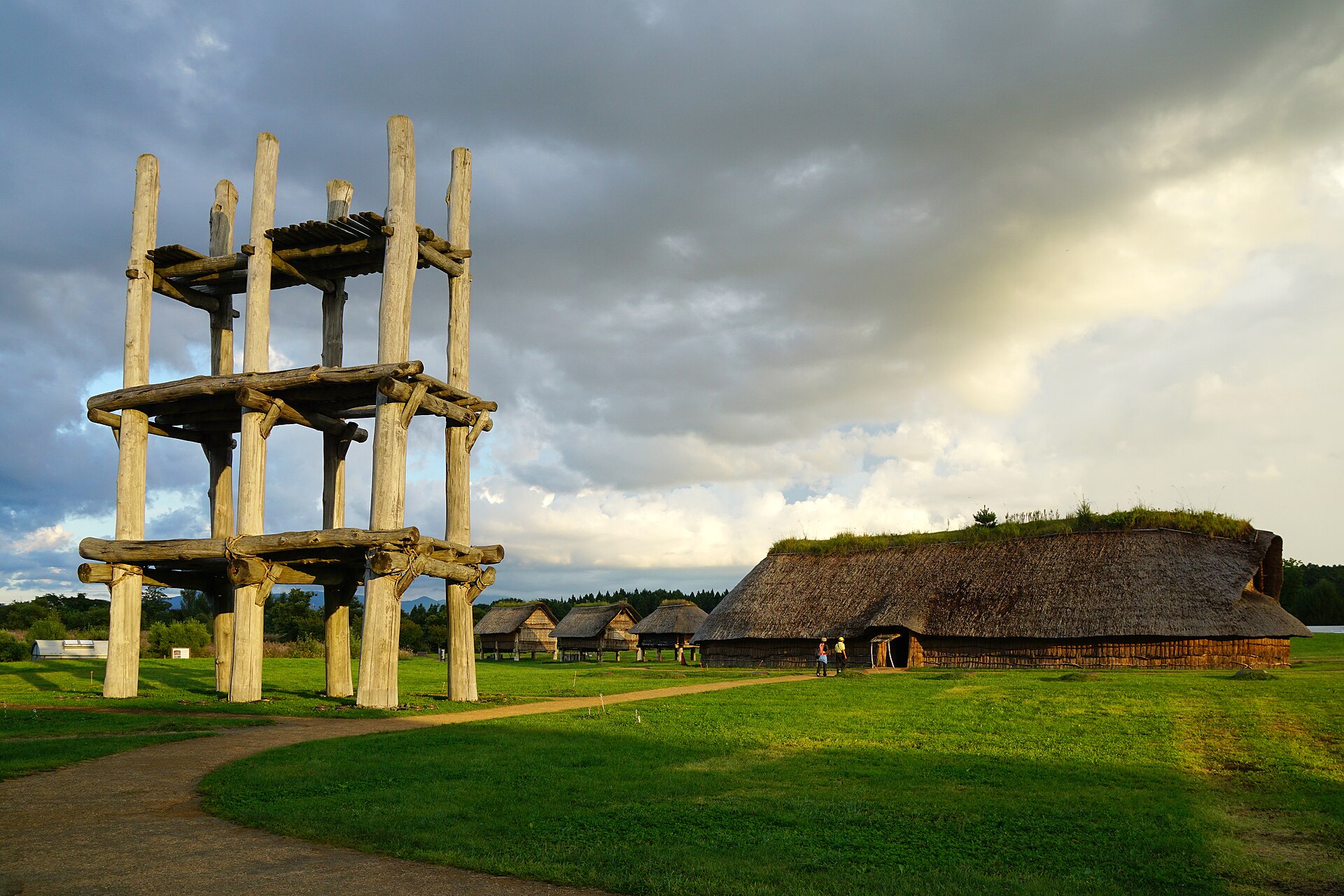
- The six-pillar buildingpost holes about 2 metres across and 2 metres deep at 4.2 metre spacing, rebuilt with chestnut posts about 1 metre thick
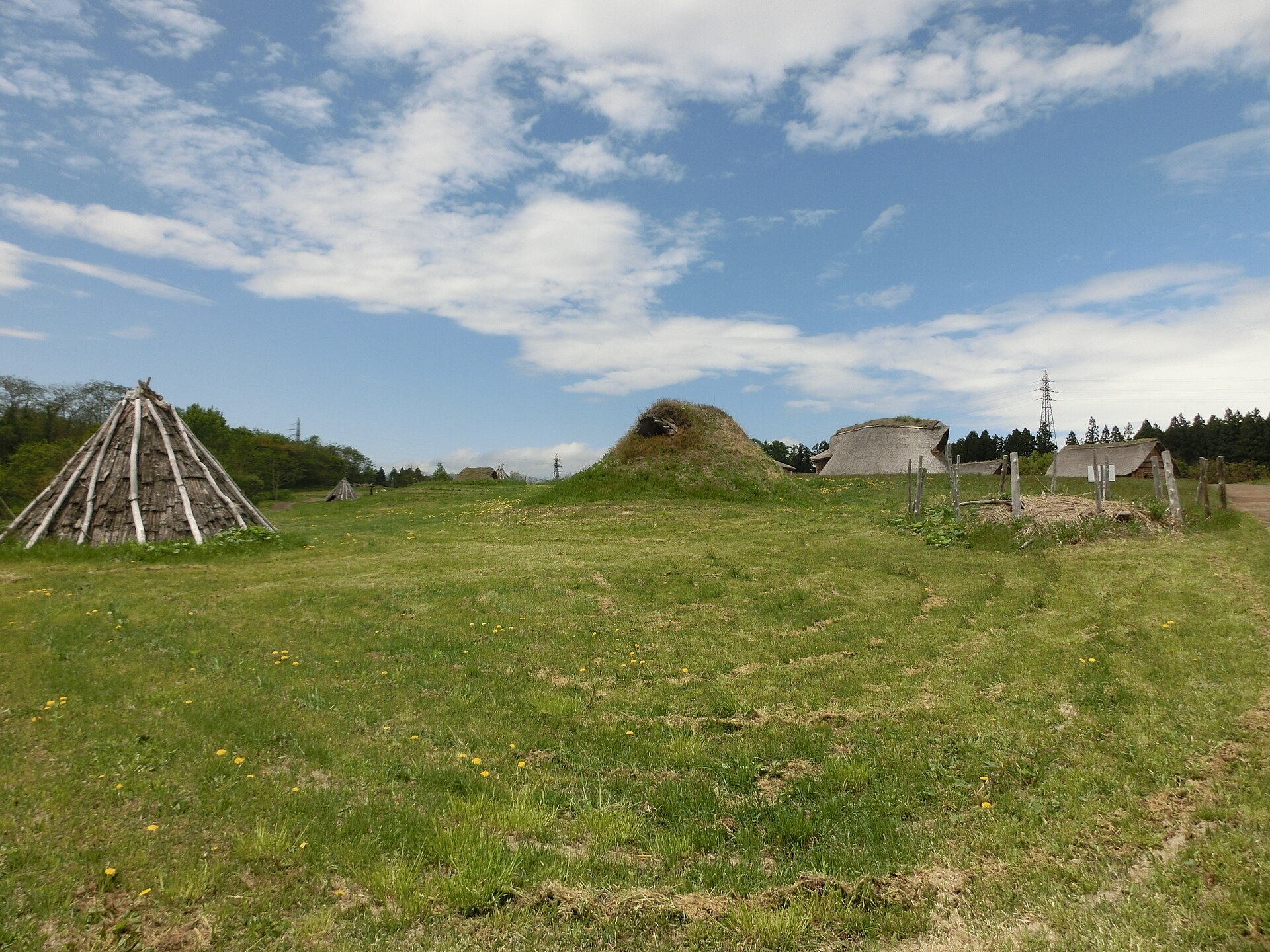
- The pit dwellingssunken-floor houses reconstructed over their excavated outlines, open to step down into
- The large longhousethe biggest reconstruction on the site, thatched over a deep sunken floor
How to actually get there
- Tokyo or Sendai → Shin-Aomori (Tohoku Shinkansen).
- Shin-Aomori Station east exit, stand 3 → Sannai-Maruyama Iseki-mae (Nebutan-go loop bus, about 15 min, 300 yen).
- Through the Jomon Jiyukan and the museum, then out along the loop past the six-pillar building and the dwellings.
- Nebutan-go shuttle from Shin-Aomori Station
- Shin-Aomori is the Tohoku Shinkansen terminus. The Nebutan-go loop bus leaves from stand 3 at the east exit and reaches the Sannai-Maruyama Iseki-mae stop in about 15 minutes for 300 yen. A taxi covers the same road in about 10 minutes.
- Back to Shin-Aomori or on into Aomori
- The same loop bus returns to Shin-Aomori. It also runs on into central Aomori, and the city bus from stand 6 at Aomori Station covers the route in about 30 to 40 minutes for 310 yen. The loop is not frequent, so check the posted departure before you go into the museum.
About the place
The site sits on a terrace on the south-western edge of Aomori city, above the bay. What was found here was not a seasonal camp but a settled village, lived in without a break through the early and middle Jomon period. The excavation has been left visible and built back over: pit dwellings, raised storehouses on posts, and a reconstructed longhouse of about 32 metres by 10 metres. Behind the buildings runs a long mound of discarded earth that turned out to hold much of the pottery and the figurines. The whole thing reads as a plan you walk across rather than a row of display cases.
How to enjoy it
The centre opens at nine and closes at five, running an hour later through Golden Week and from June to the end of September, with last entry half an hour before closing. Two hours covers the galleries and a full loop of the excavation without hurrying. A clear afternoon is worth waiting for if you want the tower against sky rather than flat grey.
Background & history
The village was occupied from roughly 3900 to 2200 BCE, across the early and middle Jomon period. The national government listed the excavation as a historic site in 1997 and raised it to Special Historic Site in 2000. In July 2021 UNESCO inscribed it as one of the Jomon Prehistoric Sites in Northern Japan, a serial listing spread across Hokkaido and the north of Honshu.
Before you go
- Cash
- Admission is charged at the centre, with separate fees for the special exhibitions. The buses are paid on board, so keep coins for the fare box.
- Before you go
- The centre closes on the fourth Monday of each month, or the following day when that Monday is a public holiday, and from 30 December to 1 January. The excavation itself is open ground with almost no shelter along the loop.
- Another way
- Aomori Airport is about 30 minutes away by car and the ferry terminal about 20 minutes, while the Aomori interchange on the expressway is roughly 5 minutes off. There is a large car park at the entrance.
- After you get off
- The bus sets down at Sannai-Maruyama Iseki-mae, in front of the Jomon Jiyukan entrance building. Everything starts inside that building — the excavation is reached through it, not around it.