North Osaka · UmedaNo.1021★★★Open in map →
Osaka Kushikatsu
— Deep-fried skewers and the one-dip rule
Kushikatsu is Osaka's own fried food: small pieces of beef, quail egg or vegetable on a bamboo skewer, breadcrumbed and dropped into oil to order. The tub of sauce on the counter is shared, so each skewer is dipped once.
- FromShin-Osaka Station
- ~10 minJR, then 3 min on foot
- Get off atOsaka Station (JR Kyoto Line)
- On foot
- Osaka Kushikatsu
Where it is
40 more notes in Osaka · open the map →What to look for — in walking order
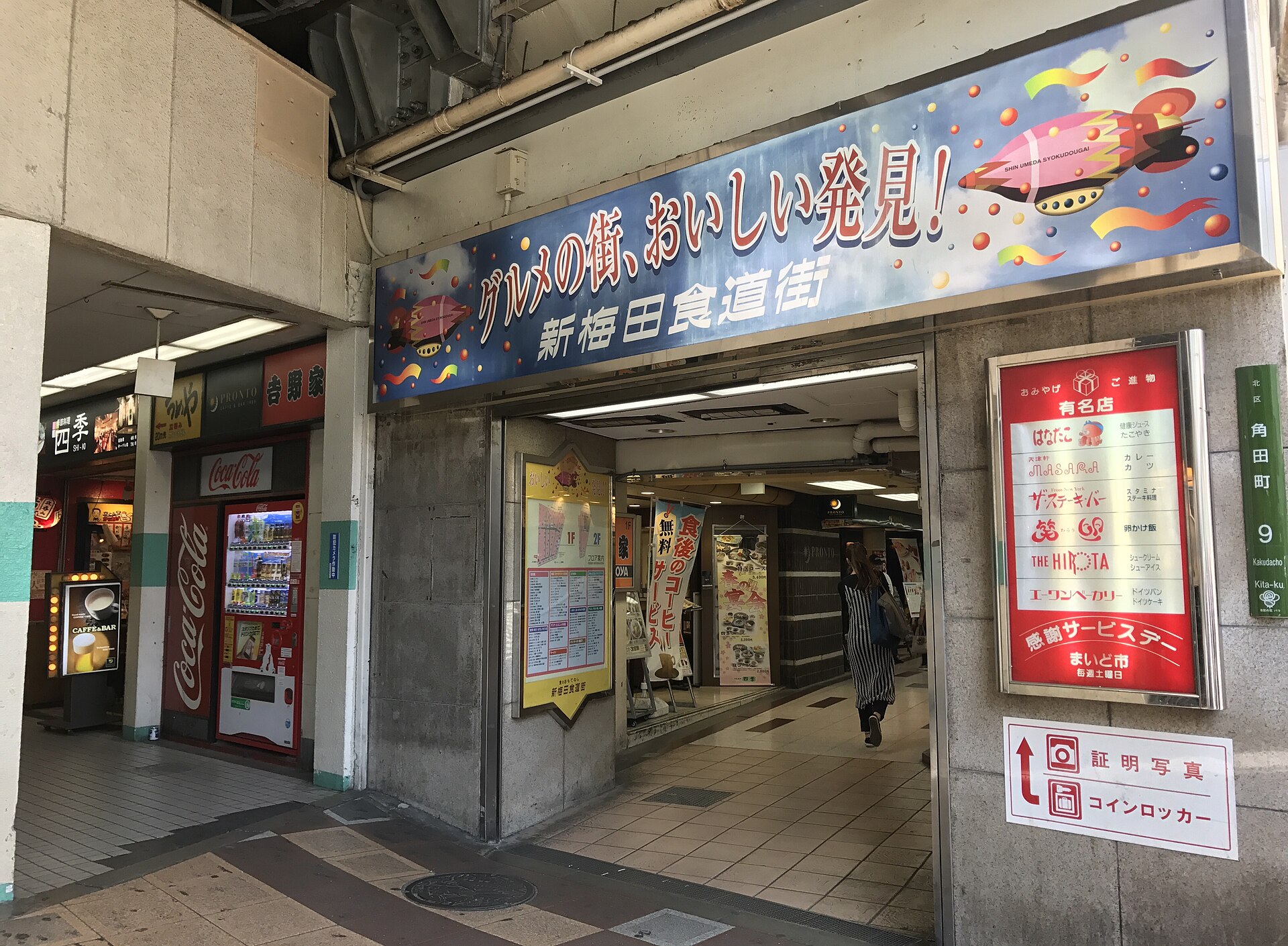
- The viaduct entranceslow openings under the railway tracks, easy to walk straight past at street level
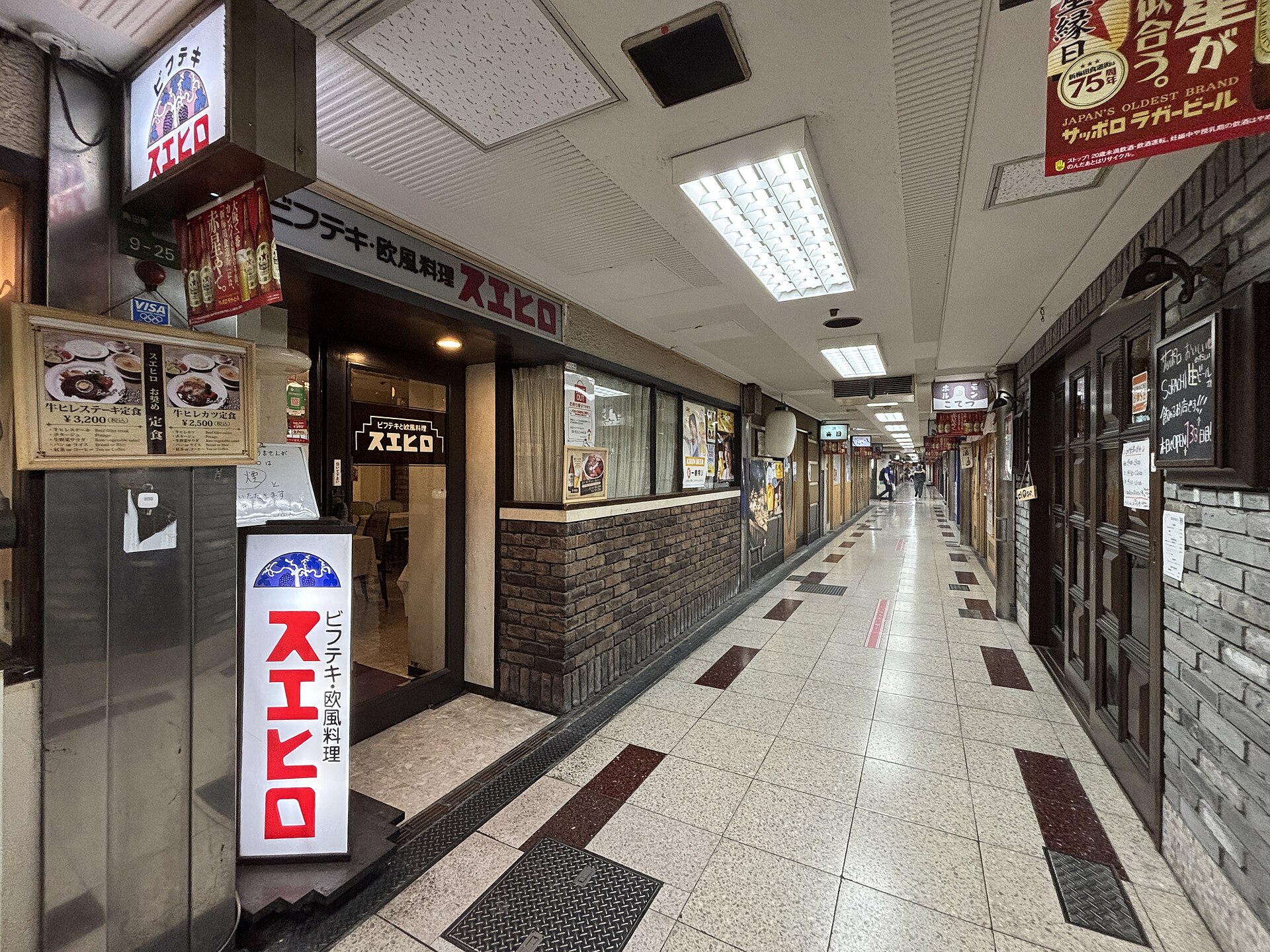
- The ground-floor passagesnarrow lanes with shops facing each other and the ceiling close overhead
- The kushikatsu countersstanding counters set with a shared tub of sauce and a bowl of free cabbage
- The upper levela second floor of the same alley, reached by stairs inside the block
How to actually get there
- Shin-Osaka Station → Osaka Station (JR Kyoto Line, the next stop south).
- Osaka Station → the Midosuji exit at the eastern end of the concourse.
- Walk east under the tracks toward the Hankyu department store, about three minutes.
- Walk the passages once, then take a counter and order two or three skewers.
- JR Kyoto Line from Shin-Osaka
- Take any JR Kyoto Line train from Shin-Osaka and get off at Osaka Station, the next stop south. Services run every few minutes through the day, so no timetable planning is needed. Head for the eastern end of the station and the Midosuji exit.
- Back from Osaka Station
- Osaka Station is the hub of the Kansai network, so returning in any direction is simple. Trains run late, but the counters close earlier than the last services, so the closing time to watch is the shop's rather than the train's.
About the place
Shin-Umeda Shokudogai is a food alley squeezed into the space under the railway viaduct beside Osaka Station. About a hundred small businesses share it. The passages run on two levels, because the viaduct spans were built as two-storey structures, and the ceilings sit close overhead. Several of the shops fry kushikatsu, at counters made for standing or perching rather than settling in for a meal. This is not where the dish was invented, but it is where the whole sequence of ordering, frying and dipping happens a short walk from the platforms.
How to enjoy it
Hours and closing days are set by each shop rather than by the alley, so early evening is when the widest choice of counters is open. Walk the passages once before picking a seat, then order two or three skewers instead of a full meal. Dip each skewer once, and if you want more sauce, scoop it with the free cabbage.
Background & history
Kushikatsu was born in Shinsekai, the working-class amusement quarter laid out below Tsutenkaku, in the last years of Taisho and the first of Showa. It was cheap, quick food for labourers, and the communal tub of thin sauce dates from the same period. The alley beside Osaka Station has a separate beginning. It opened on 15 December 1950 as a relief scheme for retired national railway staff, with eighteen shops fitted under the tracks.
Before you go
- Cash
- Each shop bills separately and skewers are priced one by one, so carry some cash. JR fares can be paid with ICOCA, Suica and the other nationwide transport IC cards.
- Before you go
- Hours and closing days belong to each shop, not to the alley, so one passage can be shuttered while the next is busy. The lanes are narrow and the ceilings low, which makes large suitcases awkward to bring in.
- Another way
- From Hankyu Osaka-umeda Station, walk south past the department store and the alley appears under the tracks.
- After you get off
- From the Midosuji exit at the eastern end of Osaka Station, walk east for a few minutes toward the Hankyu department store. The alley is the low opening under the railway tracks.