South Niigata · MatsudaiNo.1240★★Open in map →
Echigo-Tsumari Art Field
— Outdoor art around the Matsudai rice terraces
Echigo-Tsumari uses farmland as a gallery. Artists work with what the villages of Tokamachi and Tsunan already have, and the permanent pieces stay out between festivals, so Matsudai's cluster can be walked straight from the station platform.
- FromTokyo Station
- ~2 hrShinkansen, then local line
- Get off atMatsudai Station (Hokuhoku Line)
- On foot
- Echigo-Tsumari Art Field
The sweet spot
This is not a hidden place. It is the region's headline attraction, and festival summers bring crowds to the same spots. What is less obvious is that most of the art is permanent rather than temporary, so the unhurried version of the region exists in every year that is not a festival year.
Where it is
12 more notes in Niigata · open the map →What to look for — in walking order
- Tsumari in BloomYayoi Kusama's spotted flower standing in the square outside the station
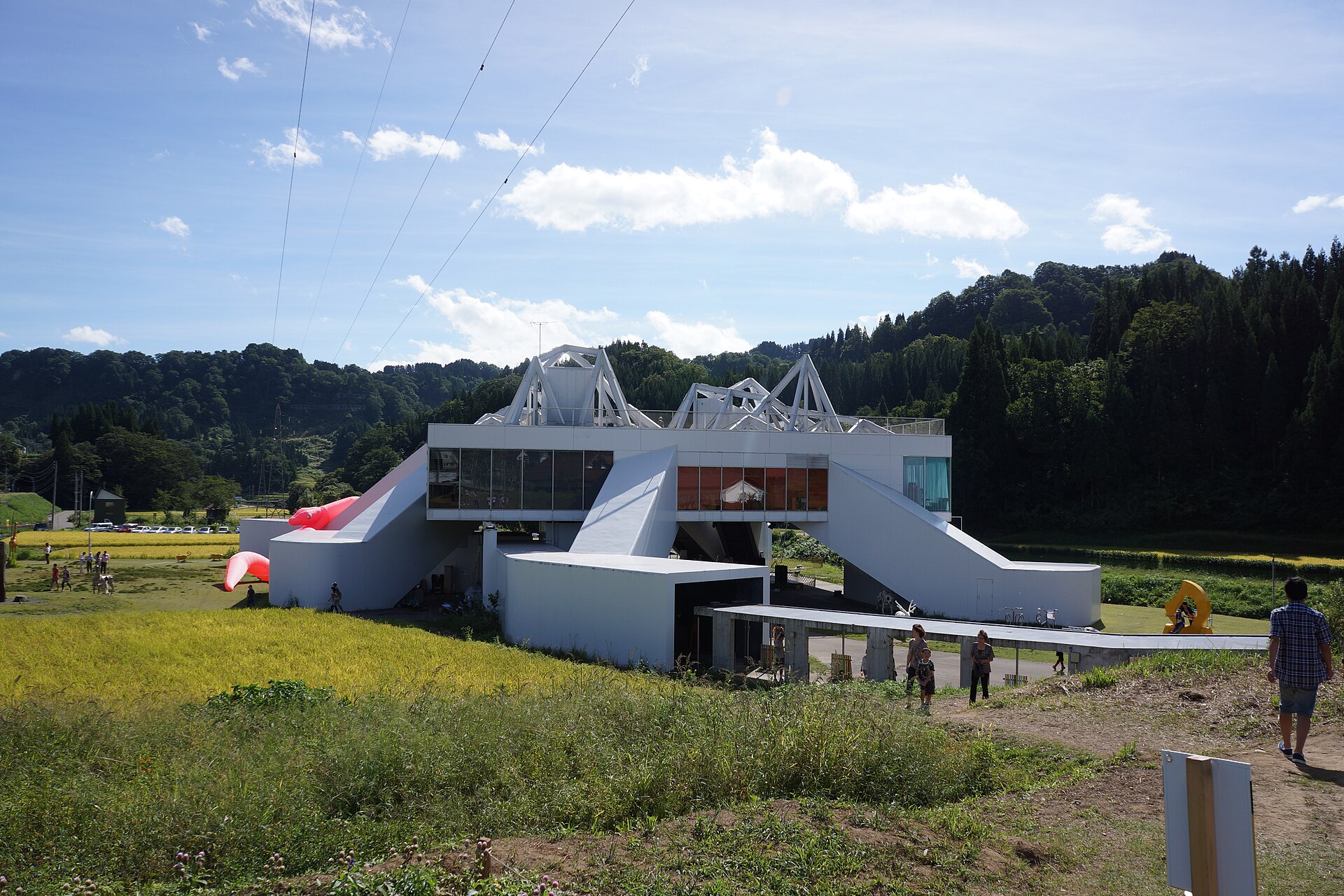
- Nohbutaithe hall joined to the platform, with rooms and fittings made by artists
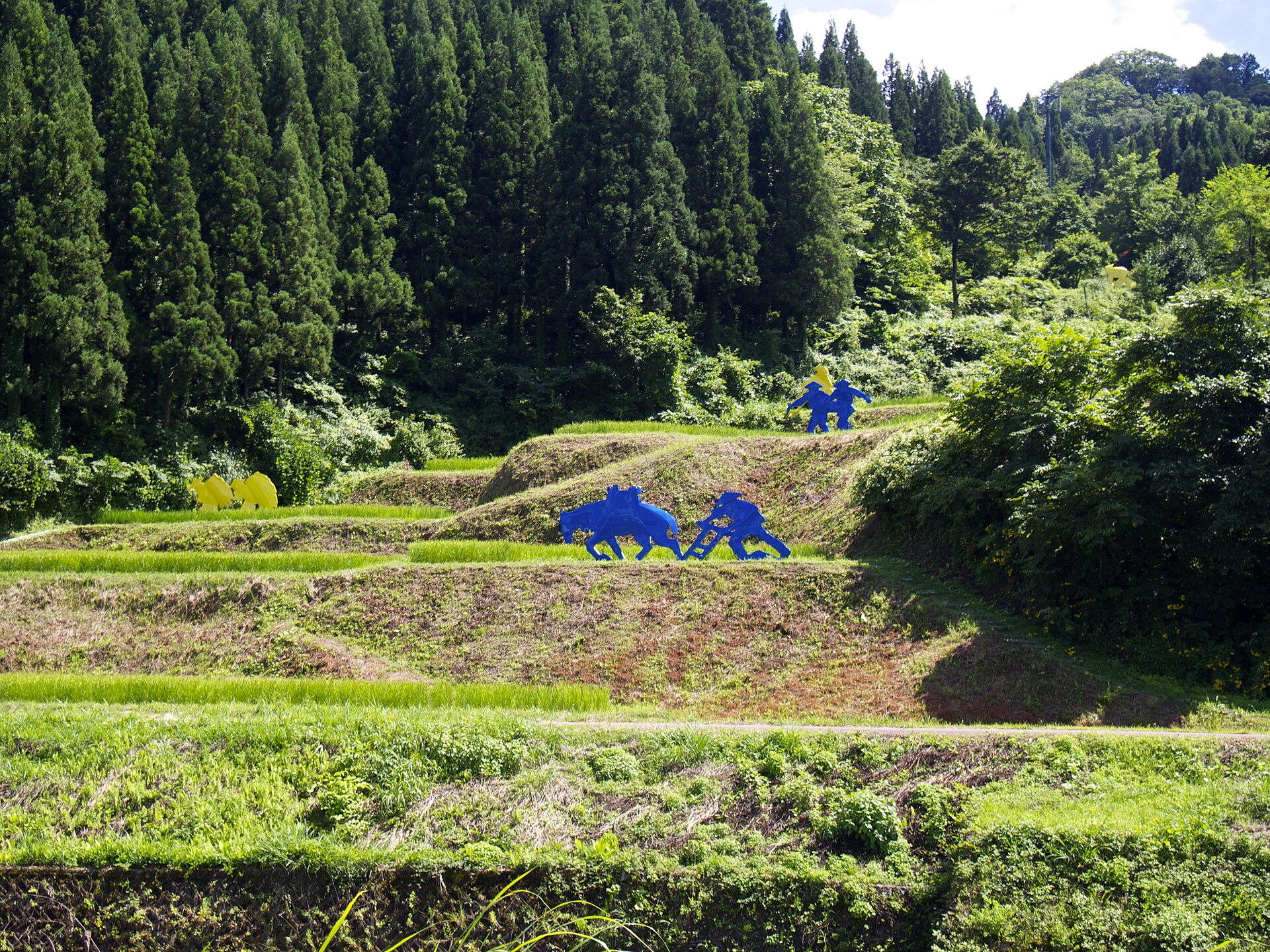
- The Rice FieldIlya and Emilia Kabakov's cut-out farmers in the terraces, read against a poem
- The Wildcat HouseMio Shirai's piece of many doors, named for a Kenji Miyazawa story
- Joyama outdoor worksTower Holding Hands, Arch of Life and the castle lookout up the slope
How to actually get there
- Joetsu Shinkansen from Tokyo Station to Echigo-Yuzawa.
- Change there for the Hokuhoku Line and ride to Matsudai; IC cards are not accepted, so buy a paper ticket.
- Leave by the south exit and take the connecting passage straight into the hall.
- Deck first, then the terraces, then Joyama on the way back.
- Shinkansen to Echigo-Yuzawa, then the Hokuhoku Line
- The official access guide gives about one hour ten minutes from Tokyo Station to Echigo-Yuzawa on the Joetsu Shinkansen, then about thirty minutes on to Tokamachi using the JR Joetsu Line and the Hokuhoku Line. Matsudai lies further along the same line. The JR ticket machines at Echigo-Yuzawa sell a through ticket for the Hokuhoku Line.
- Back from Matsudai Station
- Return on the Hokuhoku Line to Echigo-Yuzawa and change to the Shinkansen. It is the local line, not the Shinkansen, that sets the last usable connection, so settle the return train before you start up the hill. A roadside station shares the station building, which makes waiting easy.
About the place
The art field is not one site. Works are spread through the region in six areas that still follow the old town boundaries, and each sits in something the village already had: a paddy, a school, a slope. Matsudai is the area laid out for arriving by train. Its hall, Nohbutai, was designed by the Dutch practice MVRDV, and the rooms and fittings were given to artists, so the building is a work before anything inside it is. Behind it the ground rises to Joyama, and the outdoor pieces continue up the slope.
How to enjoy it
Opening is listed from ten in the morning, so the deck is a late-morning stop rather than an early one. Read the terraces first, give the hillside about an hour, then come back down to the restaurant. If you only have half a day, the outdoor works are the part to protect.
Background & history
The first Echigo-Tsumari art festival opened in 2000, with 153 works placed across the old towns and villages of the region. It has run once every three years since, and pieces judged permanent were kept in place between editions instead of being cleared away. The hall was built for the second edition, in 2003, to give Matsudai a base that stayed open the rest of the time. Its full name calls it a snow-country farming culture centre, and the programme inside keeps to that.
Before you go
- Cash
- The Hokuhoku Line does not accept Suica, PASMO or any other transport IC card, so buy a paper ticket; the JR machines at Echigo-Yuzawa handle a through ticket for it. Admission to the hall is charged, and the official listings show two kinds of ticket, one for the hall alone and a field museum ticket that also covers the outdoor area and the castle lookout. Decide how far you are walking before you buy, and carry cash for the smaller counters.
- Before you go
- The seasonal part is outdoors. The official site gives the open period for the outdoor works as May to the end of October, and they are not shown through the winter. The hall is listed as closed on Tuesdays and Wednesdays. This is deep snow country, so the footing on Joyama is a different matter from one month to the next.
- Another way
- By car, leave the Kan-etsu Expressway at Muikamachi and follow Route 253 west; the official guide allows about thirty minutes on that road to central Tokamachi, and the hall stands on the same road. In some seasons a shuttle bus or rental cycles are run for the outlying works, so ask at the desk.
- After you get off
- Matsudai Station is on the Hokuhoku Line, and a connecting passage from the south exit leads into the hall, so there is no real walk. The station building has a shop and toilets. The spotted flower stands in the open square just outside.