South Kumamoto · HitoyoshiNo.1181★★Open in map →
Aoi Aso Shrine
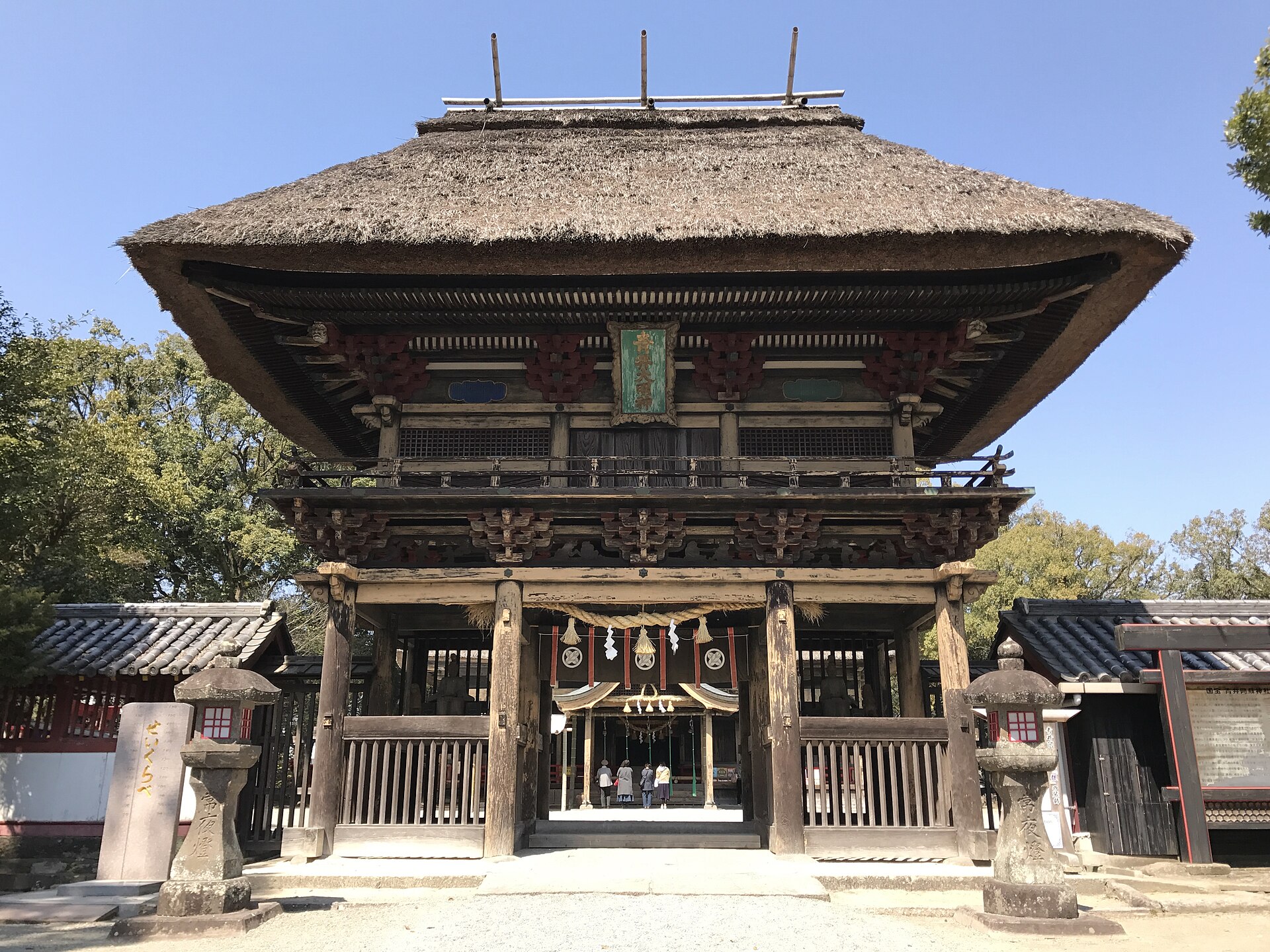
A shrine in the middle of Hitoyoshi where the gate, worship hall, offering hall, corridor and main hall all stand under steep thatch, and all carry National Treasure status — the first thatched religious buildings in Japan listed that way.
- FromKumamoto Sakuramachi Bus Terminal
- ~2 hr 15 minHighway bus, then loop bus
- Get off atHitoyoshi Station-mae (Jugurit loop bus)
- From there
- Aoi Aso Shrine
The sweet spot
This is the principal shrine of the Kuma valley and it is well known inside Kumamoto, so it is not a find. What thins the crowd is the journey. The railway that used to run through Hitoyoshi has been out of service since the floods, and the town is now reached by highway bus, which puts it off the usual Kyushu circuit.
Where it is
18 more notes in Kumamoto · open the map →What to look for — in walking order
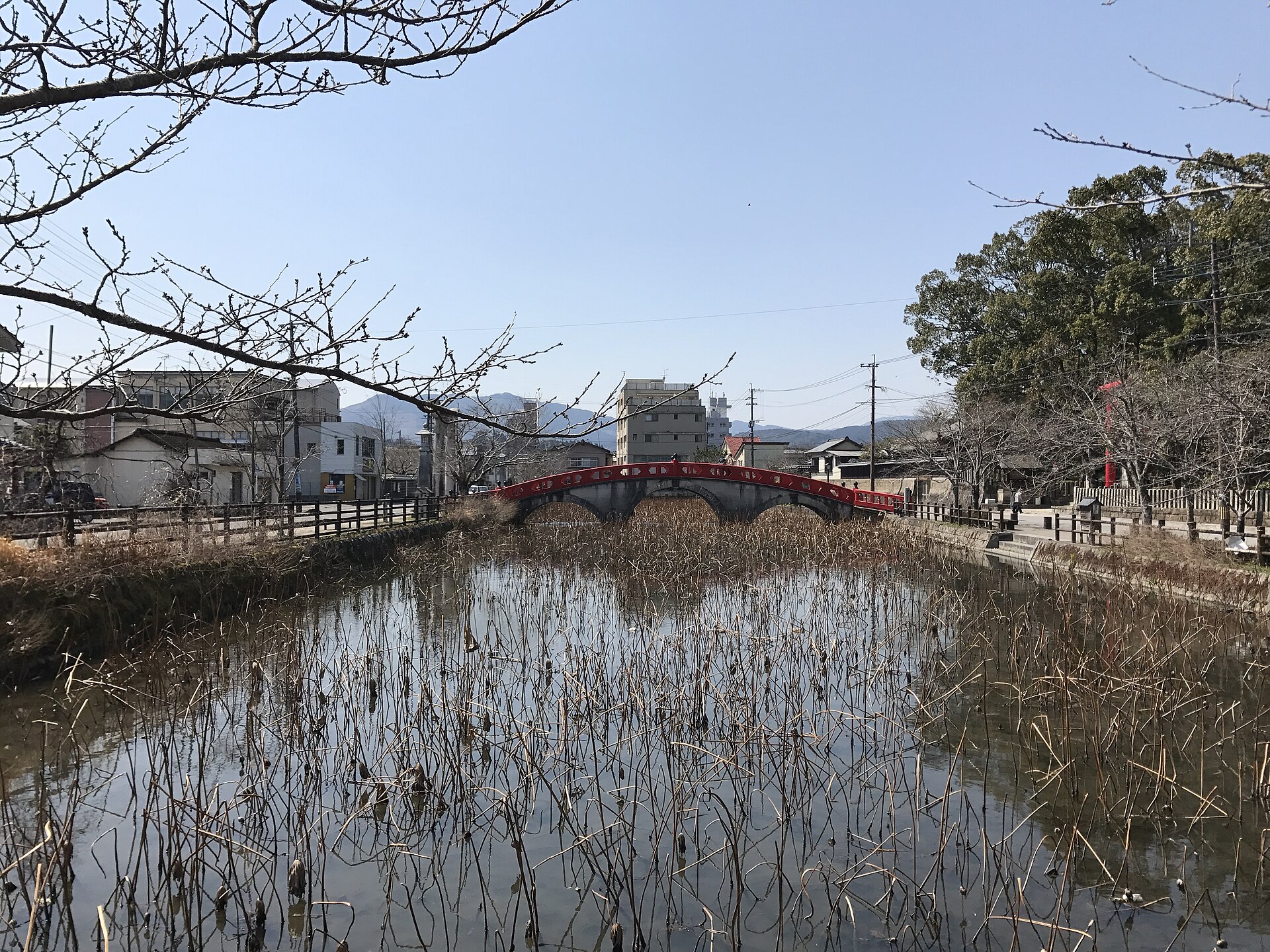
- Misogibashi Bridgea stone bridge over the shrine pond, carrying the approach in from the street
- The Romon gatea two-storey thatched gate 12 metres tall, Zen-style bracketing below and dragon carving at the eaves
- Haiden worship hallone long thatched hall divided into rooms for worship, kagura dance and offerings
- Honden and corridorthe inner hall and the short linking passage behind, closed to visitors but read from the side
- Aoi-no-Mori National Treasure Museuma timber hall by Kengo Kuma beside the precinct, its louvred roof answering the thatch
How to actually get there
- Kumamoto Sakuramachi Bus Terminal → Hitoyoshi Interchange (Kirishima-go highway bus, assigned seat).
- Hitoyoshi Interchange → Hitoyoshi Station-mae (Jugurit loop bus).
- Walk south from the station front to the approach and cross Misogibashi Bridge into the precinct.
- Take the axis first — gate, worship hall, main hall in line — then round the side for the roof, and the museum next door.
- Highway bus from Kumamoto to Hitoyoshi Interchange
- Kumamoto Sakuramachi Bus Terminal → Hitoyoshi Interchange on the Kirishima-go highway bus, which Hitoyoshi City lists at about one hour fifty minutes. Seats are assigned, so book the leg before the day rather than turning up. From the interchange stop the Jugurit loop bus runs down into the town and finishes at the station front, and the shrine is a short walk from there. The Miyazaki-bound Nanpu-go and Phoenix-go services call at the same interchange stop.
- Back out by the same interchange
- Return the way you came: loop bus from the station front up to Hitoyoshi Interchange, then the highway bus north to Kumamoto or south to Kagoshima. Departures are spread through the day rather than frequent, so fix the return before you start walking the town. If you are carrying on to Miyazaki instead, those buses use the same stop.
About the place
Aoi Aso Shrine sits a few streets back from the Kuma River, in the old castle town of Hitoyoshi. Five buildings stand in a single linked group: the gate at the front, then the worship hall, the offering hall, a short corridor and the main hall behind. They were raised as one project by the Sagara lords who held this valley, and they still read as one continuous roof line. The thatch is cut steep, in the way roofs are cut in this part of southern Kyushu, and the timber beneath it carries lacquer, colour and cloud-and-dragon carving. The National Treasure listing covers the whole group, not one hall within it.
How to enjoy it
There is no gate to queue at, so the visit takes as long as you give it: about half an hour for the buildings, longer if you add the museum, which keeps its own hours. Stand at the bridge first and look straight down the axis — gate, worship hall, main hall, all in one line. Then walk round to the side, where the thickness of the thatch and the run of the roof are easiest to read.
Background & history
The shrine dates its founding to 806, when the deities of Aso Shrine to the north were brought here and enshrined as the gods of this valley. The buildings standing now went up between 1610 and 1613 under Sagara Nagatsune, and were listed together as National Treasures in 2008. In July 2020 the Kuma River broke its banks and the precinct went under water. A timber museum by the architect Kengo Kuma opened beside the shrine in 2023, built as a marker of the recovery.
Before you go
- Cash
- Walking the precinct is free. The National Treasure museum on the site charges its own admission and keeps its own hours, so treat it as a separate stop rather than part of the shrine visit. Highway bus seats are assigned and bought through the operator ahead of time; carry cash for the local loop bus and for the shrine's own counters.
- Before you go
- The buildings are outdoors, and thatch reads better in flat light than under hard midday sun. The precinct sits low beside the Kuma River and the town has been flooded here once already, so check river and weather warnings in the rainy season. The shrine's autumn festival brings traffic restrictions around the precinct for several days.
- Another way
- From Kagoshima the Kirishima-go runs north to the same interchange stop, which makes Hitoyoshi a natural break between the two cities. From Fukuoka there is a direct highway bus to Hitoyoshi Interchange. Drivers leave the Kyushu Expressway at Hitoyoshi IC, a short run from the town centre.
- After you get off
- The loop bus ends in front of Hitoyoshi Station. From there walk south about three hundred metres on flat streets; the stone torii and the bridge over the shrine pond come into view from the corner. Drivers can park on the site.