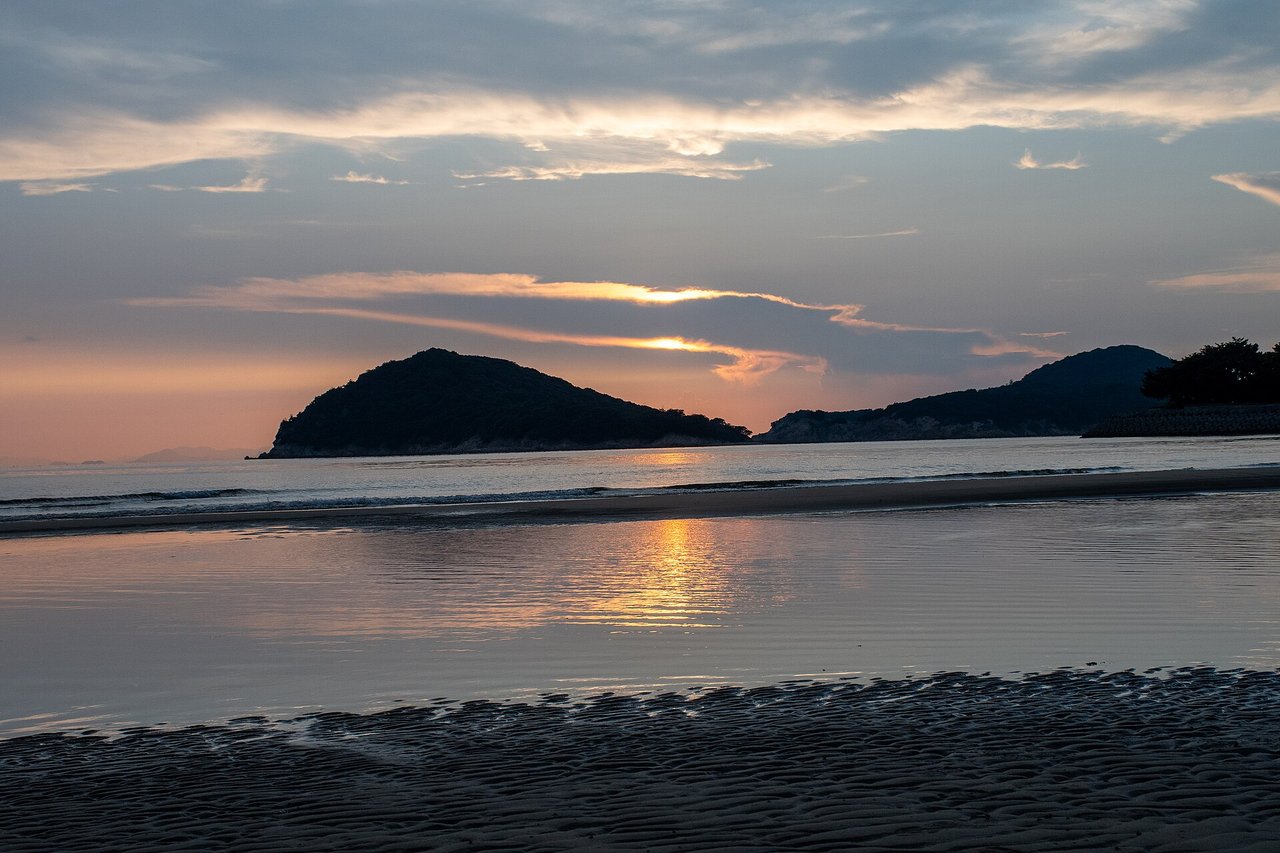
 Photos of Japan / CC0
Column No.04 · October 8, 2026 · 3 min read
Chichibugahama's Mirror Meets the Sunset About Every Two Weeks
On sand the tide has left behind, there is a second sky. The sunset, and the people standing out there, appear again in the water at your feet. Chichibugahama, a beach in Mitoyo, Kagawa Prefecture, became known for photos like those from Bolivia’s salt flats.
But this sunset keeps a schedule. The Mitoyo Tourism & Exchange Authority publishes a calendar on its official site, “Best Times to Visit Chichibugahama Beach”. Day by day it lists the low-tide hours and the time of sunset, and on the days its key marks as the best timing for low tide and sunset, the low-tide cell is shaded yellow. As the site puts it, “Low Tide = Skyview Mirror Photo Time.”
I counted the calendar’s 457 days, from October 2026 to December 2027. 257 of them are yellow, and they come in runs of 5 to 13 days. From the start of one run to the start of the next is 13 to 16 days. A low tide at sunset comes round about every two weeks. In October 2026, that means the 7th to the 13th, and the 22nd to the 28th.
The reason is the tide itself. According to the Japan Meteorological Agency, most places have two high tides and two low tides a day, and their times shift about 50 minutes later each day. The calendar shows it: the afternoon low-tide window opens at 12:30 on 8 October, and at 16:30 by the 13th. Sea level rises and falls on a cycle of about half a day, so once low tide has slipped half a day later, the next low tide arrives back at the original hour. At 50 minutes a day, that works out to about two weeks, which matches the gaps I counted.
That the calendar can be shaded more than a year ahead is presumably because tides can be worked out in advance. The agency says that the rise and fall of the sea caused by the moon and sun can be predicted with high precision, given long and accurate observations.
One condition is missing from the calendar: wind. The authority says windless hours are best, and that the evening calm called “Seto no yunagi” is a time when the wind tends to drop. In the agency’s forecasting glossary, an evening calm is when the sea and land breezes weaken in the evening and the wind along the coast almost stops. The calendar has no column for wind.
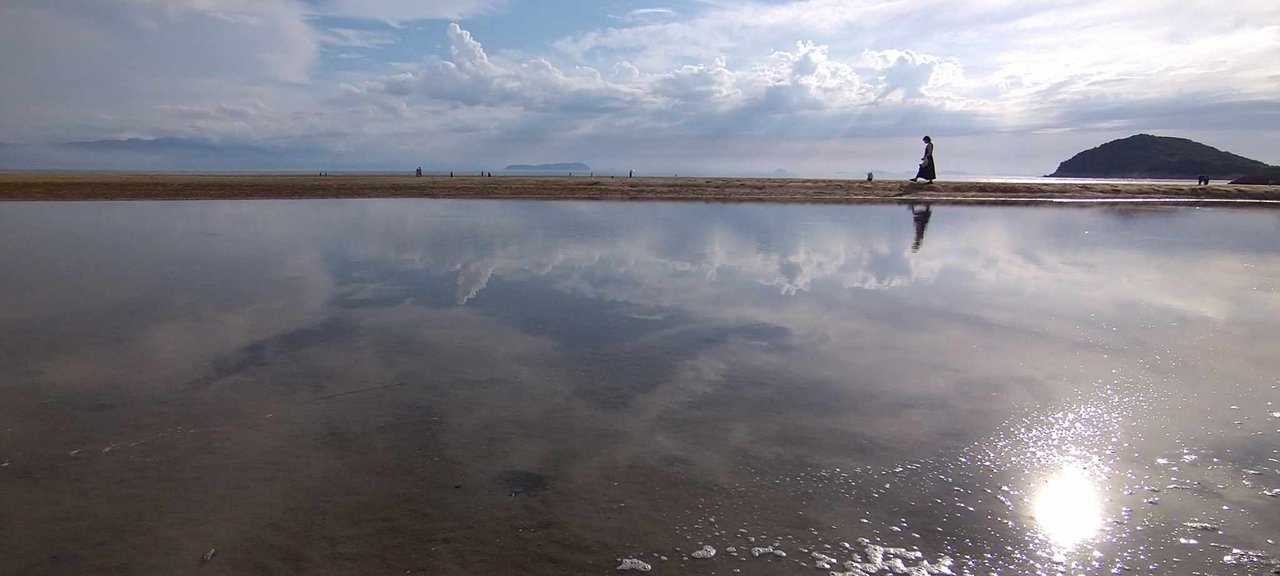
The calendar also lists low-tide hours from morning to midday. Going by the site’s own equation, in those hours the daytime sky shows in the sand too.
If you go, pick a yellow day and check the wind forecast before you set out. Arrive during the low-tide hours and you will find pools like small streams on the sand. The authority’s advice is to hold the camera almost on the ground, with the person being photographed on the sea side and the photographer on the land side. The authority’s site says local volunteers have been cleaning this beach for 25 years, so take your rubbish home.
The note for this place
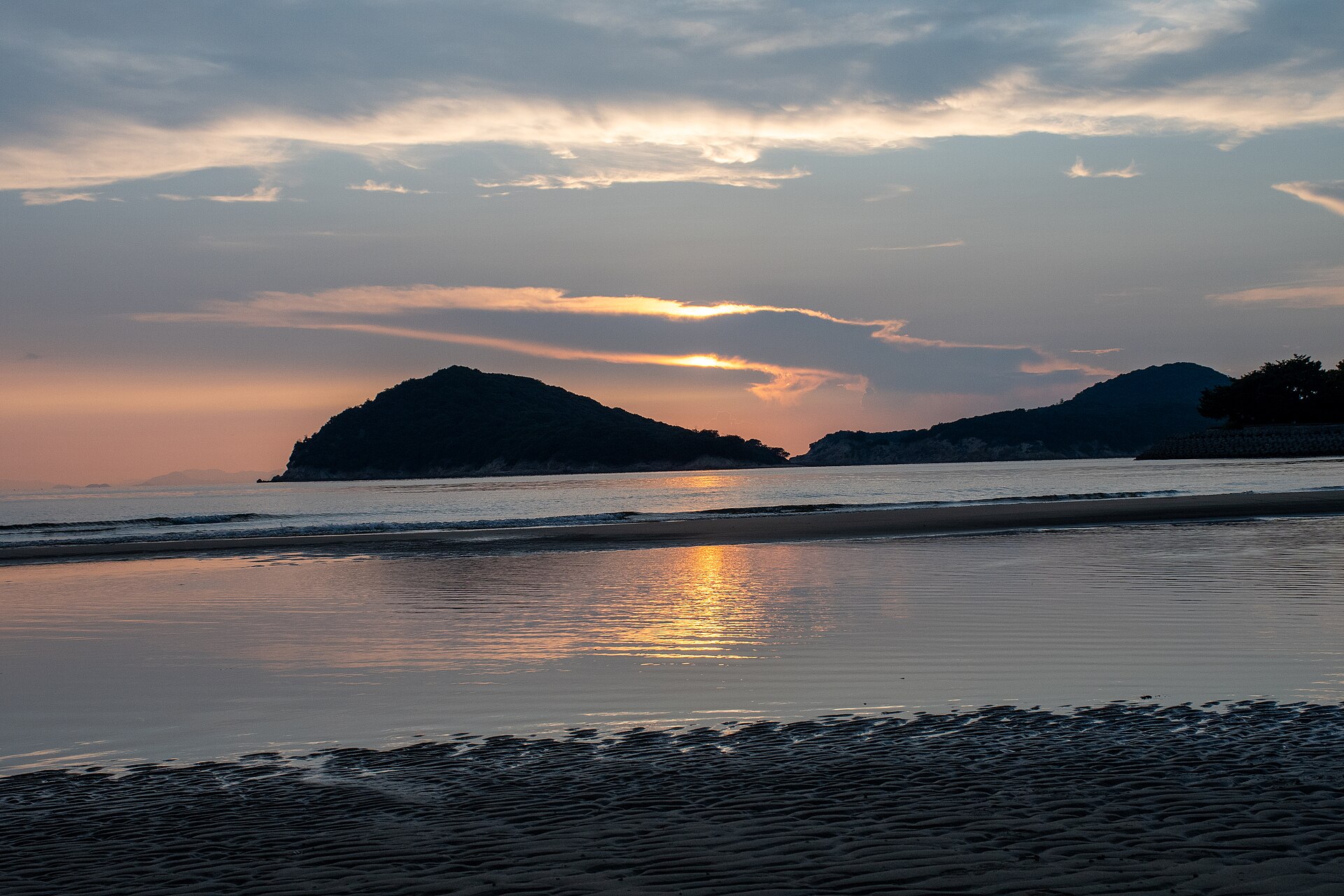 Photos of Japan / CC0
Nature · Kagawa ★★★
Chichibugahama Beach
The reflection runs to a timetable, and the timetable is public.
How to get there →