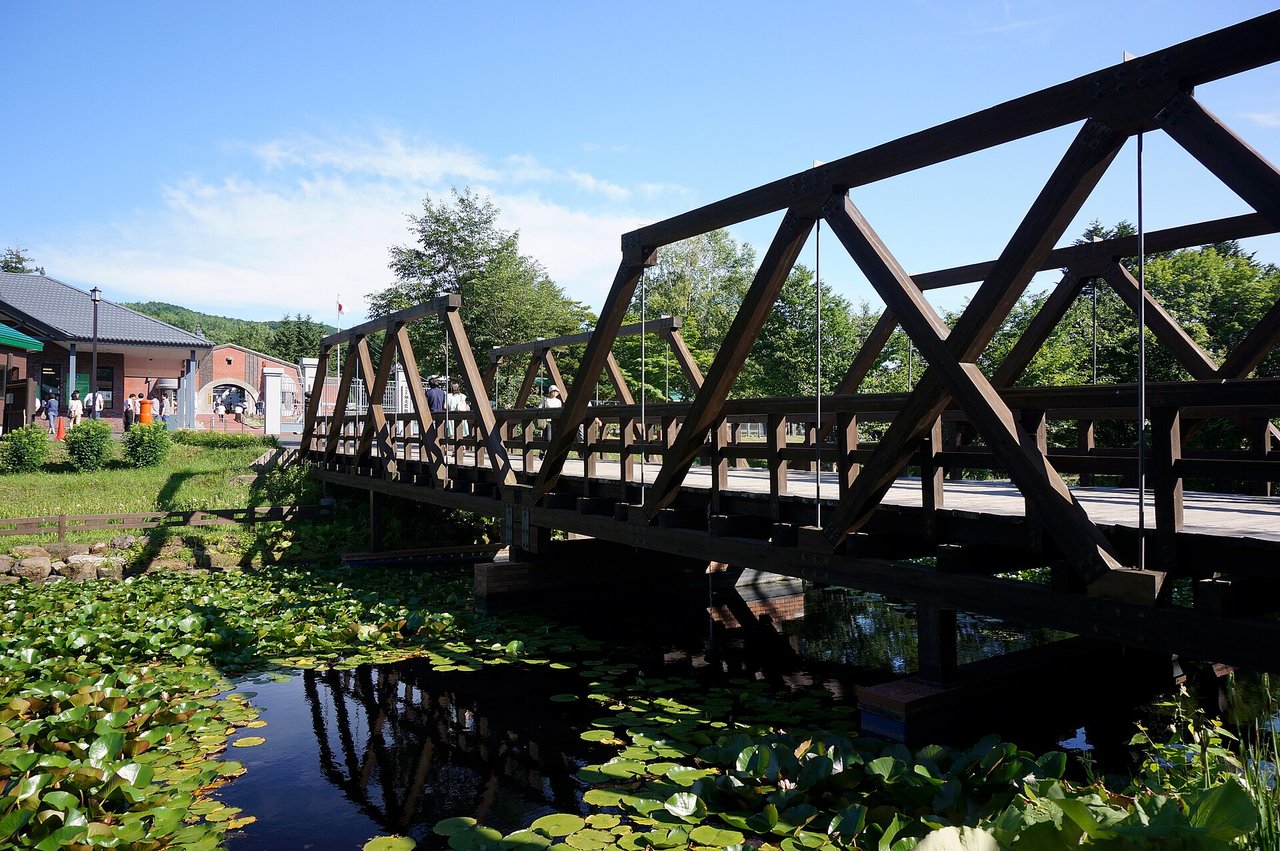
 663highland / CC BY 2.5
Column No.05 · October 15, 2026 · 3 min read
Abashiri Prison Museum's Cell Blocks Came from a Prison Still in Use
At Abashiri Prison Museum, five cell blocks fan out from a guard post in the middle. From the octagonal guard post, the corridors leading to each block can be seen at a glance. There are 226 cells in all. Japan’s Agency for Cultural Affairs describes the building as the only wooden radial cell block that survives complete.
But this is not where the cell blocks were built. They stood inside Abashiri Prison, which is on a separate site from the museum and is still in use as a prison.
According to the Agency, a fire in 1909 destroyed most of the prison’s buildings, and the ones that stand today were rebuilt in 1912, designed by the Ministry of Justice and built by the inmates. Later, under plans to rebuild the prison, the buildings were moved one after another to the museum site, starting in 1981. The museum gives 1985 as the year the cell blocks were relocated and restored here.
In aerial photographs taken in 1974–78 and published by the Geospatial Information Authority of Japan, the prison sits beside the Abashiri River, and inside its walls is a building with five wings fanning out from a centre, as the museum’s cell blocks do. A current photograph of the same place shows no such shape. The centres of the two buildings are a little over 2 km apart in a straight line.
Then and now
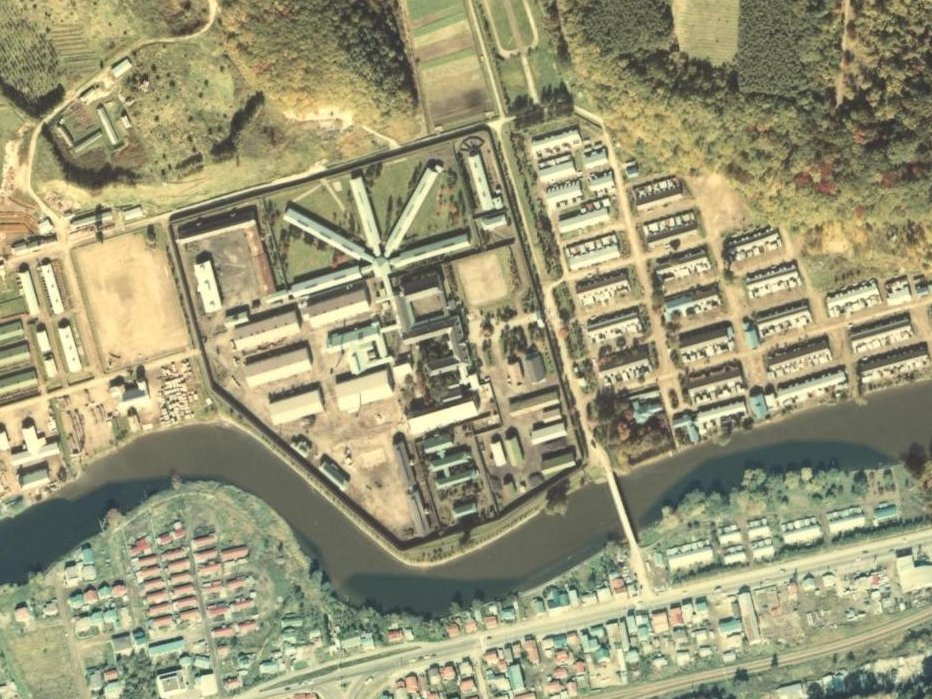 GSI Japan
Then · 1974–78
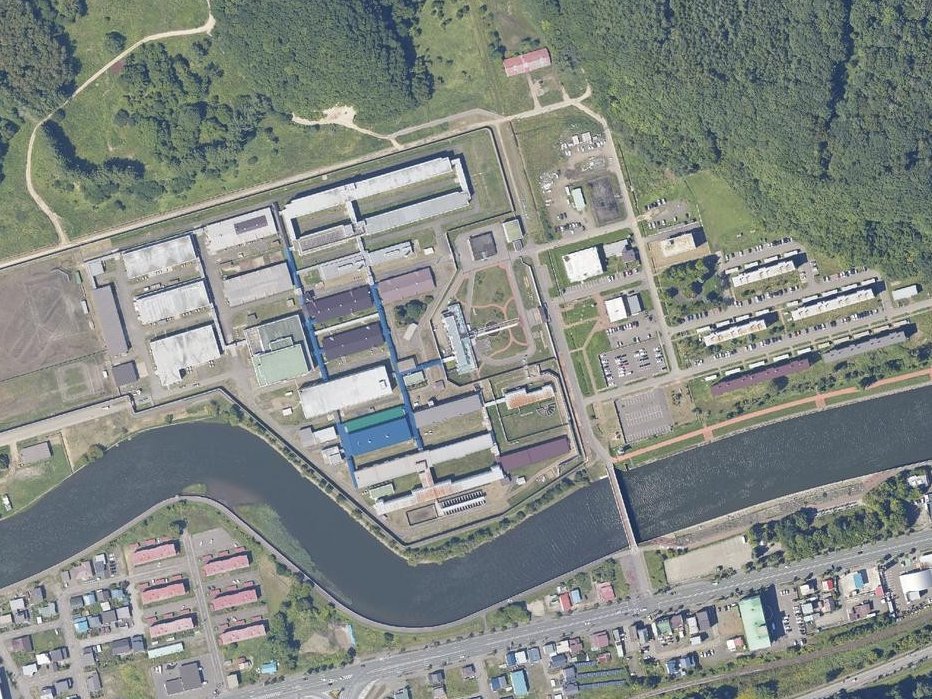 GSI Japan
Now · the same place
Now — The same place in a current aerial photograph. (Photo: based on a Geospatial Information Authority of Japan latest aerial photograph)
The red-brick main gate near the start of the museum’s route, on the other hand, was not moved. The museum lists it as a reconstruction. The original main gate still stands at Abashiri Prison. Sources disagree on when it was built: the museum gives 1924, while Hokkaido’s official tourism site gives 1922.
According to the museum, Blocks 3 and 4 are currently closed for seismic conservation work, and Blocks 1, 2 and 5 are open to visitors. After seeing the cell blocks, try getting off the bus back at the stop named “Abashiri Prison” (Keimusho-mae), the fourth stop after the museum on Abashiri Bus’s sightseeing route. On the current timetable only four buses a day run back, so check the time of the next one before you get off. The museum notes that the prison sits across the Abashiri River and can only be entered or left by crossing the Kagami Bridge. It is a working prison, so you can only see it from outside, but Hokkaido’s official tourism site describes the red-brick main gate as a popular photo spot. The cell blocks you have just seen once stood inside this prison’s walls.
The note for this place
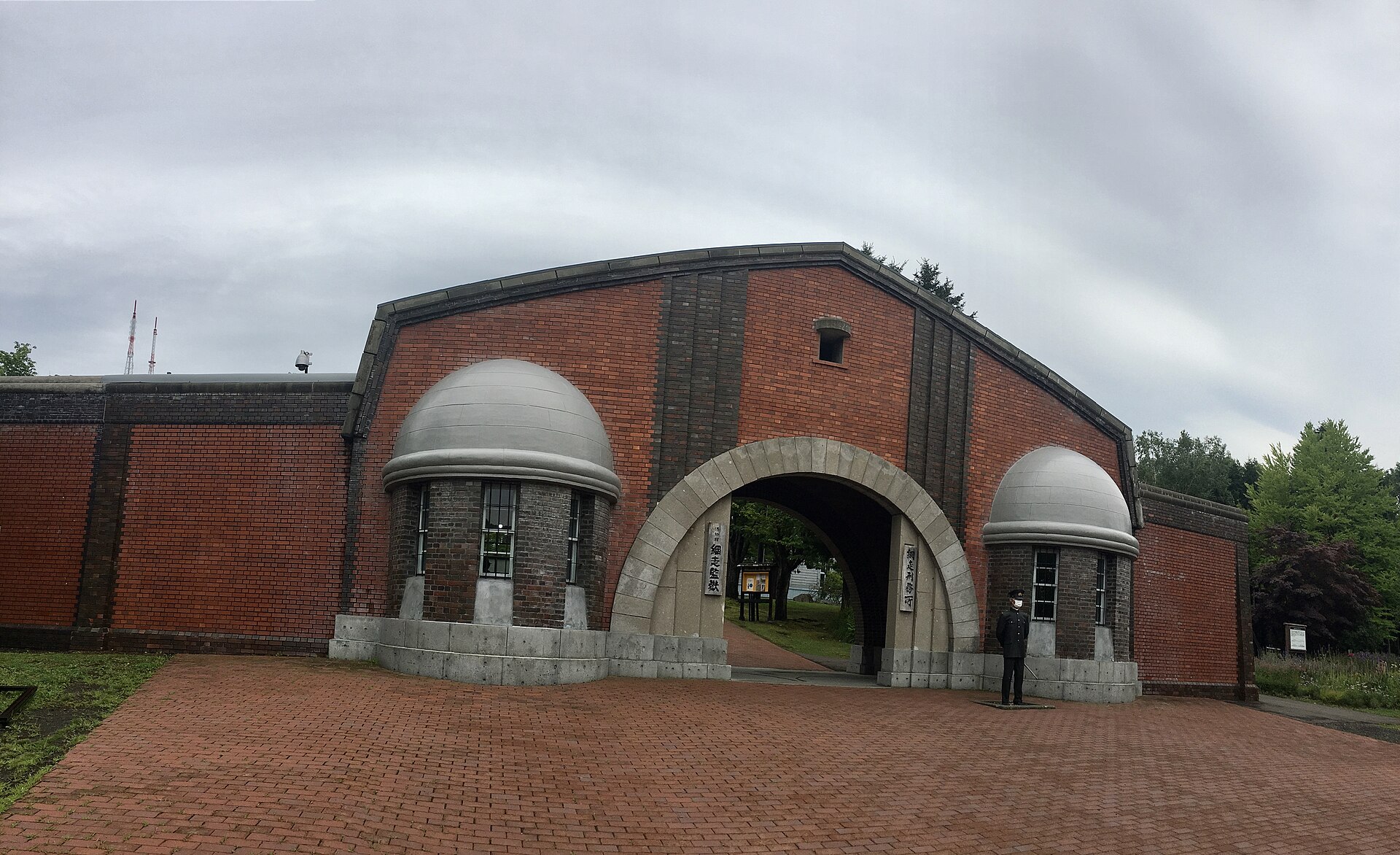 Nesnad / CC BY 4.0
History · Hokkaido ★★★
Abashiri Prison Museum
Meiji-era prison buildings you can walk inside, held as national cultural properties.
How to get there →