Hokkaido · HorokanaiNo.888★★Open in map →
Lake Shumarinai
The largest man-made lake in Japan, spread into a forest of inlets and islands in the coldest part of Hokkaido. Fishing and boating run on a strict local rule book, and one bus route ends at the shore.
- FromFukagawa Station
- ~2 h 10 minJR Hokkaido Bus, Shinmei line
- Get off atKohan, the lakeside stop (JR Hokkaido Bus, Shinmei line)
- From there
- Lake Shumarinai
The sweet spot
Shumarinai is not undiscovered. Anglers travel a long way for it and the lake runs an official site of its own. It stays quiet because it is genuinely hard to reach and because it is managed rather than opened up. Use of the water follows a written rule book, tightened after a fatal bear attack in 2023, and the handful of buses that come down to the shore sets the shape of most visits.
Where it is
102 more notes in Hokkaido · open the map →What to look for — in walking order
- Lake House Shumarinaithe lodge on the rise above the shore, with the rule board, permits, meals and rooms
- The lakeside campgroundterraced tent sites in birch and grass, with log cabins, a shower block and a laundry
- The boat pierdeparture point for the sightseeing boat that circuits the inlets in the green season
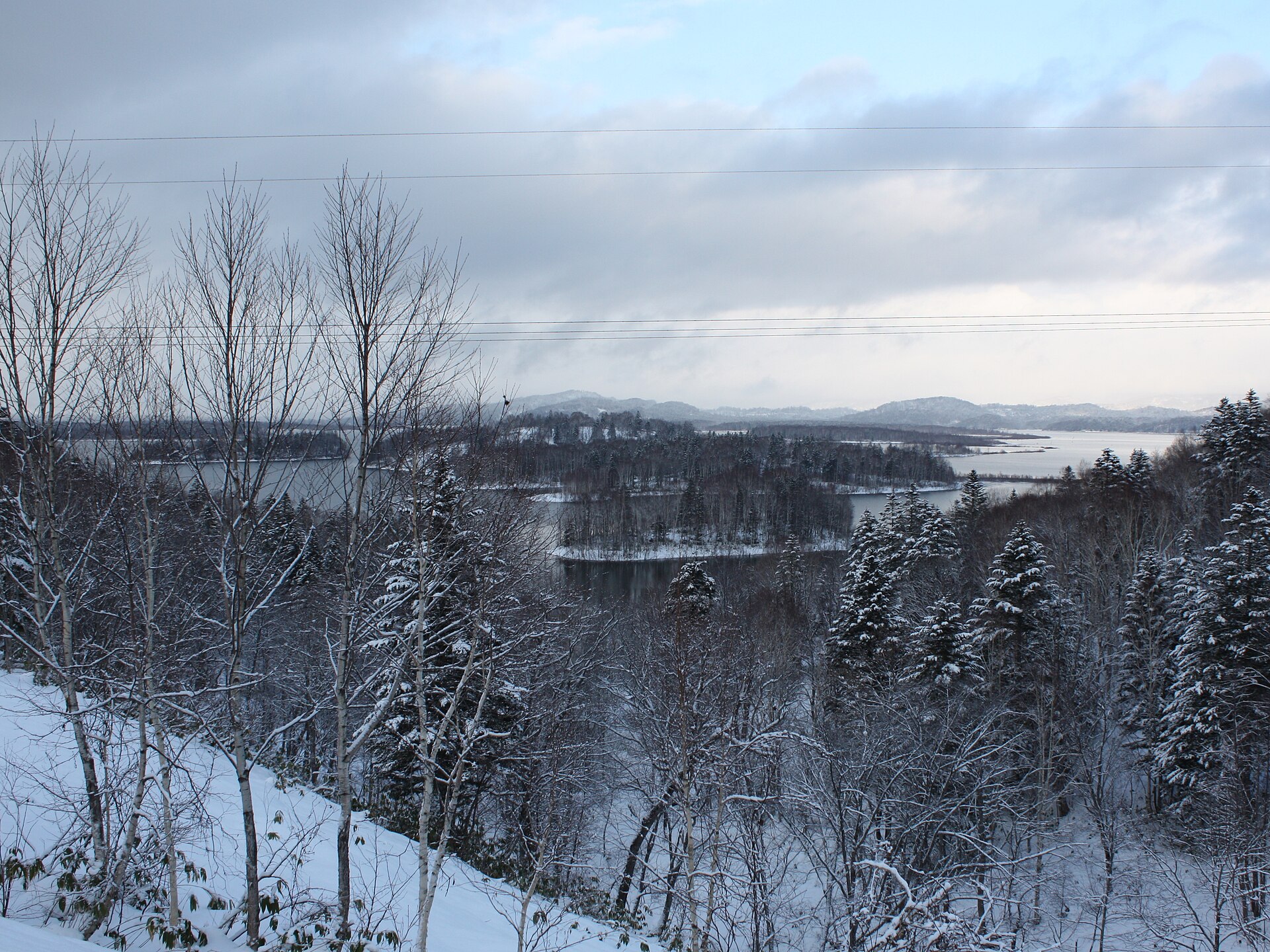
- The islands and inletswooded points and drowned ridges that break the lake into separate views from the shore
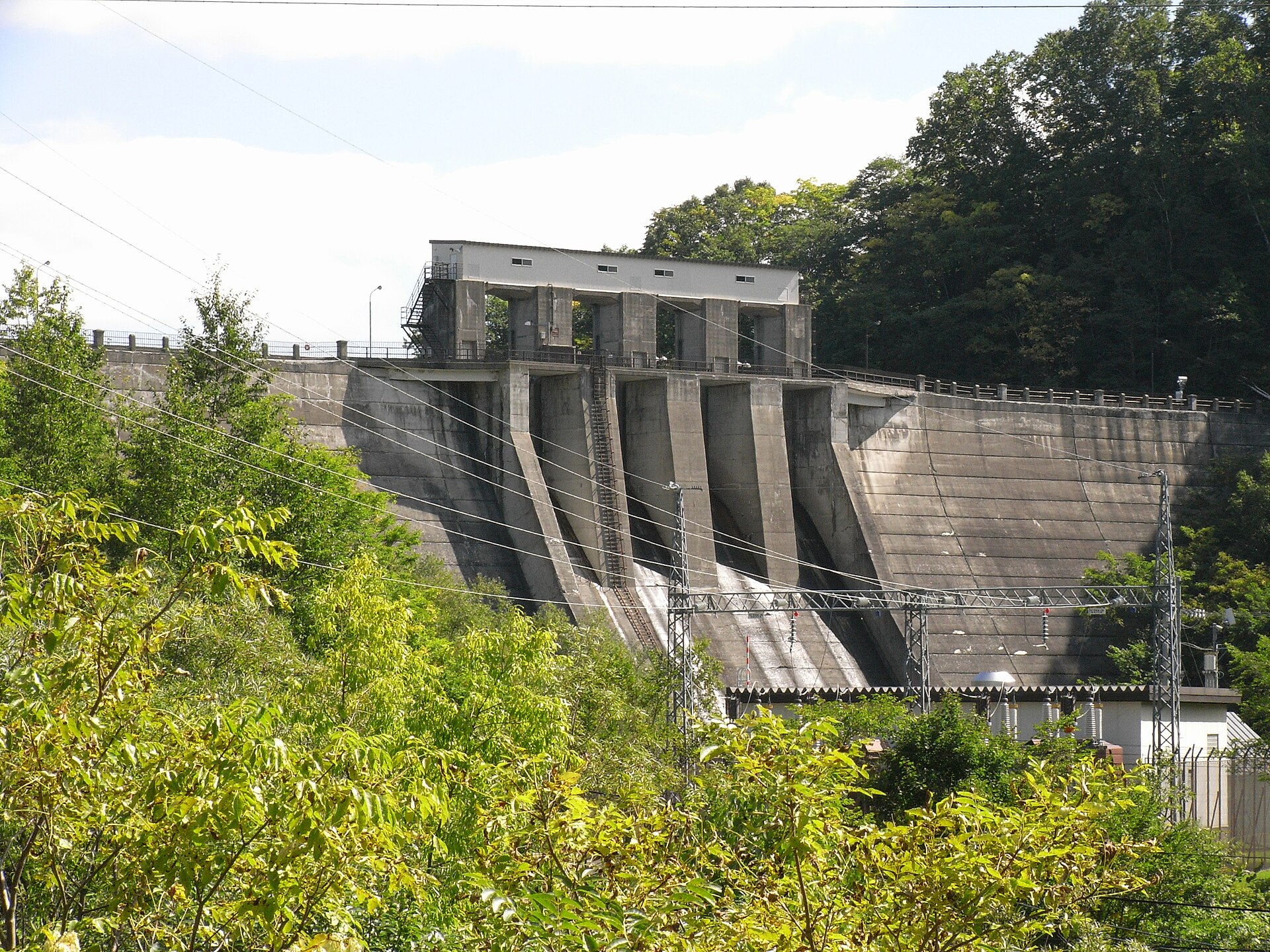
- Uryu No.1 Damthe concrete wall at the south end of the water, the thing that made the lake
How to actually get there
- Fukagawa Station → Kohan, the lakeside stop, on the JR Hokkaido Bus Shinmei line.
- Read the lake rule board at the lodge first; permits, bear equipment and the notification for going out alone are all handled here.
- Down to the pier for the circuit boat, which is the only way to see how far the inlets reach.
- Back up through the campground terraces to the stop, with the dam wall closing the south end of the water.
- JR Hokkaido Bus, Shinmei line from Fukagawa
- The Shinmei line took over from the railway of the same name and runs from Fukagawa through Horokanai to Nayoro. Only some services turn off at Mitsumata and drop down to the water, and in the summer timetable there are two of them a day. Every other run leaves you in the village of Shumarinai, a few kilometres short of the shore.
- Two departures back
- The return leaves from the same lakeside stop and there are as few of them as on the way in, one late in the morning and one in the early afternoon. Miss those and the nearest onward service is back up on the main road. Fix your return before you walk down to the water.
About the place
Lake Shumarinai lies in forest north of the village of Horokanai, in the interior of northern Hokkaido. It was made by damming the Uryu river, and by water surface it is the largest man-made lake in the country. The shoreline is not a bowl but a tangle of long inlets and wooded islands, so from any one point you see only a piece of it. The basin around it is the coldest inhabited ground in Japan, and the whole lake sits inside a prefectural natural park. Beyond a campground, a lodge and a boat pier, almost nothing has been built on the shore.
How to enjoy it
Give the shore a whole day, because the bus decides for you: the two runs that come down here leave a long block between late morning and mid-afternoon. Spend it on the water. The circuit boat takes about thirty-five minutes and shows how far the arms of the lake reach behind the trees. Fishing starts at the rule board rather than at the tackle box: single barbless hooks only, catch and release for the itou, and notification before anyone goes out alone.
Background & history
The lake did not exist before 1943, when the Uryu No.1 Dam closed the valley to store water for a hydroelectric station and the forest behind it went under. Protection came three decades later, when the lake and the woods around it were made a prefectural natural park in 1974. The fishery that grew up afterwards was built around the itou, a freshwater trout that has disappeared from most of Japan and holds on here, and the rules that govern it have been rewritten more than once since.
Before you go
- Cash
- Camping, the cabins, the boat and the fishing ticket are each charged separately, and the fishing ticket is priced by method rather than by catch. Tickets are sold at the lodge, the campground office and the fishery co-operative. This is not a shore on which to rely on a card.
- Before you go
- The seasons here are split: trout fishing from spring into December, ice fishing through the deep winter, and the campground and the sightseeing boat closed while the lake is frozen. This is brown bear country and the rules are not advisory. Fishing was suspended for months after a death on the shore, and the reopened rules require groups and bear equipment.
- Another way
- By car the lake is a straightforward run inland from Asahikawa, and the road from Nayoro comes in from the north past Moshiri. The highway follows the valley for its whole length, so the lake fits into a crossing between Asahikawa and the Sea of Japan coast rather than needing a day of its own.
- After you get off
- The bus leaves the main road and runs down a spur to the lakeside itself, stopping beside the campground and below the lodge. The office, the pier and the cabins are all within a few minutes on foot from there, and the ground is flat.